Author: itsmikeski@gmail.com

  • Altcoins Got Wiped Out in Q1 2025—Is Recovery Even Possible?

    Altcoins Got Wiped Out in Q1 2025—Is Recovery Even Possible?

    It was the ‘best worst’ quarter in crypto’s history.

    This was Q1 2025, according to the world’s biggest crypto index fund manager. And also me, you, and everyone else who held altcoins through the last few months. We got just about every bullish catalyst we could have dreamed of, but prices still fell. So what went wrong, and why?

    Today, we have all the answers – plus, why the case for higher prices in 2025 is alive and well.

    ~~~~~

    🛒 Get The Hottest Crypto Deals 👉 https://www.coinbureau.com/deals/
    ♣️ Join The Coin Bureau Club 👉 https://hub.coinbureau.com/
    📲 Insider Info in our Socials 👉 https://www.coinbureau.com/socials/
    👕 Our Merch Store 👉 https://store.coinbureau.com/?utm_source=Youtube&utm_medium=No+CTA&utm_campaign=YT
    🔥 TOP Crypto TIPS In our Newsletter 👉 https://www.coinbureau.com/newsletters/

    ~~~~~

    🔥OUR BRAND PARTNERS🔥
    🥇Binance 20% Trading Fee Discount For Life + $600 Bonus*! 👉 https://coinbureau.com/deals/trading/binance/
    🔒Get Your Ledger Wallet, Plus $10 of free BTC 👉 https://go.coinbureau.com/ledger.main
    🌐Arkham 50% Trading Fee Discount* 👉 https://go.coinbureau.com/arkham

    ~~~~~

    📺Essential Videos📺

    Digital Euro Update: Cash is COOKED in Europe?! 👉 https://youtu.be/COfHwr-Ksng
    Stagflation Incoming: Why It’s Worse Than a Recession 👉 https://youtu.be/4JgYqvNmKqI
    WAR Over Taiwan: Time’s Running Out 👉 https://youtu.be/EvFi-6Fj6oQ

    ~~~~~

    – TIMESTAMPS –

    0:00 Intro
    0:37 What Happened in Q1?
    4:10 The Market Didn’t Get the Memo
    9:18 Stablecoins
    13:54 CME Futures
    14:38 RWAs Going Vertical
    15:42 M2 and BTC
    17:43 Chaos as a Catalyst

    ~~~~~

    📜 Disclaimer 📜

    The information contained herein is for informational purposes only. Nothing herein shall be construed to be financial, legal or tax advice. The content of this video is solely the opinions of the speaker who is not a licensed financial advisor or registered investment advisor. Trading cryptocurrencies poses considerable risk of loss. The speaker does not guarantee any particular outcome.

    #crypto #altcoin #bitcoin

  • Massive Whale Staking 193,909 SOL Signals Confidence in Solana’s Future

    Massive Whale Staking 193,909 SOL Signals Confidence in Solana’s Future

    What happened?

    An anonymous whale recently staked 193,909 Solana (SOL), valued at approximately $28.7 million, suggesting strong confidence in Solana’s future. This transaction was executed from Kraken to a staking address just before 10:00 AM UTC on May 3, 2025. This massive move spurred increased trading activity, leading to an 18% surge in trading volume and a price increase for SOL.

    Who does this affect?

    This development affects multiple stakeholders including Solana investors, traders, and the broader cryptocurrency market. Large holders and whales, in particular, may feel encouraged by this demonstration of faith in Solana’s potential future growth. Additionally, projects aligned with artificial intelligence that utilize Solana’s infrastructure, such as Render (RNDR) and Fetch.ai (FET), also witnessed positive impacts from this event.

    Why does this matter?

    This whale activity could signal significant market movements, highlighting strong interest and confidence in Solana’s potential. A breakout above the $154 resistance could lead to further price escalations towards $163 or even $200, attracting momentum traders and potentially boosting market sentiment. Such moves can inspire broader implications across related crypto sectors, driving increased investment and participation within the ecosystem.

  • U.S. Reluctance to Increase Bitcoin Holdings May Impact Global Cryptocurrency Market

    U.S. Reluctance to Increase Bitcoin Holdings May Impact Global Cryptocurrency Market

    What happened?

    The United States is unlikely to significantly increase its Bitcoin holdings, according to BitMEX co-founder Arthur Hayes. He believes that the U.S., given its massive national debt and cultural perceptions of Bitcoin investors, is not in a position to buy more Bitcoin. While the U.S. holds over 198,000 BTC, mostly seized from criminal cases, expanding this reserve through direct purchases seems politically challenging.

    Who does this affect?

    This situation affects multiple stakeholders including the U.S. government, Bitcoin investors, and the cryptocurrency market as a whole. The government’s potential disinterest in acquiring more Bitcoin could influence other countries’ approach to digital currencies. It also impacts how institutional investors view the stability and growth prospects of Bitcoin based on governmental actions or inactions.

    Why does this matter?

    The market impact is significant as the U.S.’s decision might influence global perceptions and adoption rates of Bitcoin. If the U.S. were to increase Bitcoin acquisitions, it could trigger a new rally and possibly alter Bitcoin’s dominance in the crypto market. Conversely, hesitance from the U.S. might slow institutional momentum, affecting Bitcoin prices and overall market dynamics.

  • Ethereum Faces Key Resistance as Traders Await Potential Breakout

    Ethereum Faces Key Resistance as Traders Await Potential Breakout

    What happened?

    Ethereum is currently trading at around $1,829 and is facing resistance at the $1,871 level, which has rejected upward price movements three times. This resistance forms a “triple top” pattern, presenting a psychological barrier to buyers. However, Ethereum finds support from a rising trendline and the 50-period exponential moving average, holding it at about $1,821.

    Who does this affect?

    This situation affects traders and investors in the Ethereum market, particularly those looking for potential breakout opportunities. Newer traders are advised to wait for a confirmed breakout above the $1,871 resistance to avoid being caught in volatile price swings. The ongoing consolidation also interests those tracking cryptocurrency trends amid economic shifts.

    Why does this matter?

    The market impact is significant as Ethereum breaking through the $1,871 resistance could signal increased bullish momentum, potentially driving prices higher toward $1,910 or even $1,950. In a broader context, Ethereum’s movement is closely watched by investors seeking alternative assets to hedge against traditional market uncertainties, especially with indicators of slowing economic growth in the U.S. and uncertain trade policies. The outcome could influence sentiment across the digital asset market.

  • Bitcoin Holds Steady as Market Sentiment Shifts from Fear to Greed

    Bitcoin Holds Steady as Market Sentiment Shifts from Fear to Greed

    What happened?

    Bitcoin is currently stable around the $96,362 mark as the crypto market experiences a shift in investor sentiment from fear to greed. The CMC Fear and Greed Index has increased significantly to 56 from 24 over the past month, indicating a growing appetite for risk among investors. Despite a slight dip of 0.44% in the last 24 hours, Bitcoin maintains a robust market cap of $1.91 trillion with a strong momentum supported by technical stability and positive sentiment.

    Who does this affect?

    This situation primarily affects crypto investors and traders who are influenced by changes in market sentiment, as a higher index suggests a favorable trading atmosphere. It also impacts businesses, particularly those in cities like Cannes, France, where new initiatives are pushing for wider adoption of cryptocurrency payments. Lastly, regulatory bodies and institutions are implicated as they navigate the evolving landscape of crypto regulation, especially with recent scrutiny on illicit activities linked to certain entities.

    Why does this matter?

    The transition from fear to greed in the crypto market could drive further price increases and trading volume, impacting both short-term and long-term market trends. As sentiment improves, Bitcoin’s stability at key technical levels might lead to more bullish activity, attracting additional investment. Furthermore, institutional moves towards acceptance and regulation of crypto indicate a shift towards broader mainstream adoption, potentially stabilizing the market and legitimizing crypto as an asset class.

  • Litecoin Price Surge: Bullish Predictions Signal Potential Gains for Traders and Investors

    Litecoin Price Surge: Bullish Predictions Signal Potential Gains for Traders and Investors

    What happened?

    Litecoin’s price is seeing bullish predictions, with potential short-term targets at $100 and possibly reaching $140 within weeks. Currently priced around $87, Litecoin has experienced a strong uptrend, increasing about 40% from its early April lows under $64. Key resistance levels have been surpassed, indicating the possibility of further gains.

    Who does this affect?

    This affects cryptocurrency traders and investors who are interested in Litecoin, a popular altcoin. The potential price movement may attract both retail investors and institutional traders looking to capitalize on the expected upward trend. Additionally, market analysts and financial advisors monitoring altcoin performance will find these predictions significant for decision-making processes.

    Why does this matter?

    The potential rise in Litecoin’s price may influence overall market sentiment, especially as part of the broader altcoin market. If the bullish predictions materialize, it could spark increased investment interest and trading activity. However, market uncertainty and macroeconomic factors, such as trade tensions and economic health, could impact these predictions and market dynamics.

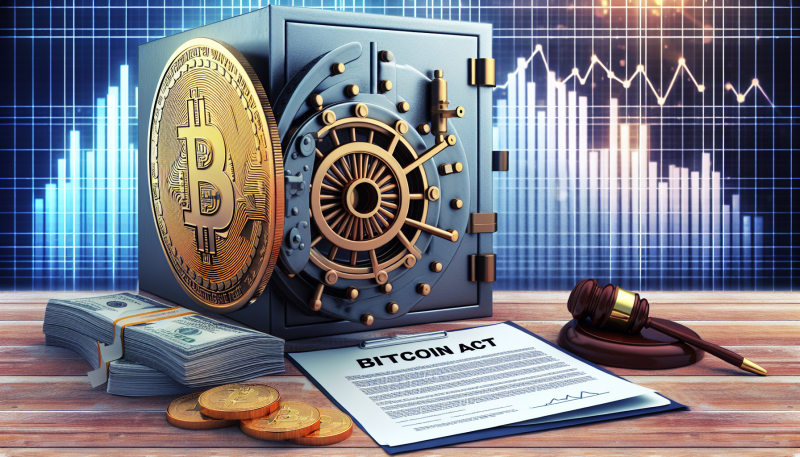
  • Senator Lummis Proposes BITCOIN Act to Establish Federal Bitcoin Reserve and Tackle National Debt

    Senator Lummis Proposes BITCOIN Act to Establish Federal Bitcoin Reserve and Tackle National Debt

    What happened?

    Senator Cynthia Lummis introduced the BITCOIN Act to address the United States’ $36 trillion debt by proposing the creation of a federal Bitcoin reserve. She promoted the act via social media, emphasizing its potential to secure America’s position as a leader in financial innovation. The proposal was initially introduced at the Bitcoin for America Summit by Lummis and Congressman Nick Begich.

    Who does this affect?

    The introduction of the BITCOIN Act primarily affects policymakers, the financial sector, and cryptocurrency enthusiasts in the United States. It has implications for American workers who could gain more control over their money through Bitcoin adoption, as well as businesses involved in digital asset technologies. Globally, it positions the U.S. as a competitive player in the cryptocurrency space and could influence international financial policies.

    Why does this matter?

    The BITCOIN Act could significantly impact the financial markets by increasing the use and legitimacy of Bitcoin as a national reserve asset. It signals a move towards integrating digital currencies into mainstream financial systems, which could affect traditional financial institutions. The market responded positively with a slight surge in Bitcoin’s value, indicating investor confidence in the growing role of cryptocurrencies.

  • Mango Markets Exploiter Avraham Eisenberg Sentenced for Child Sexual Abuse Material Possession

    What happened?

    Mango Markets exploiter Avraham “Avi” Eisenberg was sentenced to over four years in federal prison for possessing child sexual abuse material. He pleaded guilty to having nearly 1,300 images and videos of such content. The material was discovered when he was arrested for his involvement in the Mango Markets exploit.

    Who does this affect?

    This affects Eisenberg himself, as he faces a significant prison sentence. It also impacts the victims depicted in the materials he possessed. Users of Mango Markets were also affected by his previous fraudulent activities which led to substantial financial losses.

    Why does this matter?

    The sentencing highlights the legal repercussions of misconduct in both financial and personal realms. Given that Eisenberg engaged in deceptive cryptocurrency trading schemes, trust in digital asset markets could be further eroded. This case might lead to increased regulatory scrutiny in the cryptocurrency space to protect investors and uphold market integrity.

  • EU Finalizes Stricter Anti-Money Laundering Regulations Impacting Cryptocurrency Sector

    EU Finalizes Stricter Anti-Money Laundering Regulations Impacting Cryptocurrency Sector

    “`html

    What happened?

    The European Union has finalized an Anti-Money Laundering Regulation (AMLR) that will ban anonymous crypto accounts and privacy-enhancing coins starting in 2027. This regulation will require large Crypto-Asset Service Providers (CASPs) that meet specific criteria to adhere to strict compliance measures under EU supervision. Additionally, by 2029, automated systems will be in place to allow regulators to track crypto-account holders across the European Union.

    Who does this affect?

    The new regulations will primarily impact businesses operating within the cryptocurrency space, especially CASPs, decentralized exchanges, and financial institutions handling digital assets. Consumers using privacy coins or anonymous accounts will also be affected as these services will be restricted or banned entirely. The regulations will necessitate changes in operations for these entities to comply with the EU’s increased scrutiny and compliance expectations.

    Why does this matter?

    This regulatory move is significant for the cryptocurrency market as it marks a shift towards stricter oversight and alignment with traditional financial compliance standards. The introduction of such regulations could increase operational costs and lead to market restructuring as some companies might choose to exit or geofence the European market. It also sets a precedent for other regions and could impact global adoption and development strategies within the crypto industry.

    “`

  • The Rise of Tokenized Real-World Assets: Implications for Blockchain and Finance

    The Rise of Tokenized Real-World Assets: Implications for Blockchain and Finance

    “`html

    What happened?

    The market for tokenized real-world assets (RWAs) is expected to grow significantly, potentially reaching $18.9 trillion by 2033. Ethereum is currently leading the charge, driving 60% of RWA tokenization value, while other Layer-1 blockchains like Stellar and Avalanche are also contributing. Stellar, for example, hosts major projects like Franklin Templeton’s tokenized money market fund, and Avalanche is expanding partnerships with traditional financial institutions.

    Who does this affect?

    This development impacts various stakeholders including blockchain networks, financial institutions, and investors. Networks like Stellar and Avalanche benefit by establishing themselves in the growing RWA market, while institutions like Franklin Templeton can leverage blockchain technology to reduce costs. Investors gain access to a wider variety of tokenized assets, potentially democratizing access to financial products previously reserved for institutional players.

    Why does this matter?

    The surge in tokenized RWAs has significant implications for the broader market, as it introduces traditional assets into the blockchain space, potentially leading to higher efficiency and reduced transaction costs. The adoption of blockchain technology by major institutions signifies a shift towards more integrated systems, blending traditional finance with decentralized finance (DeFi). This trend could reshape asset management and trading, offering new opportunities for market participants and influencing the dynamics of the global financial ecosystem.

    “`