Tron founder Justin Sun has accused Hong Kong-based firm First Digital Trust (FDT) of misappropriating nearly $500 million in client reserves, alleging severe financial misconduct. Sun has reported the case to Hong Kong authorities and described FDT as “effectively insolvent.” These accusations have emerged amid an ongoing legal dispute between TUSD issuer Techteryx and FDT, adding complexity to the situation.
Who does this affect?
This situation impacts investors and clients of First Digital Trust, particularly those holding the FDUSD stablecoin, which experienced a sharp devaluation. It also affects participants in the broader cryptocurrency market, especially those involved with TrueUSD (TUSD). Regulatory authorities in Hong Kong are also implicated as they are called upon to address these serious allegations.
Why does this matter?
The market impact of these allegations is significant, as the FDUSD stablecoin saw a drastic drop in value, causing major fluctuations. This incident raises concerns about the stability of stablecoins and the effectiveness of regulatory oversight in the cryptocurrency sector. With Binance holding a significant amount of FDUSD, the potential ripple effect on the crypto ecosystem is considerable, possibly leading to increased regulatory scrutiny and market instability.
The crypto market has been experiencing a month-long sell-off due to fears of recession and renewed trade tensions from Trump’s tariff plans. In this volatile environment, identifying promising crypto projects ahead of the next market surge can be challenging but rewarding. A few potential breakout tokens have been identified, which may offer substantial returns if market sentiment shifts positively.
Who does this affect?
This situation impacts cryptocurrency investors and traders who are trying to navigate the turbulent market. Those looking to make strategic investments need to focus on coins with strong growth potential, like Popcat, MIND of Pepe, and Solaxy. These projects attract interest from investors aiming to secure high returns while managing risk during uncertain times.
Why does this matter?
The ongoing market sell-off and geopolitical tensions significantly influence the crypto market’s dynamics, affecting prices and investor confidence. Coins like Popcat tied to major platforms like Solana could benefit from institutional support, while innovative solutions like Solaxy offer technological advancements. Successful navigation of these market conditions can lead to substantial financial gains for those who invest in the right projects early.
✅ Sign-up to NordVPN and remain ✔️Private ✔️Safe ✔️For $3 a Month!
👉 https://nordvpn.com/nobscrypto 👈
*THIS IS NOT FINANCIAL ADVICE. I AM NOT A FINANCIAL ADVISOR AND THIS IS PURELY FOR ENTERTAINMENT PURPOSES ONLY! Please consult your financial advisor BEFORE you make any investment decisions.
Links:
X- https://x.com/KAST_official
Create a KAST account: https://kastfinance.app.link/G94XKK38
💎 Private Discord for My Full Portfolio, My Personal Buys + Access to My Trading Team and Signals That I Personally use 💎
👉 https://patreon.com/conorkenny 👈
🔥Info on buying real estate in Dubai and Bali 🔑
👉https://expat-estates.com/ck2025/ 👈
I appreciate all the support!
———————————————————————————————
ALWAYS VERIFY MY @handles below
1. Corporate Entity & Purpose of Content
The Conor Kenny YouTube Channel (“this channel”) is operated by a legally registered entity. All views, opinions, and information presented are those of the channel as a corporate entity and do not represent the personal views of any associated individual. The content is intended solely for informational and entertainment purposes.
2. No Professional Advice
The content on this channel does not constitute financial, legal, or tax advice. Conor Kenny is not a licensed financial advisor. Viewers are encouraged to consult qualified professionals before making financial or investment decisions based on this content.
3. Sponsored Content & Target Audience
This video contains sponsored content related to virtual assets and is intended for individuals with sufficient knowledge of virtual assets and the associated risks. The appearance of third-party advertisements and hyperlinks does not constitute an endorsement, guarantee, warranty, or recommendation by me. I am not your broker, intermediary, representative, agent, or advisor. This channel is not responsible for the performance of sponsors or affiliates. The promotion only reflects my personal honest opinion of the product. I may receive compensation for the promotions in my videos. Conduct your own research before deciding to use any third-party service.
o Geographic Limitations: This content is not directed at residents of the United Arab Emirates, United Kingdom, United States, or any other jurisdiction where the promotion or discussion of virtual assets is restricted or prohibited by law. Residents of such jurisdictions are advised not to
engage with or rely on this content.
4. Risk Disclosures
Investments in virtual assets and cryptocurrencies are speculative and carry significant risks. Key risks include:
o Virtual assets may lose value partially or entirely and are subject to extreme volatility.
o Owners and investors in virtual assets do not benefit from any form of financial protection, and losses may exceed initial investments.
o Virtual assets may not always be transferable, and some transfers may be irreversible.
o Virtual assets may lack liquidity, which can make them difficult to sell or exchange.
o Transactions involving virtual assets may not be private and are often recorded on public Distributed Ledger Technologies (DLTs).
o Virtual assets may be subject to fraud, manipulation, and theft, including through hacks and other targeted schemes, without guaranteed legal protections.
5. No Guarantees of Accuracy or Outcomes
This channel makes no representations or warranties regarding the accuracy, completeness, or suitability of the information provided. No specific investment outcomes, returns, or results are guaranteed. Any reliance on the information provided is solely at the viewer’s own risk.
6. Updates & Content Modifications
Conor Kenny YouTube Channel reserves the right to modify, update, or delete any content at its sole discretion. The information provided may not always be current, complete, or accurate.
7. Liability Limitation
By accessing this channel, you acknowledge and agree that Conor Kenny YouTube Channel and its representatives are not responsible or liable for any actions taken based on the information provided. All risks related to investing in virtual assets are assumed by the viewer, who bears full responsibility for any losses or damages incurred.
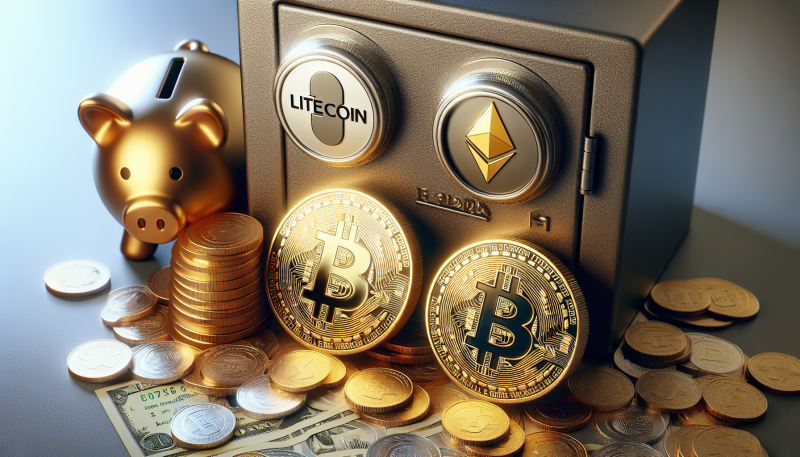
Fidelity has launched a new crypto IRA that includes Litecoin, Bitcoin, and Ethereum, allowing users to invest in these cryptocurrencies without any fees. This development comes amid growing demand for tax-advantaged crypto investment options. Although the initial market reaction saw Litecoin peak at $88, it has since experienced only modest gains, reflecting a “sell-the-news” sentiment among investors.
Who does this affect?
The launch of Fidelity’s crypto IRA primarily affects retail investors looking for tax-advantaged ways to invest in cryptocurrencies. Financial advisors might also be impacted as they consider adding crypto-based products to client portfolios, especially post-election when interest in such investments increases. Fidelity’s offering is particularly significant for Litecoin, which is now part of this accessible investment option, potentially increasing its exposure among investors.
Why does this matter?
Fidelity’s crypto IRA could significantly impact the cryptocurrency market by channeling more retail investment into digital assets like Litecoin, Bitcoin, and Ethereum. The introduction of this product might help stabilize retail liquidity, which is currently thin under market uncertainty and broader economic challenges. If successful, this increased demand could buffer issues stemming from bearish sentiments and global economic turmoil, affecting overall crypto market dynamics positively.
Velora, formerly known as ParaSwap, has launched a new platform with an upgraded system called Delta v2.5. This rebranding follows closely after a DAO vote about returning fees to Bybit from exchanges involved in a hack by the Lazarus Group. Velora’s new model focuses on improving trade speed, flexibility, and cross-chain functionality with features for advanced traders.
Who does this affect?
The rebranding to Velora affects current users of ParaSwap as well as advanced traders seeking efficient blockchain transactions. Its updates target developers and traders who need faster transactions and more sophisticated trading options. The changes also impact DAO members investing in governance decisions and anyone linked to the decentralized finance ecosystem.
Why does this matter?
This rebrand is significant in the DeFi market as Velora aims to overcome existing limitations in DEX aggregation with its innovative technology. By enhancing speed and functionality, Velora seeks to capture a larger market share, potentially disrupting competitors relying on outdated models. It marks a substantial shift in how DeFi platforms may operate in the future, focusing on user empowerment and cross-chain interoperability.
PayPal has expanded its digital asset services by adding support for Solana (SOL) and Chainlink (LINK) in the U.S. and its territories. Users can now buy, sell, hold, and transfer these cryptocurrencies directly through PayPal. This is a significant addition to PayPal’s existing crypto offerings, which previously included Bitcoin, Ethereum, Litecoin, and Bitcoin Cash.
Who does this affect?
This change primarily impacts PayPal users in the United States and its territories who are interested in cryptocurrency. It provides them with easier access to Solana and Chainlink without needing third-party services. Additionally, it benefits the broader cryptocurrency community by increasing liquidity and accessibility through a popular platform like PayPal.
Why does this matter?
This development could have a substantial impact on the market by potentially increasing the demand for Solana and Chainlink. Greater accessibility through PayPal, a major financial platform, suggests growing institutional acceptance and integration of crypto assets. It also indicates a shift in the regulatory landscape, as more platforms feel secure enough to expand their cryptocurrency offerings despite past scrutiny.
The cryptocurrency market experienced a significant downturn with the overall market capitalization dropping by 4.4% in the past 24 hours, reaching $2.74 trillion. Trading volume settled at $153 billion, reminiscent of figures prior to this latest market decline. Notably, most top coins are in the red, with Solana and Dogecoin seeing notable decreases, while Bitcoin and Ethereum also fell in value.
Who does this affect?
This downturn affects crypto investors and traders who are seeing losses across most digital assets today. Developers and projects tied to the affected cryptocurrencies may also face challenges due to reduced investor optimism and potential declines in their ecosystems. Additionally, individuals involved in crypto-based financial products or lending platforms might experience increased volatility and risk.
Why does this matter?
This market dip may lead to broader implications for the cryptocurrency market, potentially affecting investor confidence and risk appetite. It could influence decisions around funding and project development, particularly as capital may become more conservative in light of unpredictable market conditions. Furthermore, it could impact the future trajectory of cryptocurrency prices and adoption if the trend continues.
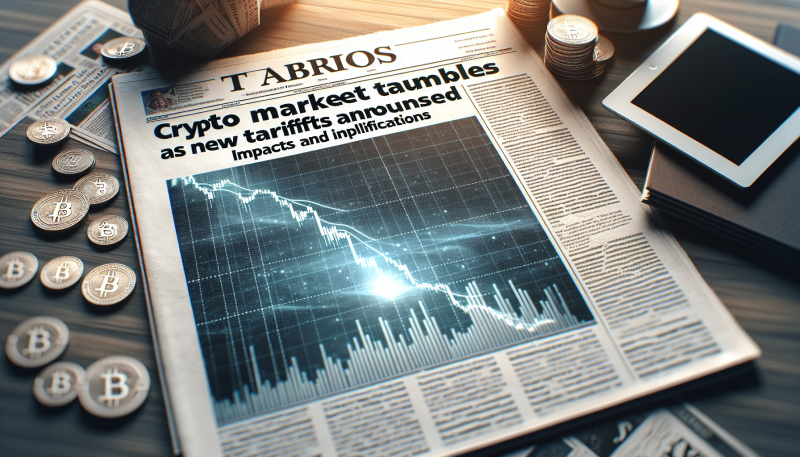
The crypto market experienced a significant downturn coinciding with Donald Trump’s announcement of new tariffs. These tariffs include a flat 10% tax on all countries exporting goods to the U.S., with some facing even higher rates. This policy has led to fears of increased inflation and a potential recession, affecting global markets and causing sharp declines in major indices.
Who does this affect?
The new tariffs impact a wide range of stakeholders, including international exporters to the U.S., American consumers, and global financial markets. Investors in cryptocurrencies have also been affected, as the news caused Bitcoin and other digital currencies to drop in value. It further extends to tech companies, as their stocks have seen significant losses due to uncertainties about future costs and revenues.
Why does this matter?
This development is critical because it has introduced volatility and uncertainty into both traditional and cryptocurrency markets. The tariffs could weaken the U.S. dollar, which may make Bitcoin more appealing as a hedge, although short-term fears are causing sell-offs. Such economic turbulence can influence investment strategies, interest rates, and ultimately, global economic stability, suggesting a potentially turbulent period ahead for market participants.
The U.S. House Financial Services Committee has passed H.R. 1919, known as the Anti-CBDC Surveillance State Act. This bill aims to prevent the Federal Reserve from issuing a central bank digital currency (CBDC) directly to individuals. The vote by the committee was 27-22, reflecting divisions in Congress over digital currencies.
Who does this affect?
This legislative move primarily affects policymakers, financial institutions, and individuals concerned about digital currency regulations. House Majority Whip Tom Emmer, who proposed the bill, represents those fearing increased government surveillance through CBDCs. It also impacts the Federal Reserve’s deliberations on potential digital dollar implementation.
Why does this matter?
The passing of this bill could significantly influence the future landscape of digital assets and financial privacy in the U.S. It emphasizes the market’s split between CBDCs and stablecoin regulation, potentially hindering the federal adoption of a digital dollar. Globally, it might encourage other countries to reassess their CBDC plans amidst growing privacy concerns and regulatory challenges.