Author: itsmikeski@gmail.com

  • USDC Stablecoin Reaches $60 Billion Market Cap, Signaling Growth in Digital Finance

    USDC Stablecoin Reaches $60 Billion Market Cap, Signaling Growth in Digital Finance

    What happened?

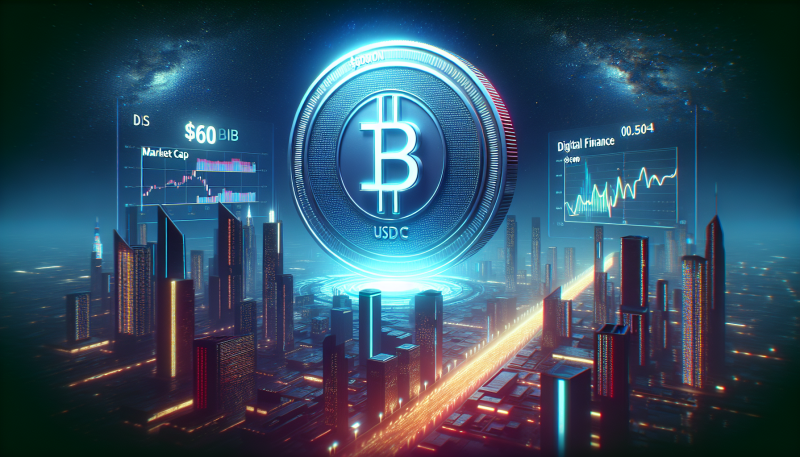
    Circle’s USDC stablecoin reached a new milestone by achieving a $60 billion market cap in March 2025, driven by significant capital inflows and rising demand on major blockchains. This growth has solidified USDC’s strong position within the stablecoin ecosystem, even as Tether (USDT) maintains the largest market share overall. The increase is primarily attributed to USDC’s expanded usage on blockchains like Solana, where it represents a significant majority of the stablecoin market.

    Who does this affect?

    This development impacts a wide range of stakeholders within the financial and cryptocurrency sectors, including blockchain developers, investors, and regulatory bodies. Developers benefit from USDC’s integration into more networks, enabling more use cases for decentralized apps. Investors can see shifts in market dynamics, while regulators are paying closer attention to stablecoins as they become integral to digital finance.

    Why does this matter?

    The surge in USDC’s market cap signifies a growing trust in digital dollars and hints at an increasing acceptance of stablecoins in global financial systems. It indicates a shift in market dynamics, potentially challenging Tether’s dominance while drawing more institutional interest in blockchain technology. As stablecoin adoption expands, it could significantly reshape payment and financial markets, prompting businesses and regulators to adapt to these evolving trends.


  • Google Cloud Joins Injective as Validator to Enhance Blockchain Ecosystem

    Google Cloud Joins Injective as Validator to Enhance Blockchain Ecosystem

    What happened?

    Injective, an interoperable Layer-1 blockchain, announced that Google Cloud is now a validator on its network. This partnership aims to enhance the network’s security, reliability, and credibility by having Google Cloud help secure the network, verify transactions, and support the ecosystem’s decentralization. Additionally, Injective will leverage Google Cloud’s protocol accelerator tools to improve the developer experience on its platform.

    Who does this affect?

    This collaboration primarily impacts developers working in the blockchain space, offering them better infrastructure and tools to build decentralized applications (dApps) on the Injective network. It also benefits businesses looking to utilize blockchain technology for tokenization and other enterprise use cases. The broader blockchain community may see increased adoption and innovation as more developers and enterprises are attracted to the Injective ecosystem via Google Cloud’s capabilities.

    Why does this matter?

    The partnership signifies a growing trend of major tech companies like Google Cloud embracing blockchain technologies, which could drive wider adoption across industries. As Injective integrates with Google Cloud, it gains institution-ready infrastructure, potentially increasing its appeal to financial markets and enterprises. The positive response in market value, with the INJ coin gaining 4.1% in a day, highlights investor confidence in the potential growth and increased use of the network.

  • Cryptocurrency Market Update: Ethereum Poised for Growth Amid Mixed Trading Day and DeFi Expansion in Latin America

    Cryptocurrency Market Update: Ethereum Poised for Growth Amid Mixed Trading Day and DeFi Expansion in Latin America

    “`html

    What happened?

    The cryptocurrency market is experiencing a mixed day with slight overall declines, but some coins like Movement (MOVE), Shiba Inu (SHIB), and Pepe (PEPE) are seeing double-digit gains. Despite the market cap drop of 1.3% to $2.99 trillion, top performers and traders anticipate potential growth for Ethereum (ETH) due to institutional interest and upcoming upgrades. Meanwhile, TruBit’s integration with Morpho opens new opportunities for high-yield DeFi access in Latin America.

    Who does this affect?

    This development affects crypto traders, investors, and enthusiasts, particularly those holding or interested in Ethereum, as it hints at possible future price movements. The integration of TruBit with Morpho significantly impacts Latin American users by providing them access to high-yield DeFi opportunities without needing prior knowledge of decentralized finance. Additionally, Bitget’s sponsorship of Flávio Sampaio in the Porsche Cup Brasil targets both motorsports fans and crypto enthusiasts, creating an intersection of interest between these communities.

    Why does this matter?

    The impact on the market can be significant as the anticipation of Ethereum’s explosive movement could drive speculative trading, increasing its demand and potentially affecting its price trajectory. TruBit’s move to democratize DeFi accessibility in Latin America may lead to increased participation in decentralized finance platforms, influencing the broader adoption and integration of cryptocurrencies in the region. Furthermore, Bitget’s engagement in supportive activities like sponsoring a Porsche Cup driver underscores the growing influence and mainstream acceptance of crypto exchanges in traditional domains, boosting visibility and brand recognition.

    “`

  • Pepeto: A Game-Changer in the Cryptocurrency Market with Zero-Fee Trading and High Staking Rewards

    Pepeto: A Game-Changer in the Cryptocurrency Market with Zero-Fee Trading and High Staking Rewards

    “`html

    What happened?

    Pepeto, a meme coin featuring a frog, has gained significant attention by raising over $5 million in its presale phase. Unlike typical meme coins that rely solely on viral appeal, Pepeto distinguishes itself with unique features like zero-fee trading and a 302% staking reward. This approach aims to address common pain points in the cryptocurrency market, appealing to both newcomers and seasoned traders.

    Who does this affect?

    The launch of Pepeto primarily affects active cryptocurrency traders and investors, especially those involved in frequent trading or interested in high staking rewards. The zero-fee trading model appeals to day traders looking to maximize profits without incurring high transaction costs. Additionally, the innovative cross-chain bridge technology simplifies asset transfers for everyday users, potentially broadening the market reach beyond tech-savvy individuals.

    Why does this matter?

    Pepeto’s emergence could significantly impact the cryptocurrency market by challenging the status quo of traditional fee structures on exchanges. Its zero-fee trading and high staking rewards present a new model that might attract a large user base, potentially influencing market dynamics and competition. The project’s success could inspire similar innovations across the industry, potentially leading to lower fees and more user-friendly experiences in crypto trading and investing.

    “`

  • Cardano Price Surge: Key Resistance Breakthrough and Market Implications

    Cardano Price Surge: Key Resistance Breakthrough and Market Implications

    What happened?

    Cardano (ADA) saw a price increase of 8% since March 23, climbing back to the $0.76 level, just below its March 3 high of $1.18. This rise was fueled by speculation regarding potential political connections and improvements in its DeFi infrastructure. The ADA’s recent momentum indicates it might be poised for a breakout past a key resistance zone that has persisted for over two weeks.

    Who does this affect?

    The developments around Cardano impact investors, traders, and stakeholders in the cryptocurrency market who hold or are interested in ADA. It also affects those participating in Cardano’s decentralized finance ecosystem, especially users of the Indigo protocol offering attractive returns. Additionally, entities like World Liberty Financial and others linked to the upcoming DC Blockchain Summit may see increased attention due to Cardano founder Charles Hoskinson’s involvement.

    Why does this matter?

    This matters because a significant movement in Cardano’s price can influence overall market sentiment and investor behavior in the cryptocurrency space. If Cardano breaks through its resistance levels, it might attract more capital and trading volume, potentially lifting ADA’s price further. Such positive shifts could bolster confidence in Cardano’s long-term scalability and utility, thus impacting its competitive position against other cryptocurrencies like Solana.

  • Nubank Expands Cryptocurrency Offerings with Four New Altcoins for 100 Million Clients in Brazil

    Nubank Expands Cryptocurrency Offerings with Four New Altcoins for 100 Million Clients in Brazil

    What happened?

    Nubank, a major digital bank in Latin America supported by Warren Buffett’s Berkshire Hathaway, has added four new cryptocurrencies to its platform: Cardano (ADA), Near Protocol (NEAR), Cosmos (ATOM), and Algorand (ALGO). With this expansion, Nubank now offers 20 different digital assets to its 100 million clients in Brazil. This move follows Nubank’s increasing involvement in the crypto sector, which started in 2022, and reflects its rapid revenue growth from $245 million in 2021 to nearly $3 billion projected by the end of 2024.

    Who does this affect?

    This development primarily affects Nubank’s large customer base in Brazil, who now have access to a broader range of cryptocurrency investment options. It also impacts the cryptocurrency market as the inclusion of these altcoins could drive increased interest and trading volume for ADA, NEAR, ATOM, and ALGO. Additionally, it affects investors and stakeholders in Nubank, including Warren Buffett’s Berkshire Hathaway, by potentially increasing the bank’s value and financial performance.

    Why does this matter?

    The expansion of Nubank’s cryptocurrency offerings underscores the growing importance of digital assets in the global financial landscape. By introducing more cryptocurrencies, Nubank is positioning itself to capture a larger share of the burgeoning crypto market, which could lead to significant profits and competitive advantage. This move could influence other financial institutions to broaden their crypto portfolios, further legitimizing cryptocurrencies as a viable investment option and potentially boosting the market capitalization of the newly added coins.

  • CryptoSphere 5.0 Conference: Uniting Blockchain and Cryptocurrency Enthusiasts in Wrocław, Poland

    CryptoSphere 5.0 Conference: Uniting Blockchain and Cryptocurrency Enthusiasts in Wrocław, Poland

    What happened?

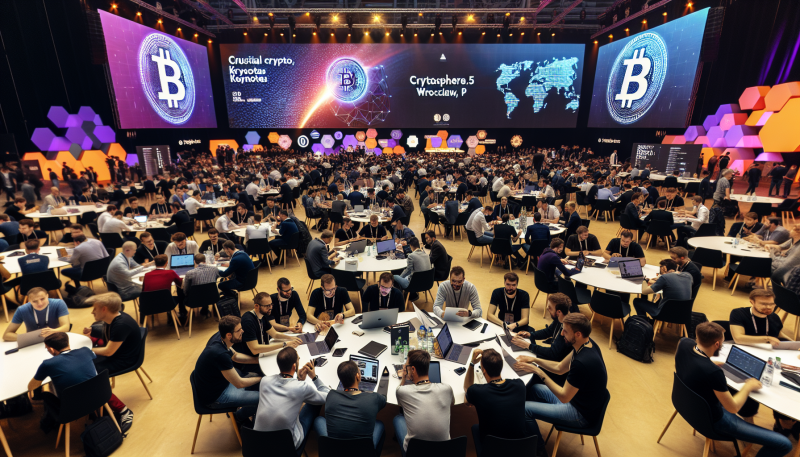
    The 5th edition of the CryptoSphere conference is scheduled to take place on April 26, 2025, in Wrocław, Poland. This event will be a hub for discussions on the latest trends in blockchain, AI, cryptocurrencies, and their applications in institutions. The conference aims to facilitate the exchange of knowledge and ideas to build a future based on modern solutions.

    Who does this affect?

    The CryptoSphere 5.0 conference will attract cryptocurrency and blockchain technology enthusiasts, investors, and professionals from around Poland and globally. It’s a key opportunity for those interested in digital assets and decentralized finance to meet, network, and access valuable educational content. The event is also open to anyone curious about new technologies and current cryptocurrency trends.

    Why does this matter?

    The CryptoSphere conference plays a significant role in the market by fostering innovation and collaboration in the blockchain and cryptocurrency sectors. It provides a platform for sharing first-hand information and insights that can influence market trends and investment decisions. Participants can gain early access to emerging technologies and ideas that could potentially shape the future of digital finance.

  • U.S. Establishes Strategic Bitcoin Reserve to Boost Investor Confidence and Legitimacy

    U.S. Establishes Strategic Bitcoin Reserve to Boost Investor Confidence and Legitimacy

    What happened?

    President Donald Trump signed an executive order to create a U.S. Strategic Bitcoin Reserve, seizing approximately 200,000 BTC in legal processes. This move is seen as eliminating the major threat of potential government crackdowns on Bitcoin. The executive order also instructs exploring budget-neutral strategies to acquire more Bitcoin without taxpayer costs.

    Who does this affect?

    This development affects Bitcoin investors, financial institutions, and states considering their own Bitcoin reserves. Institutional investors who were worried about regulatory risks now see Bitcoin as a safer investment. Additionally, state governments across the U.S. are introducing bills to capitalize on this opportunity by establishing their own Bitcoin reserves.

    Why does this matter?

    The establishment of a U.S. Strategic Bitcoin Reserve legitimizes Bitcoin as a credible financial asset and boosts investor confidence. This could lead to increased institutional investment and potentially stabilize Bitcoin prices. The move may impact global markets by reinforcing the view of Bitcoin as a hedge against currency fluctuations, particularly if the dollar’s dominance is challenged.

  • Abracadabra Money Suffers $13 Million Security Breach, Raising Concerns in DeFi Community

    Abracadabra Money Suffers $13 Million Security Breach, Raising Concerns in DeFi Community

    What happened?

    Abracadabra Money, a decentralized lending platform, experienced a major security breach that resulted in the loss of $13 million worth of its Magic Internet Money (MIM) stablecoin. The attack targeted specific products within their ecosystem and was quickly detected by PeckShield, a blockchain security firm. This incident is the second significant exploit for Abracadabra this year, following a previous hack in January.

    Who does this affect?

    This breach directly impacts users and stakeholders of Abracadabra Money, particularly those holding funds within the affected platforms or relying on MIM’s stability. The broader DeFi community also feels the effects, as such incidents can undermine trust in decentralized finance ecosystems. The incident raises concerns for investors and developers about the security measures in place within these platforms.

    Why does this matter?

    The breach has significant market implications, as it highlights ongoing vulnerabilities in DeFi platforms, potentially affecting investor confidence and leading to increased scrutiny of security practices. Abracadabra’s efforts to cover 50% of the losses using their DAO treasury indicate resilience and commitment to stabilizing their platform, which could influence market perceptions positively. However, repeated breaches may lead to regulatory interest and call for more robust risk management strategies across similar platforms.

  • South Korea Blocks Access to 17 Unregistered Crypto Apps in Regulatory Crackdown

    South Korea Blocks Access to 17 Unregistered Crypto Apps in Regulatory Crackdown

    What happened?

    South Korea’s Financial Intelligence Unit (FIU) has compelled Google LLC to block 17 unregistered crypto apps like KuCoin and MEXC from being accessed within the country. From March 25, 2025, these apps are inaccessible to new users on Google Play, and existing users will not receive updates. This action is part of a crackdown according to the Specific Financial Transaction Information Reporting and Use Act against foreign exchanges operating without proper registration.

    Who does this affect?

    This decision impacts users in South Korea who use or intend to use these unregistered crypto exchanges. It also affects foreign crypto exchanges that offer services in South Korea without registration, as they face penalties and restrictions. The enforcement affects both new and existing customers of the affected crypto platforms, limiting their ability to install or update related applications.

    Why does this matter?

    This move showcases South Korea’s expanding regulatory influence over the crypto market, seeking to regulate and secure the trading environment while preventing illegal financial activities. The immediate market impact includes a minor price drop in tokens like the KuCoin Token (KCS), highlighting investor sensitivity to regulatory actions. The broader implications could force crypto exchanges to tighten compliance efforts and possibly reduce their market presence if they do not adhere to local regulations.