Author: itsmikeski@gmail.com

  • Bitcoin Hits New All-Time High Before Tariff Shock Triggers Market Sell-Off and Potential Altcoin Rally

    Bitcoin Hits New All-Time High Before Tariff Shock Triggers Market Sell-Off and Potential Altcoin Rally

    What happened?

    Bitcoin blasted to a new all-time high of $126,080 and many altcoins and meme coins hit fresh highs in 2025. Then Trump’s announcement of 100% tariffs on China sparked a rapid market-wide sell-off that flipped sentiment to red almost instantly. Analysts call the pullback a healthy reset that flushed out over-leveraged traders and left some projects — like XRP, Pi, PEPE and Bitcoin Hyper — positioned for the next leg up.

    Who does this affect?

    Short-term traders and anyone using leverage were hit hardest by the sudden tariff-driven crash and sharp price swings. Long-term investors, retail adopters (like Pi’s mobile miners), meme-coin communities, and presale backers of projects like Bitcoin Hyper now face a mix of risk and opportunity. Banks, payment firms, and crypto funds watching XRP, stablecoins, and ETF flows could also see meaningful shifts in capital and strategy.

    Why does this matter?

    The tariff shock created a risk-off environment that can quickly erase speculative gains but also creates lower entry points and helps purge unstable positions from the market. If fundamentals strengthen — for example XRP winning more payment use, Pi moving toward mainnet, or HYPER delivering its layer‑2 features — capital could rotate into these assets and power a significant altcoin rally. In short, macro-driven volatility means big moves both ways, so today’s dips could become tomorrow’s outsized gains if bullish catalysts return.


  • Dan Morehead backs Solana as market consolidates around Bitcoin, Ethereum and Solana

    Dan Morehead backs Solana as market consolidates around Bitcoin, Ethereum and Solana

    What happened?

    Dan Morehead, CEO of Pantera Capital, publicly backed Solana and said the market will likely consolidate around Bitcoin, Ethereum, and Solana. Pantera had a big year with several IPOs and a $500 million Solana treasury vehicle, boosting its influence. Morehead also shared bullish long-term targets and Solana has shown technical strength, reclaiming its 200-day EMA and bouncing off key support.

    Who does this affect?

    This matters to crypto investors and traders who track institutional moves and price catalysts, since big fund support often drives flows and sentiment. It also affects institutions, VCs, and developers looking for high-performance chains to build on, plus early-stage projects and presales that could ride Solana’s momentum. Retail holders and altcoin investors should pay attention because consolidation toward a few chains can shift liquidity and opportunity across the market.

    Why does this matter?

    Institutional backing and technical strength can push more capital into SOL, increasing the odds of the price hitting near-term targets like $240 and, on a decisive break, testing $400. If the market really consolidates around three chains, liquidity and value could concentrate in Bitcoin, Ethereum, and Solana, squeezing smaller networks and changing where traders and builders focus. That combination of money flows, improved sentiment, and clear chart support raises upside potential but also means higher volatility and bigger bets for market participants.

  • XRP, Shiba Inu and Solana Named Top Bounce Candidates After Flash Crash as AI Forecasts and ETF Momentum Signal Potential Rally

    XRP, Shiba Inu and Solana Named Top Bounce Candidates After Flash Crash as AI Forecasts and ETF Momentum Signal Potential Rally

    What happened? Claude AI and analysts flagged XRP, Shiba Inu, and Solana as top bounce candidates after a sharp flash crash.

    Claude projected big year‑end moves — XRP potentially up to $5–$20, SHIB aiming for as much as 10× gains, and Solana forecast to climb significantly from current levels. The recent crash followed a volatile stretch where Bitcoin hit a new high then plunged after a surprise tariff announcement, which sparked one of the fastest reversals in crypto. Traders and analysts call the drop a “healthy reset,” pointing to bullish technical patterns, Ripple’s legal win, seasonal strength, and possible ETF approvals as reasons a rally could follow.

    Who does this affect? Retail traders, institutions, and the specific projects named are the most impacted.

    Retail investors and short‑term traders face big upside potential but also heightened risk and volatility if these coins run hard or fail to break key resistances. Institutional players and asset managers could change the game if ETFs for Solana or broader approvals bring large inflows and onboarding of new capital. The projects themselves — Ripple/XRP, Shiba Inu/Shibarium, Solana and new meme presales like Maxi Doge — stand to gain visibility, partnerships, and ecosystem growth if price and adoption pick up.

    Why does this matter? Because the combinations of ETF momentum, seasonality, and big AI predictions could shift where money flows in crypto markets.

    If ETF approvals and renewed retail enthusiasm line up, expect meaningful capital inflows that lift prices, boost liquidity, and redraw market leadership among altcoins. That can increase overall market volatility and create big winners and losers quickly, affecting leverage, derivatives, and DeFi positions across the board. On the flip side, if expectations aren’t met, the same dynamics can accelerate sell‑offs, so regulatory clarity and risk management will largely determine the real market impact.

  • US Seizes 127,000 Bitcoin Tied to Global Pig-Butchering Scam, Sanctions Prince Holding Group and Chairman Chen Zhi

    US Seizes 127,000 Bitcoin Tied to Global Pig-Butchering Scam, Sanctions Prince Holding Group and Chairman Chen Zhi

    What happened? The U.S. moved to seize 127,000 Bitcoin tied to a massive international “pig butchering” scam run by Prince Holding Group and its chairman Chen Zhi.

    Federal prosecutors and financial regulators unsealed filings seeking forfeiture of 127,000 Bitcoin after tracing billions laundered through shell companies, exchanges, and mining operations linked to Prince Holding Group. Authorities say the network ran long‑term “pig butchering” scams that lured victims to Cambodia, forced them to run scams under duress, and funneled proceeds back to private wallets. OFAC and FinCEN also announced sanctions and actions against scores of people and firms tied to the operation and related laundering networks.

    Who does this affect? Victims, crypto platforms, and governments on multiple continents are all being pulled into the fallout from the seizures and sanctions.

    Individual investors who lost money to the scams may get some recovery if assets are forfeited, but many victims face lasting financial and personal harm. Crypto exchanges, stablecoin issuers, and blockchain tracing firms are being drawn into investigations and must step up AML controls and cooperation with law enforcement. Governments and human rights groups are also affected because the case highlights the intersection of crypto fraud and human trafficking, driving more cross‑border enforcement and scrutiny.

    Why does this matter? The action matters for markets because it raises the bar on enforcement, could influence Bitcoin liquidity, and changes how firms and investors view regulatory risk.

    Big‑ticket seizures and coordinated sanctions signal tougher global enforcement that will likely increase compliance costs and oversight for exchanges, custodians, and payment services. Moving or auctioning such a large stash of Bitcoin could create short‑term selling or volatility, while widespread freezes and better tracing could reduce illicit flows and improve long‑term trust. In short, expect more market volatility in the near term but stronger regulatory pressure and industry cooperation that could help mainstream adoption over time.

  • Pixnapping: New Android side-channel attack steals crypto seed phrases and 2FA codes

    Pixnapping: New Android side-channel attack steals crypto seed phrases and 2FA codes

    What happened?

    Researchers at Carnegie Mellon discovered a new Android side‑channel attack called Pixnapping that can steal on‑screen secrets like crypto seed phrases and 2FA codes without needing special permissions. It abuses GPU timing, the window blur API and VSync callbacks to reconstruct pixels and was shown to work on Pixel 6–9 and Galaxy S25 devices running Android 13–16. Google issued a partial patch for CVE‑2025‑48561 but the researchers found a workaround and a second fix is expected in December.

    Who does this affect?

    Any Android user who installs apps is potentially at risk, but the biggest targets are people who use crypto wallets, authenticator apps, email, messaging and payment apps because those display sensitive info on screen. The attack was demonstrated on recent Google and Samsung flagships, and researchers warn many other Android devices may be vulnerable. Malware authors can combine Pixnapping with phishing and trojans, putting individual users, app developers and security teams on the hook.

    Why does this matter?

    This undermines confidence in on‑device self‑custody and is likely to push more users toward hardware wallets or custodial services, boosting demand for secure storage solutions. Device makers, wallet providers and exchanges may face reputational hits and higher security and compliance costs, which will drive investment into security tools, audits and insurance. In the near term the news could dent trust in mobile crypto apps and increase volatility for projects tied to self‑custody, while accelerating long‑term spending on security and centralized alternatives.

  • Scammers Buy Ads in Monad Telegram Channel to Promote Fake Airdrop Ahead of MON Token Launch

    Scammers Buy Ads in Monad Telegram Channel to Promote Fake Airdrop Ahead of MON Token Launch

    What happened?

    Scammers bought ads that appeared inside Monad’s official Telegram announcement channel and linked to fake airdrop claim portals just hours before the MON token launch. Monad co-founder Keone Hon warned users, the team is working to remove the ads, and they confirmed the only legitimate claim link is claim.monad.xyz. The airdrop portal opens at 1:00 pm UTC and runs for three weeks, so the timing made the scam especially risky for users looking to claim tokens.

    Who does this affect?

    This directly affects Monad community members and anyone planning to claim MON tokens, who could be tricked into phishing sites or malware. It also threatens other crypto users and projects because Telegram’s ad system can push malicious content into verified channels, meaning similar token launches could be targeted. Traders and speculators on platforms like Hyperliquid, where MON futures are already trading, may face price swings or losses if the airdrop is disrupted or confidence drops.

    Why does this matter?

    Marketwise, the incident undermines trust and could make people hesitant to participate in the airdrop or engage with the Monad ecosystem, reducing initial demand for MON. With MON futures implying about a $7 billion FDV, any loss of confidence or actual theft could increase volatility, trigger sell pressure, and drain liquidity around the token. It also spotlights platform-level risks that could lead to tighter regulation, higher security costs, and more cautious capital flows across crypto markets.

  • Elon Musk Returns to Pro-Bitcoin Stance, Calls Bitcoin Energy Money and Sparks Price Rally

    Elon Musk Returns to Pro-Bitcoin Stance, Calls Bitcoin Energy Money and Sparks Price Rally

    What happened?

    Elon Musk publicly returned to pro-Bitcoin comments, calling Bitcoin “energy money” and saying energy can’t be faked like fiat. His tweet came amid a thread about AI driving massive energy needs and governments debasing currency. The remark helped Bitcoin rebound to about $112,000 after a recent liquidation-driven dip.

    Who does this affect?

    Crypto traders and leveraged holders felt the immediate impact as price swings and liquidations reshuffled positions. Bitcoin miners and energy-focused crypto operations get renewed attention since Musk framed Bitcoin’s value around energy consumption. Institutional holders and companies with crypto exposure, like Tesla and SpaceX, also face valuation and narrative shifts from Musk’s stance.

    Why does this matter?

    Market-wise, Musk’s endorsement can spark short-term rallies and sentiment-driven flows, potentially pushing price toward the upper channel near $127k–$128k if momentum holds. Analysts expect a likely downside liquidity sweep to around $107k–$109k before a recovery, with $100k–$103k as a critical support that would invalidate the bullish setup if broken. Concentrated liquidity around $116k–$120k means those levels could be the battleground for the next decisive move in price.

  • Bitcoin in a Liquidity Squeeze: ETFs and Custodians Drain Supply and Increase Volatility

    Bitcoin in a Liquidity Squeeze: ETFs and Custodians Drain Supply and Increase Volatility

    What happened?

    Spot Bitcoin ETFs and large custodial funds have been pulling big chunks of Bitcoin into long-term custody while U.S. government-linked wallets have been quietly moving coins between addresses. Together these flows are noticeably shrinking the amount of Bitcoin available on exchanges and in active circulation. That overlap—strong institutional accumulation alongside opaque public holdings—is changing how price reacts when most available supply is already spoken for.

    Who does this affect?

    Retail and professional investors alike are affected, from day traders who rely on deep order books to institutions that use ETFs for portfolio exposure. ETF holders and fund managers now contend with large custodians like IBIT holding a meaningful share of supply, which changes allocation dynamics. Traders who depend on exchange liquidity face greater risk because government transfers and shrinking float can trigger sudden, larger moves.

    Why does this matter?

    With ETFs soaking up coins and exchange balances dropping, markets are becoming thinner, so price moves can be sharper and more volatile. If government-held coins are ever liquidated, that uncertainty could amplify sell pressure and lead to bigger corrections than in the past. Overall, this makes Bitcoin behave more like a less-liquid asset, so investors need to factor in liquidity risk, timing, and potentially longer holding periods.

  • Solmate’s $50 Million SOL Purchase and Foundation Board Nominations Highlight Rising Institutional Interest in Solana Infrastructure

    Solmate’s $50 Million SOL Purchase and Foundation Board Nominations Highlight Rising Institutional Interest in Solana Infrastructure

    What happened?

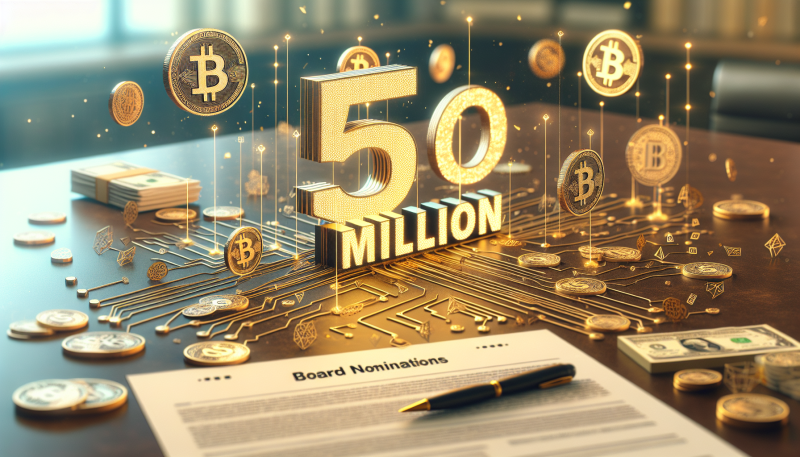
    Solmate Infrastructure bought $50 million worth of SOL at a 15% discount from the Solana Foundation to power its UAE Solana infrastructure, while the Foundation secured the right to nominate up to two board members. Ark Invest also disclosed an 11.5% stake in Solmate, building on earlier PIPE investments. The announcements come amid a broader wave of corporate treasury accumulation in SOL and growing institutional interest in Solana-focused infrastructure.

    Who does this affect?

    This directly affects Solmate, the Solana Foundation, and their investors by shifting token holdings and board influence. It also matters to the wider Solana ecosystem and UAE digital projects that will use the new infrastructure. Retail traders and other institutions could see increased volatility as markets react to concentrated institutional buying and new strategic backers.

    Why does this matter?

    Big purchases like this can shrink available SOL supply and act as price support while signaling stronger institutional confidence, which may boost demand and help the case for spot SOL ETFs. More infrastructure investment and high-profile backers can accelerate adoption and revenue growth across the Solana ecosystem. But concentrated holdings and added governance influence raise concentration and regulatory risks that markets will likely price in, so expect both upside potential and elevated volatility.

  • Three Men Sentenced in UK for Dark-Web Drug Operation Involving Crypto Payments and Postal Shipments

    Three Men Sentenced in UK for Dark-Web Drug Operation Involving Crypto Payments and Postal Shipments

    What happened?

    Three men in the UK were sentenced to a combined 27 years in prison for running a dark‑web drug operation that took orders for class A drugs and shipped them through the postal service. They used cryptocurrency to handle some payments and one of the men was found with crypto and related hardware when arrested. Two pleaded guilty and the third was convicted after a trial.

    Who does this affect?

    This affects the people directly involved and their customers, who now face criminal penalties and disrupted supply chains. It also puts pressure on postal services, law enforcement, and online marketplaces that have to spot and stop this sort of activity. Legitimate crypto users and businesses can be indirectly affected as regulators and platforms respond to the case with tighter controls.

    Why does this matter?

    For markets, cases like this can increase regulatory scrutiny and push exchanges and payment providers to strengthen KYC and compliance, which raises costs for crypto businesses. That can hurt sentiment in the short term while boosting demand for blockchain analytics and compliance services. Overall it doesn’t necessarily move crypto prices by itself, but it shapes the regulatory and business environment investors and companies must operate in.