Category: News

  • SEC’s New Listing Standards Fast-Track Spot Solana ETFs, Signaling Imminent Approval and a Market Shift

    SEC’s New Listing Standards Fast-Track Spot Solana ETFs, Signaling Imminent Approval and a Market Shift

    What happened?

    The SEC’s new generic listing standards and recent S-1 amendments have put spot altcoin ETFs — especially Solana — on a fast track, with analysts like Eric Balchunas saying approval odds look certain. This means the usual 19b-4 clock is less relevant and S-1 filings are the last formal step before a green light. Issuers have already submitted fourth amendments, so market watchers think an approval could come very soon.

    Who does this affect?

    Institutional investors, retail traders, and asset managers who want TradFi exposure to crypto would suddenly have a simple way to buy SOL and similar tokens through ETFs. Solana holders and projects in its ecosystem could see big demand and price gains, while exchanges, market makers, and trading tools would handle new flows and competition. ETF issuers and crypto-focused platforms (including trading-bot services) also stand to benefit from increased activity and product demand.

    Why does this matter?

    Approval of spot SOL ETFs could drive major inflows that fuel a technical breakout — analysts point to a key $300 level, a potential 130% move to $500, and even higher upside if broader market conditions turn favorable. Early approvals give Solana a first-mover advantage and concentrated demand, but the new framework could also enable thousands of crypto ETFs over time and dilute those effects. Overall, ETFs would likely boost institutional participation, liquidity, and volatility across altcoins, reshaping how traders and funds position for big moves.


  • New York Proposes Tiered Electricity Tax on Crypto Mining, With Renewable-Energy Exemptions

    New York Proposes Tiered Electricity Tax on Crypto Mining, With Renewable-Energy Exemptions

    What happened?

    New York State Senator Liz Krueger introduced a bill to tax crypto mining operations based on how much electricity they use, with tiered rates up to 5¢ per kWh. The proposal exempts miners using less than 2.25 million kWh a year and operations powered entirely by renewable energy. It arrives as mining costs and energy prices have surged, putting pressure on miners’ profit margins.

    Who does this affect?

    Big, power-hungry Bitcoin miners in New York would be hit hardest, while small operators and those running on 100% renewables would be spared. Utilities and local energy markets could see shifts in demand and revenue as miners respond. Some firms may relocate to cheaper states, invest in clean power, or consolidate with larger operators that can absorb the added cost.

    Why does this matter?

    Higher energy taxes could squeeze mining profits, prompt an outflow of capacity from New York, and reduce local hashpower, which affects the broader crypto ecosystem. The rules would likely give an edge to large miners with access to renewables or lower-cost power, while smaller players face tougher economics and possible closure. Overall, expect shifts in investment, equipment sales, regional energy demand, and potential volatility in miner revenues that ripple through crypto and energy markets.

  • SEC Delays Canary Capital’s Spot Litecoin ETF, Stalling Approvals and Market Access

    SEC Delays Canary Capital’s Spot Litecoin ETF, Stalling Approvals and Market Access

    What happened?

    The SEC missed its deadline to act on Canary Capital’s proposed spot Litecoin ETF, leaving the application in limbo. The firm had withdrawn a 19b-4 filing and filed an S-1 after the SEC urged that shift, which muddles traditional review timelines. A potential federal government shutdown and the agency’s limited operations have further slowed or paused reviews of new ETF registration statements.

    Who does this affect?

    It directly impacts Canary Capital and investors waiting for regulated, spot Litecoin exposure in the U.S. and also slows down other asset managers who are converting 19b-4s to S-1s for altcoin ETFs. More broadly, it affects traders, crypto funds, and market makers who were expecting clearer paths for altcoin ETF approvals and the inflows they bring.

    Why does this matter?

    Delays increase uncertainty and could slow institutional and retail inflows that have already poured billions into Bitcoin and Ethereum ETFs, reducing near-term demand for Litecoin and other altcoins. Prolonged limbo may push listings or investor interest to non-U.S. venues, raise short-term volatility, and make price discovery harder for these tokens. While new SEC rules like Rule 6c-11 could eventually speed approvals, the current pause creates market friction and delays broader investor access.

  • Nomura’s Laser Seeks Institutional Crypto Trading License in Japan Signaling Growing Adoption

    Nomura’s Laser Seeks Institutional Crypto Trading License in Japan Signaling Growing Adoption

    What happened?

    Nomura’s crypto arm Laser is applying for a license to offer institutional crypto trading services in Japan and is in pre-consultation with the Financial Services Agency. The unit, which already has a Dubai license and a Japanese subsidiary, aims to act as a broker-dealer for both traditional financial institutions and crypto firms. The move comes as Japan’s crypto trading value has surged, roughly doubling to ¥33.7 trillion in the first seven months of the year.

    Who does this affect?

    Institutional investors and traditional financial firms in Japan could gain new access to regulated crypto trading and custody services. Crypto exchanges, fintechs, and younger retail investors may face more competition and a wider set of institutional-grade products. Nomura and its shareholders are also affected because Laser’s past losses mean the expansion could influence the bank’s near-term profitability even as it chases growth.

    Why does this matter?

    More activity from a major bank’s crypto unit signals accelerating institutional adoption, which should boost liquidity and trade volumes in Japan’s market. That can speed the rollout of new services like using crypto as collateral and encourage more licensed stablecoins and fund products. At the same time, increased competition and tighter regulatory scrutiny could squeeze margins and create challenges for firms trying to turn a profit even as the market expands.

  • Bitcoin tops $120,000 as Uptober rally extends into October amid regulatory uncertainty

    Bitcoin tops $120,000 as Uptober rally extends into October amid regulatory uncertainty

    What happened? Bitcoin topped $120,000 as an Uptober rally extended into October.

    Bitcoin surged past $120,000 after rebounding from an earlier dip to about $114,000, continuing a strong run that began in September. Major altcoins also rose—Ether, XRP and Solana gained while the total crypto market cap climbed roughly 2% to about $4.2 trillion. The move held up even with a US government shutdown underway, as traders leaned on dip buying, derivatives flows and typical Q4 repositioning.

    Who does this affect? Traders, funds and everyday crypto holders are the most directly impacted.

    Derivatives desks and spot traders see brisk activity around round numbers, which can boost short-term volume and volatility. Institutional funds and year-end rebalancing strategies may increase inflows, while retail investors can experience FOMO or sharper swings. Regulators, projects and service providers are also affected because a US shutdown could slow approvals and guidance, influencing institutional participation and product rollouts.

    Why does this matter? The rally can reshape market positioning, influence prices and change capital flows.

    A sustained break above $120k would reinforce bullish sentiment and likely draw more capital into crypto funds, which can lift prices broadly across the market. Increased derivatives activity and year-end flow dynamics raise the chance of heightened volatility, making support levels like $120k important to watch. Meanwhile, regulatory delays from the shutdown add uncertainty—potentially slowing formal adoption paths like ETF approvals while nudging some users toward crypto-native solutions, both of which affect market valuations.

  • Crypto Markets Rally in Uptober as Bitcoin Tops $121,000 and Major Tokens Hit New Highs

    Crypto Markets Rally in Uptober as Bitcoin Tops $121,000 and Major Tokens Hit New Highs

    What happened?

    Crypto markets rallied even while the U.S. government was shut down, with Bitcoin briefly topping $121,000 and major tokens like BNB hitting an all-time high above $1,000. Ethereum climbed toward $4,400 and Solana pushed past $224 as the so-called “Uptober” momentum drove buying across the sector. Overall the session showed strong bullish sentiment despite macro uncertainty.

    Who does this affect?

    This move matters most to crypto investors and traders who saw big gains and heightened volatility in their portfolios. Institutional investors and funds watching for macro triggers may restart allocations, while retail traders could face increased FOMO and risk. Exchanges, token projects, and on-chain services also benefit from higher volumes and attention.

    Why does this matter?

    The surge can pull more capital into crypto and push market valuations higher, changing risk pricing across digital assets. Higher prices and volumes increase liquidity but also raise the chance of sharp corrections if sentiment shifts, so risk management becomes more important. If the rally continues it could accelerate institutional adoption and influence how traditional markets view crypto as part of broader risk-on flows.

  • Bitcoin surges to $120,132, a seven-week high, as markets weigh Fed easing and CME 24/7 futures

    Bitcoin surges to $120,132, a seven-week high, as markets weigh Fed easing and CME 24/7 futures

    What happened?

    Bitcoin jumped to $120,132, its highest in seven weeks, rising about 4% in 24 hours and breaking key resistance around $117,500. The surge pushed Bitcoin’s market cap to roughly $2.37 trillion and helped the overall crypto market swell to about $4.16 trillion, while major altcoins like Ethereum, Solana, Cardano, and Dogecoin climbed roughly 5–6%. At the same time, traders are eyeing softer U.S. labor data and hopes of Federal Reserve rate cuts as a key driver of the rally.

    Who does this affect?

    Retail traders and short-term momentum players may see fresh opportunities as prices and volatility rise, but they also face higher risk near potential resistance zones. Institutional investors and asset managers are watching too, especially with the CME planning 24/7 Bitcoin and Ethereum futures in 2026, which could make it easier to manage crypto exposure around the clock. Policymakers and sovereign actors — like Sweden, which is considering a Bitcoin reserve — also stand to influence flows and credibility if they move toward holding crypto.

    Why does this matter?

    The move reinforces the idea that macro expectations (like Fed easing) can quickly drive large capital into crypto, lifting prices and liquidity across the market. If the CME gets 24/7 futures approved and institutions ramp up participation, that would likely deepen liquidity, reduce arbitrage gaps, and make price moves more sustained, but it could also bring in more correlated flows from traditional markets. Technical warnings — a Bearish Butterfly PRZ around $128k–$130k and resistance near $124.6k — mean the market could still face sharp profit-taking, so risk management and stop levels matter for anyone trading or allocating funds now.

  • ETF Wave Could Lift XRP, DOGE and Meme Tokens Into Year-End Rally

    ETF Wave Could Lift XRP, DOGE and Meme Tokens Into Year-End Rally

    What happened?

    The crypto market jumped to a $4.18 trillion cap today and XRP, PEPE and Dogecoin all posted solid gains in the last 24 hours. Analysts say this could be the start of a bigger move because a wave of crypto ETFs is expected to hit the market soon. The article gives price forecasts and looks at both technical signals and fundamentals that could push these coins higher into the end of the year.

    Who does this affect?

    Retail traders and long-term crypto investors could benefit if ETF-driven demand lifts prices and liquidity. Institutional players, ETF issuers and exchanges stand to gain more exposure and larger inflows, while whales accumulating tokens like PEPE can trigger sharp, fast moves. Token projects and presale investors (for example PEPENODE) may see increased interest, listings and price volatility as the market heats up.

    Why does this matter?

    ETF launches usually bring big new demand and volume, which can materially push prices higher and create sustained rallies. If ETFs roll out as expected, institutional flows could amplify momentum for XRP, DOGE and even meme tokens, possibly helping some hit new highs by year-end. That shift would change market dynamics—more steady inflows and liquidity for major alts, but also greater volatility and bigger winners and losers among smaller projects.

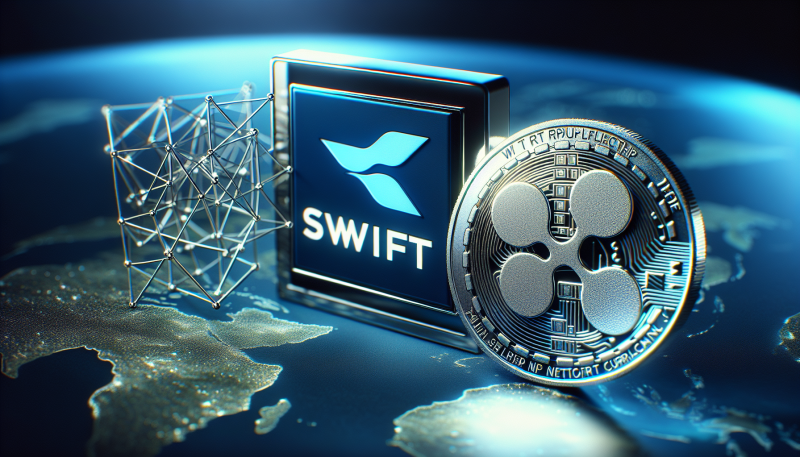
  • SWIFT Blockchain Pilot, Ripple XRP Momentum and New Layer-2 Projects Signal Shift in Cross-Border Payments

    SWIFT Blockchain Pilot, Ripple XRP Momentum and New Layer-2 Projects Signal Shift in Cross-Border Payments

    What happened?

    SWIFT announced a pilot for a blockchain-based shared ledger with 30+ banks while Ripple’s cross-border payments remain live and are seeing renewed institutional support. XRP recently bounced off $2.70 and the RSI flashed a buy signal, and several spot XRP ETF applications face key deadlines between October 18–25, 2025. At the same time, new projects like Bitcoin Hyper ($HYPER) are launching presales promising faster, cheaper Bitcoin Layer 2 transactions.

    Who does this affect?

    Traditional banks and payment providers involved in the SWIFT pilot could change how they settle cross-border payments and compete with existing crypto solutions. Ripple, XRP holders, and traders are directly impacted by renewed institutional interest and technical buy signals that could drive price moves. Developers and investors in scaling projects like Bitcoin Hyper also stand to gain attention and capital if demand shifts toward higher-speed, lower-cost infrastructure.

    Why does this matter?

    This matters because SWIFT validating blockchain rails and Ripple’s live payments both lend credibility to blockchain-based cross-border payments, which can attract institutional money into the space. Short-term technicals (RSI buy, $2.70 support) plus looming ETF deadlines could spark rallies toward $3.40 and possibly $5, increasing volatility and trading volume in XRP. Meanwhile, interest in Layer 2s like Bitcoin Hyper could redirect investment into infrastructure plays, shaping where capital flows in the next market cycle.

  • Gemini’s AI Forecast Points to Altcoin Rally by End of 2025 Amid Regulatory Clarity and ETF Developments

    Gemini’s AI Forecast Points to Altcoin Rally by End of 2025 Amid Regulatory Clarity and ETF Developments

    What happened?

    Google’s Gemini AI projected that XRP, Pi Coin, and Shiba Inu could see big gains by the end of 2025, with specific forecasts like XRP to $5 and Pi to $5.20 in bullish scenarios. Bitcoin is trading close to its all-time high and the overall crypto market cap has risen, while October’s historical strength adds bullish sentiment. U.S. policy moves—like the GENIUS Act, Project Crypto, and upcoming ETF rulings—are creating clearer rules that could act as catalysts for these moves.

    Who does this affect?

    Retail traders and crypto investors watching altcoins could see major portfolio swings if these forecasts play out. Institutional players and fund managers are also affected because clearer regulation and ETFs make it easier to deploy large amounts of capital into crypto. Crypto projects, exchanges, and DeFi platforms will feel the impact too, since price moves and regulatory clarity change listing, custody, and product decisions.

    Why does this matter?

    If Gemini’s outlook is right, we could see an altcoin-led rally that rivals or even beats the 2021 cycle, driving significant inflows into the market and lifting market caps across multiple tokens. ETF approvals, legal wins, and new stablecoin rules could accelerate institutional adoption and liquidity, pushing prices higher but also increasing volatility. That combination makes this a potentially market-moving moment—big upside for holders, bigger risks for latecomers, and a likely shift in where capital flows in crypto.