Category: News

  • Hashdex and Nasdaq Launch Expanded Crypto ETF, Offering Broader Access to Leading Digital Assets

    Hashdex and Nasdaq Launch Expanded Crypto ETF, Offering Broader Access to Leading Digital Assets

    What happened?

    Hashdex Asset Management Ltd. and Nasdaq Global Indexes have expanded the Hashdex Nasdaq Crypto Index US ETF (NCIQ), which is a multi-asset spot crypto exchange-traded product (ETP) in the U.S. Originally launched in February 2025 with Bitcoin and Ether, the ETF now includes XRP, Solana, and Stellar, therefore giving exposure to five leading cryptocurrencies. These tokens collectively represent over $3 trillion in combined market capitalization.

    Who does this affect?

    The expansion of the NCIQ ETF affects U.S. investors seeking diversified access to digital assets. Rather than needing to select individual cryptocurrencies, investors can gain exposure to a basket of assets through a single, tradable product. The move is also significant for Hashdex, as it cements their position as a global leader in crypto index products with four index products tied to the global Nasdaq Crypto Index and $1.56 billion in assets under management.

    Why does this matter?

    This development is significant as it shows increasing demand from investors for structured, index-based crypto exposure. As regulatory clarity improves and generic listing standards are approved, these types of products are likely to expand and adapt. Additionally, this collaboration between Hashdex and Nasdaq underscores the growing maturation of crypto as an asset class, with diversified index products emerging as benchmarks for both institutional and retail allocation.

  • Global Cryptocurrency Market Experiences 2.2% Decline Amidst Major Coin Losses

    Global Cryptocurrency Market Experiences 2.2% Decline Amidst Major Coin Losses

    What happened?

    The global cryptocurrency market has seen a decline of 2.2% over the past 24 hours, bringing the total market value down to $3.91 trillion. Nine out of the ten top cryptocurrencies have shown a decrease in value, including major coins such as Bitcoin (BTC), which is trading at $111,401 and Ethereum (ETH) at $4,001. This red trend comes despite a slight increase in total crypto trading volume, now at $178.5 billion.

    Who does this affect?

    This downturn affects all stakeholders within the crypto market, from individual investors to large-scale blockchain firms. Specific impact can be seen on owners of Bitcoin (BTC) and Ethereum (ETH) with both showing significant declines. Additionally, the sudden drop in Ethereum’s price triggered a massive liquidation, leading to significant losses for certain traders. For instance, wallet 0xa523 lost their entire 9,152 ETH long position.

    Why does this matter?

    The dip in the market can indicate potential uncertainty and instability due to various factors including macro and regulatory influences. This could cause potential investors to hesitate or discourage current holders, affecting the overall growth of the crypto industry. The market’s current state also highlights the importance of crypto’s volatile nature and the high risk associated with digital asset investments. Additionally, market trends and the Fear & Greed Index suggest that the market is waiting for stronger macro signals before establishing new positions.

  • Capital Group Becomes Top Shareholder in Japan’s Metaplanet, Signaling Institutional Shift Towards Bitcoin

    Capital Group Becomes Top Shareholder in Japan’s Metaplanet, Signaling Institutional Shift Towards Bitcoin

    What happened?

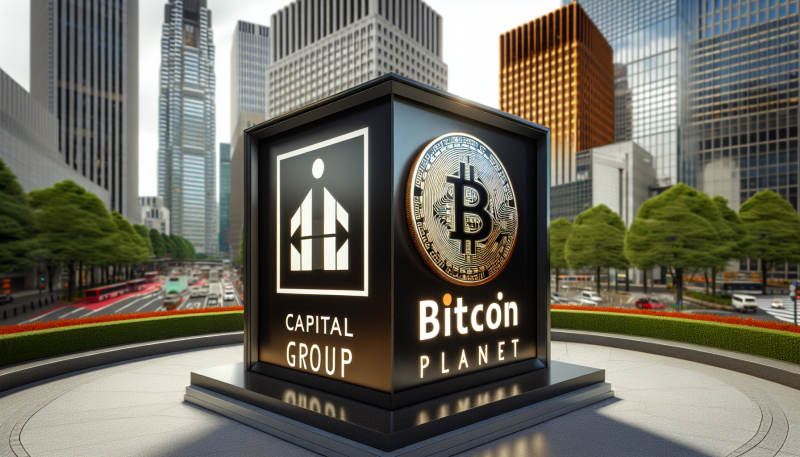
    Capital Group, one of the world’s largest asset management firms, has become the top shareholder in Japan’s Metaplanet Inc. This was achieved by acquiring an 11.45% stake worth about half a billion dollars via its subsidiary Capital Research and Management Company. Metaplanet is known for holding a vast amount of Bitcoin, currently the fifth-largest corporate Bitcoin holder globally with an estimated worth of $2.71 billion.

    Who does this affect?

    This development mainly impacts shareholders and potential investors of both Capital Group and Metaplanet Inc. Participants in the cryptocurrency market, particularly those involved with Bitcoin, are also likely to be affected. As an asset management giant, Capital Group’s significant investment and by proxy exposure to Bitcoin signals a notable move in the financial world.

    Why does this matter?

    Market impact is primarily due to Capital Group’s significant move towards cryptocurrency – specifically Bitcoin. Instead of directly investing in Bitcoin, Capital Group strategically increased crypto exposure through equity stakes in companies like Metaplanet which possess substantial Bitcoin assets. This investment approach showcases a growing institutional acceptance of cryptocurrencies and could potentially influence other asset management companies to follow suit.

  • HKMA Denies Rumors of Offshore Yuan-Pegged Stablecoin Issuance in Hong Kong

    HKMA Denies Rumors of Offshore Yuan-Pegged Stablecoin Issuance in Hong Kong

    What happened?

    The Hong Kong Monetary Authority (HKMA) has dismissed social media rumors that the world’s first offshore yuan-pegged stablecoin has been issued in the city. The regulator labeled the reports as “false news” and advised investors to be on guard against unauthenticated claims which could confuse the market. Under the Stablecoin Ordinance that came into effect on August 1, any company wishing to issue a stablecoin in Hong Kong must secure an official license from the regulator.

    Who does this affect?

    This affects traders, developers, and companies looking for new forms of liquidity in the digital asset sector, particularly with regards to stablecoins linked to the Chinese yuan. As of now, no entity has been granted a license to issue a yuan-pegged stablecoin in Hong Kong, meaning any claims of yuan-pegged stablecoin issuance or marketing in Hong Kong are not only misleading, but illegal under the new regulatory framework.

    Why does this matter?

    This development is significant considering the growing global attention towards stablecoins. It underscores the importance of clarity, regulation, and responsible participation in the evolving digital finance ecosystem. Additionally, the HKMA’s intent to safeguard the stability of Hong Kong’s financial markets signifies the city’s positioning as a regulated hub for digital assets. This will have a direct impact on the market as compliance with the licensing regime becomes an essential requirement for stablecoin issuance and promotion.

  • Ethereum’s Fusaka Upgrade: A Revolutionary Step Towards Enhanced Scalability and Efficiency

    Ethereum’s Fusaka Upgrade: A Revolutionary Step Towards Enhanced Scalability and Efficiency

    What happened?

    Ethereum co-founder Vitalik Buterin introduced Fusaka, Ethereum’s most ambitious scaling upgrade to date. Set to activate on December 3, the revolutionary technology eliminates the need for any single computer to download the entire blockchain data. This is achieved through the introduction of PeerDAS, which verifies information by checking small random pieces, rather than entire data blocks.

    Who does this affect?

    This affects all participants in the Ethereum network, as the upgrade allows for increased scalability while maintaining security. It targets the issue of network congestion and the criticism that Layer 2 solutions create fragmented user experiences. The upgrade could also potentially impact Ethereum’s revenue, which has been falling due to reduced base layer fee generation caused by Layer 2 adoption.

    Why does this matter?

    This upgrade matters significantly to the market as it presents a solution to concerns over Ethereum’s scalability and sustainability. Fusaka is expected to double blob capacity within two weeks, helping to alleviate current network congestion. It also marks a shift in how blockchain networks handle information, utilizing mathematical probability to verify data and subsequently improving the overall efficiency of the network.

  • U.S. Senate Prepares to Discuss Taxation of Digital Assets in Crucial Hearing

    U.S. Senate Prepares to Discuss Taxation of Digital Assets in Crucial Hearing

    What happened?

    The U.S. Senate is set to discuss the taxation of digital assets in a session called “Examining the Taxation of Digital Assets.” This session will include the testimony of high-profile crypto executives, policy advocates, and tax lawyers. Key figures set to be in the spotlight are Coinbase’s Vice President of Tax Lawrence Zlatkin, and other representatives from Coin Center and ASK Kramer Law.

    Who does this affect?

    This hearing affects everyone who interacts with or invests in digital assets, including cryptocurrencies like Bitcoin and Ethereum. Both individual investors and large corporations like Coinbase may see changes in how their digital assets are taxed. The session likely has broader implications for the digital asset market as a whole, especially if new legislation is introduced.

    Why does this matter?

    This session could lead to significant market impacts as it may change how taxation of digital assets is handled. The introduction of new tax rules could impact the valuation of digital assets and influence investor behavior. Moreover, this hearing represents a step forward in the U.S. government’s recognition and regulation of digital assets, which can provide more legitimacy and stability to the market.

  • Circle Explores Reversible USDC Transactions to Align Crypto with Traditional Finance

    Circle Explores Reversible USDC Transactions to Align Crypto with Traditional Finance

    What happened?

    Circle, issuer of the USDC stablecoin, is exploring the possibility of enabling reversible transactions in an effort to align blockchain payments with traditional finance standards. This shift aims to address fraud and disputes, going a step further by considering refund capabilities for USDC payments. Circle’s President has acknowledged the tension this creates, as blockchain systems are traditionally built on the premise of immediate, irrevocable transfers.

    Who does this affect?

    This change would primarily impact financial institutions and businesses dealing with stablecoin transactions. Circle’s new blockchain, Arc, targets corporate use where financial organizations could settle transactions such as foreign exchange payments using stablecoins. However, the move towards reversibility and increased centralization may also have larger implications for the broader ethos of the blockchain and cryptocurrency community.

    Why does this matter?

    This exploration by Circle signifies a significant shift in bridging the gap between the traditional financial systems and crypto. By making blockchain-based payments more acceptable to larger institutions wary of irreversible errors or scams, it could lead to broader adoption and regulatory acceptance of stablecoins like USDC. However, the move towards centralization may face opposition from those who value blockchain’s core principle of decentralization.

  • GSR Files for ETF to Track Companies Holding Cryptocurrencies Amid Market Uncertainty

    GSR Files for ETF to Track Companies Holding Cryptocurrencies Amid Market Uncertainty

    What happened?

    Crypto trading firm GSR has filed with the U.S. Securities and Exchange Commission (SEC) to launch its first exchange-traded fund (ETF), which is designed to track public firms that hold cryptocurrencies on their balance sheets. The proposed GSR Digital Asset Treasury Companies ETF would primarily consist of companies listed on U.S. exchanges. This filing comes amidst a time when corporate treasuries holding crypto have reached record levels in 2025, despite many firms’ valuations slipping below the value of their reserves.

    Who does this affect?

    This largely affects public companies that have invested heavily in cryptocurrencies like Bitcoin and Ether, and are now dealing with market values below the worth of the tokens they possess. These firms, along with institutional investors, could stand to benefit from or be impacted by the success of GSR’s proposed fund. It also has implications for the broader market of Wall Street vehicles packaging crypto exposure for traditional markets.

    Why does this matter?

    The performance of GSR’s proposed ETF could influence the market’s perception of corporate crypto treasuries as either a safe innovation or a risky experiment under stress. It also signals an acceleration of momentum in the ETF market, with issuers increasingly filing for products tied to altcoins and staking strategies. The decision of SEC on the approval of GSR’s fund may also have implications on the future of crypto ETFs filtering into the mainstream market.

  • Major European Banks Unite to Launch Euro-Backed Stablecoin by 2026

    Major European Banks Unite to Launch Euro-Backed Stablecoin by 2026

    What happened?

    Nine major European banks, including ING, Banca Sella, KBC, Danske Bank, DekaBank, UniCredit, SEB, CaixaBank, and Raiffeisen Bank International have come together to launch a euro-backed stablecoin. This stablecoin is expected to roll out in the second half of 2026 and will be regulated under the trading block’s Markets in Crypto Assets (MiCA) rule. The banks have also established a new company in the Netherlands to house this innovative project.

    Who does this affect?

    This development impacts both the banks involved and the larger European market. As the digital asset targets providing an alternative to the US-dominated stablecoin markets, it may also affect existing stablecoin issuers, particularly those based in the United States. Users stand to gain from near-instant transactions at lower costs, with access to cross-border payments, digital asset settlements and more.

    Why does this matter?

    The introduction of a euro-backed stablecoin serves as a significant step towards shifting the dominance away from US dollar-based stablecoins which currently account for 99% of the total stablecoin market cap. It also illustrates Europe’s strategic move towards autonomy in payments. Considering the European Central Bank’s recent call for stricter rules on non-EU stablecoin issuers, this development helps bolster Europe’s standing in the global cryptocurrency market.

  • Nansen AI Launches to Transform Blockchain Trading with Conversational Insights

    Nansen AI Launches to Transform Blockchain Trading with Conversational Insights

    What happened?

    Nansen, a data platform focused on blockchain, introduced Nansen AI, an innovative mobile agent crafted to revolutionize the way investors and traders interact with blockchain information. This launch marks a shift from traditional static dashboards to an AI agent-driven trading approach, where insights are delivered conversationally and are specifically tailored to individual user portfolios.

    Who does this affect?

    This development primarily affects players in the digital asset ecosystem, including investors and traders interacting with blockchain data. The new Nansen AI is designed to provide not just accurate but also actionable insights to these users. It facilitates enhanced understanding of onchain datasets, contributing to more informed decision making and promoting responsible blockchain adoption.

    Why does this matter?

    This is of significance as it could have considerable market impact, specifically in the realm of crypto markets. By merging advanced AI with user incentives, Nansen aims to strengthen its position as a leader in onchain intelligence. It sets the vision for a future where AI agents operate as the default gateway to crypto markets, potentially impacting the way trading data is consumed and maneuvers are strategized.