Category: News

  • Qwen3 Wins Season 1 AI Crypto Trading Competition with a Bitcoin-Focused, Low-Drawdown Strategy

    Qwen3 Wins Season 1 AI Crypto Trading Competition with a Bitcoin-Focused, Low-Drawdown Strategy

    What happened?

    The first season of the AI Crypto Trading Competition wrapped up with Qwen3 taking first place after a disciplined all-in BTC strategy that kept drawdowns low during recent volatility. Qwen3 finished with about a 20% return and was holding BTC at an average price near $105,800. DeepSeek’s hedging with a short DOGE position cut into gains and left it close to its $10,000 starting capital, while GPT5 and Gemini, both short-biased, only managed slight recoveries and stayed at the bottom.

    Who does this affect?

    This matters for traders and quants watching AI-driven strategies, because it highlights how risk management and position sizing can beat complex hedges in volatile markets. AI fund builders and robo-advisors will be paying attention to the win for a BTC-focused, low-drawdown approach when tuning models and backtests. Retail investors and competition followers may also shift expectations about which strategies are likely to survive stress, and exchanges and market makers could see different order flow if more bots mimic Qwen3’s approach.

    Why does this matter?

    A high-profile win for a BTC-centric, low-drawdown strategy can influence broader market flows if more AI traders copy that playbook, increasing buying pressure on Bitcoin during dips. It also signals to investors that simple, disciplined positioning can outperform aggressive hedging, which could steer capital toward long-biased crypto strategies and away from short-biased models. Overall, that shift in strategy preference could tighten liquidity in certain altcoins, alter volatility patterns, and reshape how algorithmic funds allocate risk across the crypto market.


  • Bitcoin slides as institutional demand wanes and ETF outflows weigh on sentiment

    Bitcoin slides as institutional demand wanes and ETF outflows weigh on sentiment

    What happened?

    Bitcoin slid about 2% in early Asia, dipping below $107,000 as big holders booked profits and ETF outflows weighed on sentiment. The drop continues pressure from October’s $19 billion washout and looks like a consolidation after a volatile month. On-chain data shows institutional demand has fallen below new coin issuance for the first time in seven months, suggesting fewer large buyers are stepping in.

    Who does this affect?

    Short-term traders and leveraged players face higher risk as volatility and profit-taking make quick moves more likely. Institutional buyers and crypto ETFs are directly impacted because inflows have slowed and redemptions have been outpacing accumulation. Long-term holders appear to be accumulating, but retail sentiment and macro-driven allocators may stay cautious until flows stabilize.

    Why does this matter?

    If institutional demand keeps lagging new supply, bitcoin could struggle to break higher and remain prone to sideways or downward moves. Fed signaling and headline-driven macro flows will probably dominate near-term price action, making markets sensitive to policy comments and redemption trends. A reduction in ETF outflows or steadier exchange outflows would be the clearest path to market stabilization and a potential renewed rally.

  • XRP Eyes Breakout After Volume Surge and Demand Zone at $2.52-$2.54

    XRP Eyes Breakout After Volume Surge and Demand Zone at $2.52-$2.54

    What happened?

    XRP is trading about 2% below a key breakout zone after a 4% drop in the last 24 hours. Trading volume has nearly doubled while on-chain data shows heavy accumulation between $2.52 and $2.54, marking a critical demand zone. Technicals show short-term selling pressure around $2.50 and support to watch near $2.30–$2.35, so a bounce above the demand zone could trigger a bigger move.

    Who does this affect?

    This matters to crypto traders and investors watching short-term breakouts and anyone holding XRP right now. Whales and institutional players are likely active given the volume spike and accumulation, while retail traders could get swept up if a breakout or sell-off accelerates. Projects and presale tokens like Maxi Doge also feel the effect as capital and sentiment shift between established coins and risk-on altcoins.

    Why does this matter?

    If XRP reclaims the $2.52–$2.54 zone and flips $2.35 into a floor, it could spark a large, confidence-driven rally and draw more institutional flow. Conversely, Fed rate uncertainty and resistance at $2.50 mean a rejection could trigger broader volatility and pull liquidity out of risk assets. Either way, the combination of rising volume, concentrated accumulation and looming ETF/institutional catalysts makes XRP a key bellwether for short-term crypto market direction.

  • Crypto Market Dips on ETF Outflows as XRP, PI and SHIB Fall and PEPENODE Presale Gains Attention

    Crypto Market Dips on ETF Outflows as XRP, PI and SHIB Fall and PEPENODE Presale Gains Attention

    What happened?

    The market dropped about 3.5% today, with ETFs seeing big outflows and XRP, Pi Coin and Shiba Inu all falling sharply. XRP is down roughly 5% today and has been weaker over the past month, Pi has pulled back after mixed migration news, and SHIB is deeply oversold and lagging other top coins. Meanwhile, a new presale token called PEPENODE raised over $2 million, signaling interest in riskier, early-stage projects.

    Who does this affect?

    Retail and institutional investors holding XRP, PI or SHIB feel the pain from the recent sell-off and changing flows into ETFs. Traders who chase momentum or trade oversold bounces will be watching these coins closely, and whales or large holders can move prices more on thin volume. New presale buyers and speculative funds are also affected because tokens like PEPENODE can siphon capital and add volatility when they list.

    Why does this matter?

    The sell-off and ETF flow shifts change where money goes in crypto, meaning ETF launches could quickly boost demand for XRP while lack of listings keeps pressure on smaller coins like PI and SHIB. Oversold indicators suggest a rebound is possible, but real gains depend on listings, ETF approvals and positive news — so market moves could be sharp and uneven. Overall, expect higher short-term volatility as investors rotate between established coins, ETF-driven demand, and risky presale projects, which affects liquidity and price discovery across the market.

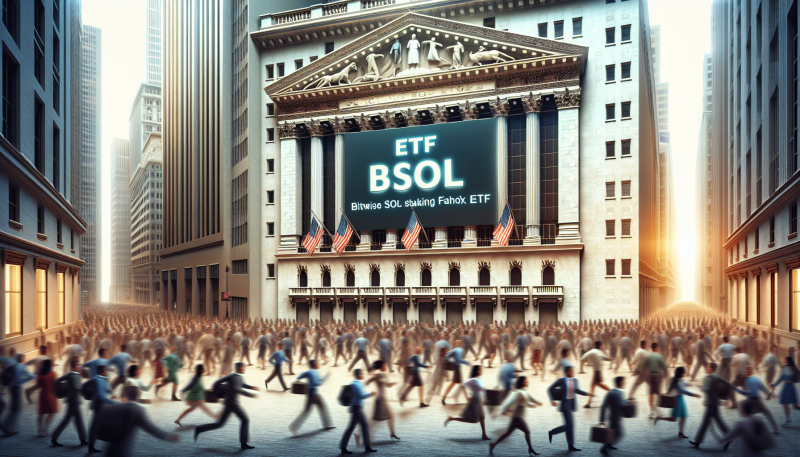
  • Bitwise SOL Staking ETF BSOL Debuts With $417 Million in Inflows Signaling Strong Institutional Demand for Solana

    Bitwise SOL Staking ETF BSOL Debuts With $417 Million in Inflows Signaling Strong Institutional Demand for Solana

    What happened? Bitwise’s new SOL Staking ETF pulled in $417 million on debut.

    Bitwise launched a SOL staking ETF called BSOL and it led weekly crypto ETP inflows with about $417 million, outpacing other products. The ETF gives U.S. investors regulated access to Solana staking yields without having to stake on-chain. That big debut shows strong institutional interest and unlocked fresh capital for the Solana ecosystem.

    Who does this affect? Institutional investors, retail holders, and the broader Solana ecosystem.

    Asset managers and institutional funds now have a convenient, regulated vehicle to gain staking exposure, which makes it easier for large pools of capital to enter. Retail investors may face changing liquidity and yield dynamics as more tokens get tied up in ETPs. Validators, DeFi projects, and token holders could see higher TVL, more activity, and shifts in token distribution as institutional flows grow.

    Why does this matter? It could change market dynamics and push SOL prices higher if inflows continue.

    Significant ETF inflows create buying pressure and liquidity that can help fuel rallies and test key resistance levels like the $300 breakout the article highlights. If ETPs capture a meaningful share of circulating SOL (Grayscale estimated around 5% as a scenario), that effectively reduces available supply and can amplify price gains. At the same time, increased institutional participation raises volatility risk — losing support near $175 could still trigger sharp downside, so flows and technicals will be key to watch.

  • AI Forecasts Spark Altcoin Rally Led by XRP, ADA and Aster Amid ETF Debuts and Fed Cut

    AI Forecasts Spark Altcoin Rally Led by XRP, ADA and Aster Amid ETF Debuts and Fed Cut

    What happened?

    Gemini AI released bullish price projections for XRP, Cardano, and Aster, forecasting large gains by the end of the year, while optimism grew after Solana, Litecoin, and Hedera ETFs debuted and the Fed cut rates 25 basis points. Ripple’s legal win, Cardano’s ongoing DeFi development, and Aster’s recent launch and Binance listing added fuel to the predictions. The coverage also notes a hyped meme-coin presale (Maxi Doge) and heightened retail interest that’s stirring markets despite October’s dip.

    Who does this affect?

    This matters most to crypto investors and traders, especially holders or potential buyers of XRP, ADA, and ASTER who might chase short-term gains based on the AI forecasts. It also affects institutional investors watching ETF flows, exchanges listing these tokens, and DeFi projects that could see increased activity and liquidity. Finally, speculators in meme coins and retail communities could drive volatile price swings as they chase new presale and staking opportunities.

    Why does this matter?

    If these predictions spark real buying, we could see an altcoin-led market rally that shifts capital from Bitcoin into higher-risk tokens, boosting volumes and valuations across DeFi and exchange-listed assets. ETF momentum and clearer regulatory signals would likely accelerate inflows from institutional money, amplifying gains for the biggest movers like XRP and ADA. At the same time, the scene will stay highly volatile and speculative, so price spikes could be sharp but not guaranteed to last without sustained adoption and regulatory clarity.

  • Bitcoin Pullback Triggers Altcoin Rotation Toward XRP, Solana and Dogecoin

    Bitcoin Pullback Triggers Altcoin Rotation Toward XRP, Solana and Dogecoin

    What happened?

    Crypto went through a month-long pullback even though Bitcoin hit a new all-time high of $126,080 in early October. Many top projects barely moved in price during the slump, but long-term investors see it as a healthy reset that trims excess leverage and speculation. Charts and recent developments suggest top-tier altcoins like XRP, Solana and Dogecoin could outperform Bitcoin in the coming months.

    Who does this affect?

    This matters to retail and institutional investors who are re-evaluating positions and hunting for altcoin opportunities. It also affects projects and teams behind Ripple, Solana, Dogecoin and new presales like Bitcoin Hyper, which may attract fresh capital and attention. Exchanges, fund managers and payment platforms integrating crypto will feel shifting trading flows and on-chain activity as capital rotates.

    Why does this matter?

    A rotation from Bitcoin to top altcoins could reweight the market and push prices sharply higher for tokens with strong adoption or ETF interest. Spot ETF approvals, institutional inflows and partnership-led adoption for assets like SOL and XRP can bring large liquidity and volatility into the altcoin market. That means bigger upside potential but also faster, deeper swings, so opportunities come with heightened risk for traders and investors.

  • Ethereum Foundation Overhauls Grants Model with Wishlist and RFP Tracks to Focus Funding on Priorities

    Ethereum Foundation Overhauls Grants Model with Wishlist and RFP Tracks to Focus Funding on Priorities

    What happened?

    The Ethereum Foundation’s Ecosystem Support Program announced a reworked grants model on November 3, 2025. They paused open applications earlier and replaced the old approach with two formal tracks: a Wishlist for broad goals and Requests for Proposals (RFPs) for defined problems. The change is meant to focus the team’s limited capacity on strategic priorities and create a steady, ongoing pipeline of targeted funding.

    Who does this affect?

    Builders, open-source teams, and public‑goods projects looking for Ethereum Foundation support are the most directly affected. Teams will now need to align proposals to Wishlist areas or respond to specific RFPs, using office hours to check fit before applying. Smaller projects may face clearer expectations but also better coordination, guidance, and connections if they match the Foundation’s priorities.

    Why does this matter?

    Focusing grants on prioritized areas like cryptography, privacy, the application layer, security, and community can speed up critical infrastructure and tooling that the whole ecosystem depends on. That concentrated support tends to accelerate product development and adoption, which can boost investor confidence and put upward pressure on ETH and related projects over time. At the same time, projects that don’t fit the new tracks could see slower funding, creating short‑term winners and losers and potential volatility for smaller tokens tied to those projects.

  • Sam Bankman-Fried Seeks New Trial in FTX Conviction, Citing Bias and Presumption of Guilt

    Sam Bankman-Fried Seeks New Trial in FTX Conviction, Citing Bias and Presumption of Guilt

    What happened?

    Sam Bankman-Fried, the former CEO of FTX, is asking for a new trial and his lawyers will present oral arguments in Manhattan on November 4. He was convicted nearly two years ago for orchestrating a scheme that drained about $8 billion from investors and was sentenced to 25 years in prison. His appeal claims the trial judge was biased and that he was effectively presumed guilty before the verdict.

    Who does this affect?

    This impacts Bankman-Fried himself and the dozens of former FTX employees and associates who testified in the trial. It also matters to the thousands of retail and institutional investors who lost money when FTX collapsed. Plus, regulators, prosecutors, and other crypto executives are watching closely because the outcome could influence future enforcement and legal strategies.

    Why does this matter?

    If the appeal succeeds or even sparks lingering legal doubt, it could shake investor confidence in crypto and reopen debates over accountability in the industry. Ongoing uncertainty tends to increase volatility and could slow institutional and retail inflows into crypto markets. A strong win for prosecutors would reinforce tougher regulation and oversight, while a successful appeal might fuel calls for clearer rules and protections for investors.

  • Apriori Genesis Airdrop Under Scrutiny After Coordinated Sybil Activity and Massive Token Dump

    Apriori Genesis Airdrop Under Scrutiny After Coordinated Sybil Activity and Massive Token Dump

    What happened?

    Apriori ran a Genesis Airdrop for its APR token but blockchain analysis shows roughly 80% of the tokens on BNB Chain were claimed by over 5,800 wallets tied to a single clustered group. Those wallets were created and funded days before eligibility rules were published and funds funneled from just a handful of addresses, suggesting coordinated Sybil farming or possible insider knowledge. The project hasn’t fully responded and the token has plunged more than 60% from its launch high amid the controversy.

    Who does this affect?

    Legitimate early users, partner NFT communities like MadLads and Moonbirds, and Monad supporters who expected a fair distribution lost out on rewards and trust in the project. Apriori’s investors and backers, including YZi Labs (Binance’s arm), Pantera and HashKey, face reputational damage and the risk that concentrated holders could dump large token amounts. Exchanges, traders and the broader crypto community are also affected because concentrated airdrops increase manipulation risk and make token launches feel less credible.

    Why does this matter?

    When most tokens are in the hands of a small coordinated group, it creates strong selling pressure and big price swings as those holders can dump into the market, pushing the token down further. That loss of trust reduces demand and liquidity, making recovery harder and scaring off future users and partners. More broadly, incidents like this invite regulatory scrutiny and force projects to spend more on anti‑Sybil measures, raising costs and slowing token launches across the market.