Category: News

  • Coinbase Accuses SEC of Destroying Key Communications, Raising Concerns Over Crypto Regulation Transparency

    Coinbase Accuses SEC of Destroying Key Communications, Raising Concerns Over Crypto Regulation Transparency

    What happened?

    Coinbase has accused the U.S. Securities and Exchange Commission (SEC) of destroying almost a year’s worth of former Chair Gary Gensler’s text messages, inhibiting the company’s ability to inspect how the SEC developed its hardline approach on cryptocurrencies under Gensler’s leadership. The allegations were made in a court filing where Coinbase is supporting a case by research group History Associates that sought Gensler’s communications under the Freedom of Information Act.

    Who does this affect?

    This situation primarily affects Coinbase and potentially other cryptocurrency exchanges and investors. The lost messages cover a significant period for digital currencies, including Ethereum’s transition to proof of stake, FTX’s downfall, and numerous enforcement actions against exchanges. As these internal discussions could have revealed when the regulator decided to act and how it strategized, their loss could impact regulatory transparency and accountability.

    Why does this matter?

    This matters because Coinbase asserts that without these messages, there are gaps in transparency and due process. If the court rules in favor of sanctions, it could heighten the SEC’s challenges in overseeing the crypto market. Conversely, siding with the regulator could lead to further criticism about lack of accountability in regulatory agencies. This dispute underscores the broader debates about crypto regulation, market transparency, and the role of governmental agencies in this burgeoning industry.


  • Galaxy Digital Acquires $536 Million in Solana Tokens, Signaling Institutional Endorsement

    Galaxy Digital Acquires $536 Million in Solana Tokens, Signaling Institutional Endorsement

    What happened?

    Galaxy Digital has acquired approximately 2.31 million Solana (SOL) tokens, equivalent to nearly $536 million in value. The acquisitions were tracked over a 24-hour period and were transferred from major exchanges like Binance, Bybit, and Coinbase wallets. This move is speculated to be related to Galaxy’s recent $300M investment in Forward Industries, which is transitioning into a Solana-focused digital asset treasury.

    Who does this affect?

    The acquisition majorly impacts investors and stakeholders of Galaxy Digital and Solana. Forward Industries’ shareholders also see an effect, as the company’s shares have seen a substantial increase following their pivot towards SOL. Moreover, other publicly listed companies utilizing Solana-based treasury strategies might be influenced by this large-scale acquisition and strategic repositioning.

    Why does this matter?

    In the broader market context, Galaxy Digital’s significant investment underlines the growing trend of firms transitioning traditional assets into cryptocurrency-based treasuries. Galaxy’s backing may boost confidence in Solana, which recently surpassed BNB in market cap, reaching $236.83 per token. This acquisition by a major financial institution signals an important endorsement for Solana, potentially leading to increased institutional interest and adoption.

  • FTX and Alameda Withdraw 192,000 Solana Tokens Amid Ongoing Unstaking Trend

    FTX and Alameda Withdraw 192,000 Solana Tokens Amid Ongoing Unstaking Trend

    What happened?

    Bankrupt cryptocurrency firms FTX and Alameda have withdrawn around 192,000 Solana (SOL) tokens—valued at approximately $44.9 million—from staking, as reported by blockchain analytics provider EmberCN. This move is part of a broader unstaking trend that has seen nearly 9 million SOL, worth an estimated $1.2 billion, removed since November 2023.

    Who does this affect?

    This decision primarily affects FTX and Alameda’s creditors, as the firms continue to repay their debts through these redemptions. Despite ongoing unstaking measures, it’s noteworthy that these companies still hold a significant amount of SOL—about 4.18 million tokens, estimated to be worth nearly $1 billion. Moreover, FTX is prepared for its third round of creditor repayments, scheduled for September 30, as part of its ongoing restructuring efforts.

    Why does this matter?

    The market impact of this action reflects in Solana’s moderately positive response, with a 4.3% daily gain and a 14.4% increase over the past week. As these large-scale unstakings and redemptions continue, they could influence SOL’s market performance and investor sentiment. Additionally, FTX’s repayments are closely watched by the market, with the company having returned $6.2 billion to former users as part of its restructuring strategy following its collapse in 2022.

  • Bitcoin Surges Past $116,000 as Inflation Data Sparks Rate Cut Hopes

    Bitcoin Surges Past $116,000 as Inflation Data Sparks Rate Cut Hopes

    What happened?

    Bitcoin briefly exceeded $116,000 after new US inflation data led to expectations of a Federal Reserve interest rate cut, positively affecting risk assets. Alongside Bitcoin’s rise, Ether increased 2.5% and the overall crypto market grew by 1.5%. This came as a result of economic releases indicating changes in market sentiment.

    Who does this affect?

    This development largely impacts investors who are actively involved in Bitcoin, Ether and other cryptocurrencies. It also affects the wider financial market as any changes in Federal Reserve monetary policy can have both direct and indirect impacts. Moreover, it is pertinent to those who monitor Bitcoin as a gauge of macroeconomic trends and financial stability.

    Why does this matter?

    The changes matter because they signify broader market implications. The market response to inflation data suggests that investors anticipate a rate cut from the Fed, which could lead to further investment growth. The resilience of Bitcoin, in particular, indicates its increasing role as a protective asset in scenarios of both currency debasement risks and macroeconomic uncertainty.

  • Gemini Space Station’s IPO Success Signals Investor Confidence in Digital Assets

    Gemini Space Station’s IPO Success Signals Investor Confidence in Digital Assets

    What happened?

    Gemini Space Station, a digital asset platform, had a successful initial public offering, collecting $425 million. This IPO, founded by the Winklevoss brothers in New York, is one of the strongest for a digital trading platform in recent times. Gemini priced 15.2 million shares at $28 each, exceeding its preliminary guidance of $24 to $26 per share.

    Who does this affect?

    This event affects investors interested in digital assets and the crypto market, as demand for Gemini’s shares outpaced supply twentyfold, reinforcing the investor confidence in the platform. Additionally, it impacts long-standing users, employees, and close associates of Gemini, and retail investors on platforms like Robinhood, SoFi, and Webull due to the allocation of shares for these groups.

    Why does this matter?

    This matters because it highlights the increasing investor appetite for shares in crypto infrastructure. The success of Gemini’s IPO, despite regulatory scrutiny in the US, signifies that investors are willing to bet on growth in spot trading, custody services, and exchange-traded products linked to digital assets. Consequently, this can influence the market value of similar digital asset platforms and their potential for growth.

  • Binance and Franklin Templeton Collaborate to Innovate Capital Markets Through Blockchain Technology

    Binance and Franklin Templeton Collaborate to Innovate Capital Markets Through Blockchain Technology

    What happened?

    Binance, a prominent cryptocurrency exchange, and Franklin Templeton, a leading U.S. asset management company, have entered into an agreement to explore new blockchain and Traditional Finance (TradFi) use cases. The particulars of the projects they will undertake remains undisclosed, but the broader aim is that of developing innovative solutions to streamline capital markets. Consequently, the market has responded positively with Binance Coin (BNB) reaching a record high.

    Who does this affect?

    This collaboration directly affects both parties involved and their respective users. More specifically, Franklin Templeton may soon move to tokenize its wide range of Exchange-Traded Funds (ETFs) and investment vehicles, allowing Binance users direct access through the platform. Additionally, this move could result in expanded adoption of the Binance Smart Chain, and BNB, its native token, could potentially benefit as it powers the underlying infrastructure.

    Why does this matter?

    The partnership matters as it can help modernize capital markets by providing greater efficiency, transparency, and accessibility via blockchain technology and tokenization. By potentially tokenizing a wide range of investment vehicles, the move could also lead to a broader adoption of the Binance Smart Chain and an increase in value for BNB. Furthermore, the partnership’s announcement has already shown a significant impact on the crypto market with the BNB price surge, indicating that developments within this collaboration could sway market trends in the future.

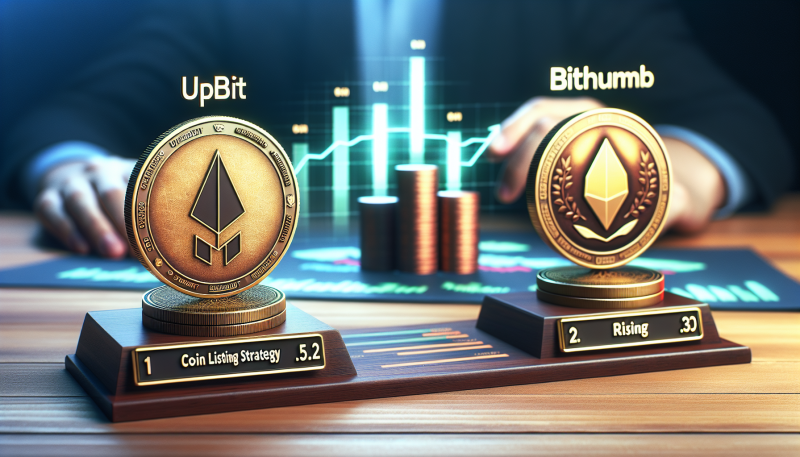
  • Upbit’s Aggressive Coin Listing Strategy: A Response to Bithumb’s Rising Competition

    Upbit’s Aggressive Coin Listing Strategy: A Response to Bithumb’s Rising Competition

    What happened?

    South Korean crypto exchange Upbit has embarked on a coin listing spree, introducing seven new tokens within the past 10 days. The move comes in response to the recent growth in trading volume experienced by its competitor, Bithumb. These events are being seen as a strategic response by Upbit to maintain its majority market share, which currently stands at 50.6%, compared to Bithumb’s 46%.

    Who does this affect?

    This development is of particular interest to cryptocurrency traders, especially those dealing with South Korean exchanges. Both existing customers and potential new users of Upbit and Bithumb could be affected by these changes. Additionally, the market dynamics between these two platforms could shape the decisions of other crypto exchanges in their coin listing strategies.

    Why does this matter?

    The competition between Upbit and Bithumb can significantly influence the crypto trading environment in South Korea. The continuous expansion of coin listings might lead to hasty decisions by platform managers and compromise the review process. This rush for listing more coins may impact the security and reliability of these exchanges, potentially affecting investor trust and the overall stability of the crypto market.

  • Emerging Sub-$1 Crypto Projects Poised for Exponential Growth Amidst Market Surge

    Emerging Sub-$1 Crypto Projects Poised for Exponential Growth Amidst Market Surge

    What happened?

    The total market cap of cryptocurrency has risen above $4 trillion, despite recent inflation-related dips. In this context, three sub-$1 projects have emerged as potential investment opportunities for those seeking exponential appreciation ahead of the next bull run – Maxi Doge ($MAXI), PEPENODE ($PEPENODE), and Wall Street Pepe ($WEPE). These projects are gaining traction due to their unique features and community-driven focus.

    Who does this affect?

    This development impacts investors seeking to diversify their portfolios with potentially explosive projects. Particularly, those interested in so-called meme coins might find these projects attractive. Additionally, developers and communities surrounding these tokens may also be affected, as greater recognition and financial interest could drive further growth and community engagement.

    Why does this matter?

    The rise of these projects matters as it speaks to the ongoing growth and dynamism within the crypto marketplace. If these tokens achieve the projected 100x appreciation, they could significantly impact the market and provide substantial returns for early investors. Furthermore, their success may further validate the role of community-based and meme-oriented projects within the broader crypto ecosystem.

  • Brian Quintenz’s CFTC Nomination Challenged by Tyler Winklevoss Over Past Litigation Dispute

    Brian Quintenz’s CFTC Nomination Challenged by Tyler Winklevoss Over Past Litigation Dispute

    What happened?

    Brian Quintenz, picked by U.S. President Donald Trump to head the Commodity Futures Trading Commission (CFTC), has shared messages between him and Gemini co-founder Tyler Winklevoss. These messages highlight a request from Winklevoss to pause Quintenz’s nomination following a disagreement over a past litigation involving CFTC.

    Who does this affect?

    This primarily affects Brian Quintenz and his potential role within the CFTC, but it also involves Tyler Winklevoss and the Gemini platform. The claims made can potentially impact their reputations within the cryptocurrency industry. Furthermore, if the allegations have merit, those within the crypto market who rely on the regulatory decisions of the CFTC could be affected.

    Why does this matter?

    The outcome of this dispute is significant because it concerns the integrity and transparency of key figures in the cryptocurrency and regulatory sector. This could influence trust levels in the market, particularly around CFTC decisions. Also, since the CFTC has the power to impose penalties for misleading practices, as demonstrated in Gemini’s previous case, future actions taken by this body could drastically impact the cryptocurrency market.

  • BlackRock Explores Tokenization of ETFs Amid Growing Interest in Digital Assets

    BlackRock Explores Tokenization of ETFs Amid Growing Interest in Digital Assets

    What happened?

    BlackRock, the largest asset manager in the world, is researching ways to tokenize exchange-traded funds (ETFs). According to a Bloomberg report, they are specifically considering ETFs that are connected to real-world assets like stocks. This idea is being pursued subject to regulatory considerations and follows the company’s successful endeavors in digital assets including its tokenized money-market fund BUIDL and spot Bitcoin ETF.

    Who does this affect?

    The move to tokenize ETFs affects BlackRock, asset managers, investors and the broader financial industry. If successful, tokenized ETFs could allow for easier international access and trading outside Wall Street’s usual hours. Companies like Franklin Templeton have already issued tokenized share classes of money-market funds. BlackRock CEO Larry Fink has previously expressed his belief that every financial asset can be tokenized.

    Why does this matter?

    This potential shift towards tokenization relates to market impact in several ways. New research suggests that tokenizing real-world assets could tap into the $400 trillion traditional finance market. Furthermore, reports suggest that the tokenized RWA market could reach $16 trillion by 2030. This includes both traditional banks and blockchain-native firms exploring RWA products for yield generation and liquidity management. However, there are still challenges to overcome regarding regulatory and custodial issues.