Category: News

  • Pudgy Penguins (PENGU) Soars Over 20% as Traders Anticipate Continued Momentum and ETF Approval

    Pudgy Penguins (PENGU) Soars Over 20% as Traders Anticipate Continued Momentum and ETF Approval

    What happened?

    The meme cryptocurrency Pudgy Penguins (PENGU) has seen a surge of over 20% in the past week, with its trading volume spiking 359% in the last 24 hours. This bullish trend is set to continue, with many traders making optimistic price predictions for September. However, seasoned investors are waiting for a definite breakout before jumping on board.

    Who does this affect?

    This development affects all participants in the cryptocurrency market, but especially traders and investors interested in memecoins like PENGU. The price movement also earmarks Solana as a cryptocurrency to watch given its resilience in recent weeks. Additionally, the potential approval of Canary Capital’s spot PENGU ETF by the U.S. SEC in mid-October will likely draw mainstream interest if it goes through.

    Why does this matter?

    The sudden popularity of PENGU could revitalize the meme sector of Solana, which has been languishing in a downtrend. Moreover, the potential approval of a PENGU ETF could increase demand and market adoption, leading to further price increases. However, whether PENGU can sustain its momentum or whether it will drop back is yet to be seen, making it an interesting asset to watch in the coming weeks.

  • Binance Bahrain and Singapore Gulf Bank Launch Direct U.S. Dollar Transfer Service for Retail Customers

    Binance Bahrain and Singapore Gulf Bank Launch Direct U.S. Dollar Transfer Service for Retail Customers

    What Happened?

    Binance Bahrain has partnered with Singapore Gulf Bank (SGB) to launch a direct U.S. dollar transfer service aimed at retail customers. This service simplifies the movement of funds between traditional banking systems and digital assets, a significant development in financial systems throughout the Gulf region. It permits retail customers to link their SGB bank accounts directly to Binance Bahrain, enabling quick deposits, withdrawals, and conversion of fiat into crypto through a single compliant flow.

    Who Does This Affect?

    This partnership primarily affects retail customers who can now access direct U.S. dollar banking through Binance Bahrain. For the first time, retail users, as opposed to only corporate and high-net-worth clients, can experience efficient and secure fund transfers. Transactions between an SGB account and a Binance Bahrain wallet are executed in seconds, smoothing the process of converting traditional money into digital assets. Customers need only link their accounts once, after which the technical complexities are handled by Binance and SGB

    Why Does This Matter?

    This venture is significant as it embodies the Central Bank of Bahrain’s forward-thinking approach to digital finance and supports Bahrain’s ambition to establish itself as a regional hub for financial development. By integrating banking-grade infrastructure with a global crypto platform, Binance and SGB are setting a new standard for real-time, borderless, compliant fiat-crypto transactions. This move reflects a broader shift towards digital assets in the Gulf Cooperation Council (GCC) countries and other rapidly developing markets, reshaping finance across these regions.

  • Bitcoin Sees Remarkable Investment Surge Amidst Economic Turbulence

    Bitcoin Sees Remarkable Investment Surge Amidst Economic Turbulence

    What happened?

    Despite the fluctuating macroeconomic backdrop, Bitcoin experienced a notable surge in investment, trading at $111,654 with a daily turnover of $44.1 billion. Last week alone, CoinShares reported $2.48 billion in net inflows, concluding August with $4.37 billion, which is a 58% increase from last year’s period. This indicates a steady return of money into the crypto market.

    Who does this affect?

    The shift in Bitcoin’s value will affect various market segments ranging from individual investors to institutions that have invested in the cryptocurrency. Companies and countries that have incorporated Bitcoin into their financial systems will also feel the impact. Surprisingly, Ethereum outshone others by attracting $1.4 billion, causing a noticeable investor rotation.

    Why does this matter?

    This matters because the spike in Bitcoin’s value amidst macroeconomic turbulence demonstrates the crypto market’s resilience. Additionally, the introduction of Bitcoin Hyper ($HYPER), which combines BTC security with Solana’s speed, indicates ongoing innovation in the crypto space, paving the way for new use-cases like lightning-fast, low-cost smart contracts, decentralized apps, and meme coin creation.

  • CFTC Considers Allowing Foreign Crypto Exchanges to Operate in the U.S. Market

    CFTC Considers Allowing Foreign Crypto Exchanges to Operate in the U.S. Market

    What Happened?

    The Commodity Futures Trading Commission (CFTC) is considering approval for foreign crypto exchanges to operate under U.S. regulatory frameworks, according to Acting Chairman Caroline D. Pham. This approach would extend the CFTC’s long-standing framework for foreign boards of trade (FBOTs), allowing overseas exchanges to serve U.S. customers given that their home jurisdictions meet comparable regulatory standards.

    Who Does This Affect?

    This development affects American traders, foreign boards of trade, and foreign crypto exchanges. With this cross-border framework, market access could be widened for American traders. Furthermore, offshore trading activity could come back under U.S. oversight, which may persuade American crypto firms who have moved operations abroad citing ambiguity in U.S. regulations, to reinvest in the United States.

    Why Does This Matter?

    The market impact of this regulatory evolution is significant. It means the return of U.S. crypto trading activity to offshore exchanges and the integration of those markets under a regulatory umbrella that aligns with American rules. Extending recognition to qualified foreign platforms would mark a significant expansion of the CFTC’s cross-border reach. This alignment is expected to avoid market fragmentation and improve global coordination, thereby potentially boosting the American crypto market without waiting for lengthy legislative changes or new bilateral agreements.

  • Senate Democrats Unveil New Cryptocurrency Regulations to Protect Consumers and Ensure Fair Practices

    Senate Democrats Unveil New Cryptocurrency Regulations to Protect Consumers and Ensure Fair Practices

    What happened?

    Twelve Senate Democrats, including Mark Warner, Kirsten Gillibrand, and Cory Booker, have presented a unified framework for regulating cryptocurrencies. This is the first concerted effort by the Democratic party to engage in legislation discussions after their silence on digital asset regulations. The new proposition aims to protect consumers, preventing illicit financial activities and ensuring that politicians cannot profit from these digital assets.

    Who does this affect?

    The new rules will impact anyone involved in the cryptocurrency marketplace. This includes crypto platforms, which will need to register with the Financial Crimes Enforcement Network (FinCEN), and the Securities and Exchange Commission (SEC), who are required to swiftly include existing digital asset platforms in their regulatory framework. Additionally, developers aiming to create and issue new digital assets will be affected as the framework demands pathways for adequate consumer disclosures.

    Why does this matter?

    The proposed framework’s market impact is significant as it introduces new regulations in a space that has seen little from the Democratic party. It aims to facilitate safer transactions for consumers and stricter oversight of crypto platforms, affecting how businesses operate within the domain. Moreover, it seeks to prevent potential misuse by politicians, suggesting implications for the future evolution of the crypto industry, particularly regarding its political involvement and supervision.

  • Lawmakers Call for National Security Review of China-linked Bitcoin Mining Companies

    Lawmakers Call for National Security Review of China-linked Bitcoin Mining Companies

    What happened?

    Zachary Nunn, a Republican lawmaker, has requested that the U.S. Treasury conducts a national security review of two China-linked companies, Bitmain and Cango, which are involved in Bitcoin mining hardware. He expressed concerns over their increasing involvement in the U.S. due to their lack of transparency in ownership structures and potential connections to foreign state actors.

    Who does this affect?

    This issue directly impacts Bitmain and Cango, who control a significant portion of the global Bitcoin mining hardware market, specifically Bitmain, which controls over 80%. Given the firms’ plans to scale operations in the United States, American regulatory bodies, potential investors, and Bitcoin miners could also be affected by the outcome of the desired investigation.

    Why does this matter?

    As Bitmain and Cango hold a dominant share of the Bitcoin mining hardware market, any potential security issues could significantly impact the cryptocurrency marketplace. If connections to foreign state actors were found, it could raise questions about the security and transparency of these companies. This could potentially result in a shift in the influence of global Bitcoin mining operations and impact the value and stability of Bitcoin.

  • Bitcoin Futures Market Sees Shift as Retail Investors Gain Influence Amidst Declining Activity and Inflation Watch

    Bitcoin Futures Market Sees Shift as Retail Investors Gain Influence Amidst Declining Activity and Inflation Watch

    What happened?

    The Bitcoin futures market is experiencing a slowdown, with less activity from larger players (whales) and more control being exerted by smaller retail investors. This shift in market dynamics has been accompanied by a decline in the Bitcoin futures volume and an increase in selling pressure, suggesting that the market participants anticipate a drop in Bitcoin’s price. Market analysts are also observing the inflation data such as CPI and PPI reports, which will be released shortly, and expect a retest of the $105K BTC price.

    Who does this affect?

    This development impacts all stakeholders in the Bitcoin futures market, including both large-scale (whale) and small-scale (retail) investors. The decline in whale activity means that the futures market is now more susceptible to shifts caused by retail investors. Those who are invested in Bitcoin may experience consequences depending on incoming inflation data, which might either contribute to a bearish sentiment with lower Bitcoin prices or potentially trigger aggressive Fed rate cuts, favorable for Bitcoin.

    Why does this matter?

    This matter is significant due to the potential market impact it could precipitate. The cooling down of the Bitcoin futures market alongside a possible bearish sentiment suggests a potential decrease in Bitcoin’s price, affecting its investors. Meanwhile, investors are keeping a close watch on the imminent inflation data. Should these data prove “cooler” than expected, it could lead to rate cuts from the Federal Reserve, thereby stimulating the economy and potentially buoying the price of Bitcoin in response.

  • SharpLink Gaming Initiates $1.5 Billion Share Buyback Amid Strong Ethereum Holdings

    SharpLink Gaming Initiates $1.5 Billion Share Buyback Amid Strong Ethereum Holdings

    What happened?

    SharpLink Gaming Inc, one of the largest corporate holders of Ethereum, has started deploying its $1.5 billion share buyback program. The company purchased around 939,000 shares of common stock at an average price of $15.98, as it thinks that the stock is undervalued. This move is a part of SharpLink’s strategy to leverage its strong financial position, powered by its approximately $3.6 billion holdings in Ethereum.

    Who does this affect?

    This affects SharpLink shareholders and the broader investment community as the firm’s move could influence perceptions of its value and future prospects. Investors with exposure to Ethereum are particularly impacted, given SharpLink’s significant holdings in the cryptocurrency. Notably, SharpLink’s actions can also have implications for other companies holding large cryptocurrency assets, setting a precedent for how they might leverage those assets.

    Why does this matter?

    The buyback program shows market confidence and long-term financial robustness on part of SharpLink. By buying back its own shares, SharpLink is making a strong statement about its future growth prospects. In addition, given the size of SharpLink’s Ethereum holdings, its moves could impact Ethereum’s broader market dynamics. Moreover, this could set a model for other firms on monetizing their significant cryptocurrency holdings.

  • Ripple Expands Partnership with BBVA to Enhance Digital Asset Custody for Retail Clients in Spain

    Ripple Expands Partnership with BBVA to Enhance Digital Asset Custody for Retail Clients in Spain

    What happened?

    Ripple is expanding its partnership with BBVA, a leading Spanish bank, to provide institutional-grade digital asset custody technology. This agreement will bolster the bank’s existing crypto operations and enable BBVA to manage bitcoin (BTC) and ether (ETH) holdings for its retail clients in Spain. The collaboration builds upon earlier successful projects with BBVA in Switzerland and Turkey.

    Who does this affect?

    This development mainly impacts BBVA’s retail customers in Spain who will now have access to secure crypto asset management services. On a broader scale, it reflects a European-wide trend post-MiCA regulation, as banks ramp up their digital asset offerings to meet consumer demand. Additionally, it positions Ripple as a vital partner for regulated financial institutions seeking compliant, scalable crypto service solutions.

    Why does this matter?

    This collaborative move between Ripple and BBVA matters as it represents a significant step in mainstream banks offering comprehensive, secure, and regulated crypto management services to their customers. Consequently, it could contribute to increased market confidence and drive further adoption of such services across the banking industry. As Ripple expands its footprint within traditional financial institutions, it could set a precedent for others to follow.

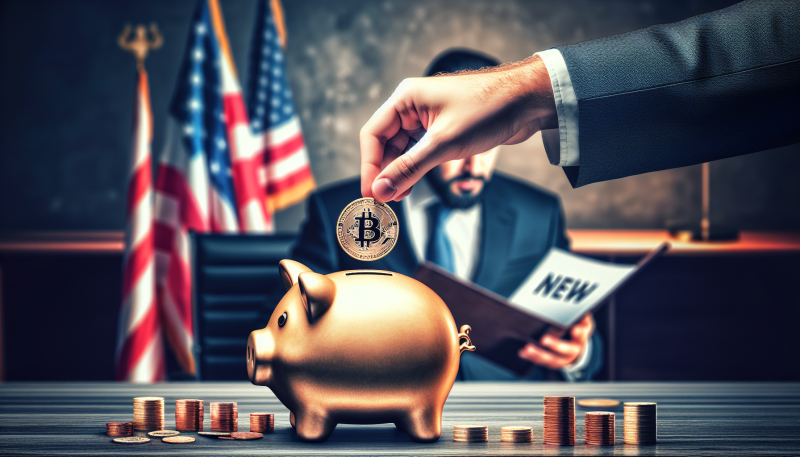
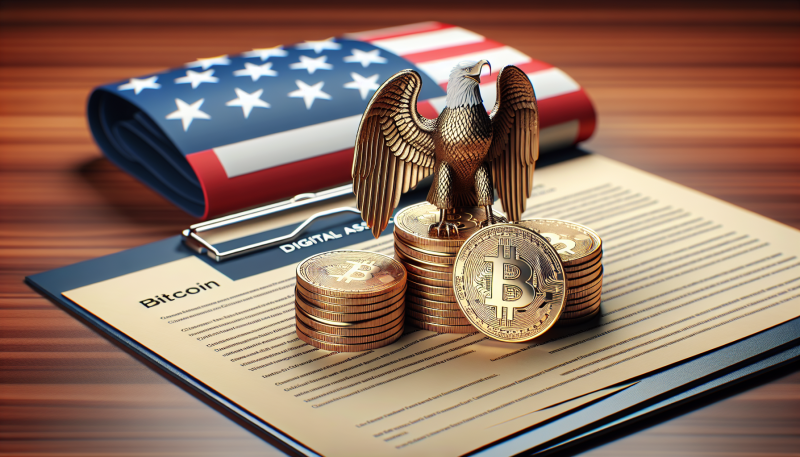
  • U.S. Congress Moves to Establish Strategic Bitcoin Reserve and Evaluate Digital Asset Stockpile

    U.S. Congress Moves to Establish Strategic Bitcoin Reserve and Evaluate Digital Asset Stockpile

    What happened?

    The U.S. Congress is progressing with legislation that demands a comprehensive report on the Strategic Bitcoin Reserve and the broader U.S. Digital Asset Stockpile from the Treasury Department within 90 days of the law being enacted. This directive is part of the Financial Services and General Government Appropriations Act for FY2026, and it requests an evaluation of the feasibility, security, and accounting of a federal digital asset reserve primarily comprised of confiscated cryptocurrencies.

    Who does this affect?

    This move impacts the federal government that currently holds an estimated $17-$20 billion worth of Bitcoin, chiefly acquired through law enforcement actions against online illegal activities. The proposed framework would require the Treasury to assess the practicability of establishing a strategic Bitcoin reserve and digital asset stockpile, including potential legal or operational barriers. It could also influence any outside contractors used for safekeeping these assets.

    Why does this matter?

    This action is significant as it reflects a shift in the perception of cryptocurrencies in the financial market. Rather than selling off these assets at public auctions as has been done in the past, the government is now considering retaining them strategically. Clear regulations around managing these reserves can impact not just the U.S. but also set a precedent for many other countries around the world that are exploring their own crypto reserves.