Category: News

  • Mantle Token (MNT) Surges Amid Market Challenges, Driven by Bybit Integration

    Mantle Token (MNT) Surges Amid Market Challenges, Driven by Bybit Integration

    What happened?

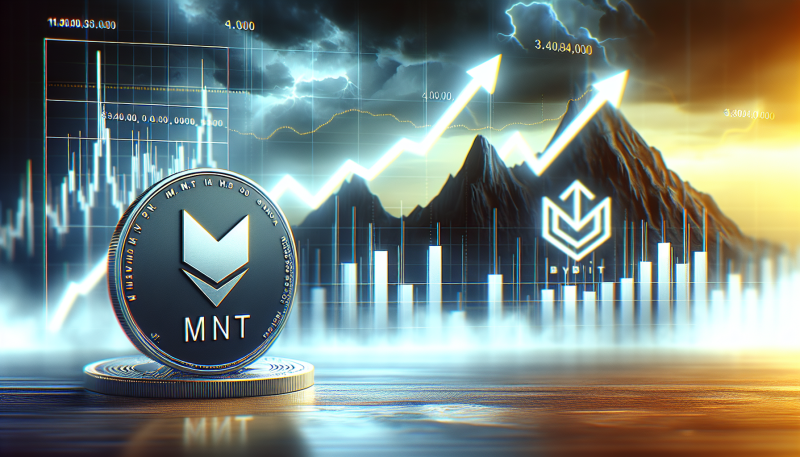
    Mantle (MNT) has made headlines as its token’s value continues to rise despite tough market conditions. Over the past week, MNT surged by more than 17%, contributing to a 50% gain in August, and the token is now recovering 100% from its previous low in June. The strategic integration of Mantle with the Bybit exchange has been a significant driver of this growth.

    Who does this affect?

    This affects crypto investors, especially those involved with the Mantle Network and Bybit exchange, as well as traders interested in governance and utility tokens. Competitors such as Pepe (PEPE), Ethena (ENA), and Aave (AAVE) in the top 30 crypto rankings will also feel the impact as MNT gains market presence. Additionally, the increased utility of MNT across Bybit’s ecosystem may attract new users and developers looking for innovative blockchain solutions.

    Why does this matter?

    This matters because MNT’s rising market capitalization and active on-chain activity show significant investor interest and potential market shifts. The partnership with Bybit could lead to increased use of MNT within their platform, potentially affecting the broader crypto market by introducing more liquidity and competition among cryptocurrencies. Furthermore, the potential breach of the $2 price level for MNT could signal market confidence and set a precedent for other Layer 2 network tokens.

  • Stellar’s XLM Price Plummets 8% Amid Decreased Trading Volumes, Raising Market Concerns

    Stellar’s XLM Price Plummets 8% Amid Decreased Trading Volumes, Raising Market Concerns

    What happened?

    Stellar’s XLM price dropped 8% in the last week as trading volumes decreased significantly. On August 22, only $245 million worth of XLM was traded, compared to $868 million on August 14. Despite this downturn, some traders believe that if XLM breaks past certain resistance levels, a rally could follow.

    Who does this affect?

    This situation primarily affects XLM investors and traders who might be considering potential entry points for buying or selling. It also impacts the Stellar development team monitoring these trends. Additionally, it indirectly influences other stakeholders in the cryptocurrency market, including analysts and competitors observing XLM’s performance.

    Why does this matter?

    A sustained drop in XLM’s price and trading volume could signal broader impacts on the crypto market, potentially affecting investor confidence. However, if a bullish trend emerges, as some predict, it could lead to significant gains, drawing increased attention to XLM. These dynamics can shift market sentiment, influencing both short-term trading strategies and long-term investment plans.

  • SBI Holdings and Startale Group Launch Integrated Onchain Trading Platform for Tokenized Assets

    SBI Holdings and Startale Group Launch Integrated Onchain Trading Platform for Tokenized Assets

    What happened?

    Japanese conglomerate SBI Holdings and crypto infrastructure provider Startale Group announced a partnership to launch an integrated onchain trading platform. The platform will focus on tokenized stocks and real-world assets, offering 24/7 trading and cross-border settlement with reduced fees. This venture aims to tap into the potential $18.9 trillion tokenized asset market by 2033.

    Who does this affect?

    This platform will impact global financial markets and individual investors by providing institutional-grade onchain trading infrastructure. Retail investors will benefit from fractional ownership of high-value stocks, as well as near-instant settlements. Traditional traders and DeFi enthusiasts alike will find new opportunities in the integration of tokenized stocks with decentralized finance protocols.

    Why does this matter?

    The collaboration between SBI Holdings and Startale Group could significantly influence the financial markets by accelerating the adoption of tokenization. By enabling 24/7 trade and real-time compliance monitoring, this initiative aims to enhance liquidity and capital efficiency. It represents a shift towards the digitalization of financial markets, setting a precedent for the convergence of traditional finance and blockchain technology.

  • Trump Coin Faces Significant Decline as Selling Pressure Increases

    Trump Coin Faces Significant Decline as Selling Pressure Increases

    What happened?

    Trump Coin has experienced a significant decline, losing 8.2% in the past week and briefly falling below a key support level of $8.55. Trading volumes skyrocketed by 31% in the past 24 hours to $460 million, which represents a strong selling pressure on the token. The token’s price, which peaked at $10 on August 14, has since fallen to $8.4, marking a 16% decrease.

    Who does this affect?

    This primarily affects investors and traders who hold Trump Coin, as they are witnessing a rapid decrease in its value. The selling pressure is especially concerning for those who bought the token at higher prices, betting on continued growth. Additionally, it impacts market sentiment, especially among those who are closely watching meme tokens like Trump Coin for potential investment opportunities.

    Why does this matter?

    The sharp decline in Trump Coin’s price and the corresponding trading activity can have a broader impact on the market, particularly within the altcoin segment. If the coin sustains its bearish trend, it could lead to increased volatility and may deter investor confidence in similar meme tokens. Conversely, should the token manage a bounce back from its current support level, it might reignite interest and potentially bring about a larger market rally in this sector.

  • Exchange Tokens Surge as Market Activity Heats Up

    Exchange Tokens Surge as Market Activity Heats Up

    What happened?

    Exchange tokens like BNB Coin and OKB have recently seen significant gains, with BNB reaching a new all-time high and OKB having a massive token burn. As a result of this trend, other exchange tokens such as KuCoin (KCS) and Bitget (BGB) could potentially experience boosts. The general crypto market is booming, driven by increased investor interest and institutional adoption.

    Who does this affect?

    This situation primarily affects users of cryptocurrency exchanges like Bitget and KuCoin, who purchase KCS and BGB to receive discounts on trading fees and other benefits. These tokens are experiencing increased demand due to rising trading activity, positioning them for potential growth. Investors and traders engaged with these platforms are likely to experience the impact of these trends directly.

    Why does this matter?

    The surge in exchange token prices signifies robust activity in the crypto markets, which can attract even more investors and increase market liquidity. For traders and investors, understanding these movements is crucial as they can impact portfolio values and inform strategic decisions. Additionally, the rise of user-friendly trading platforms like CoinFutures supports this dynamic by offering accessible tools for engaging with the market.

  • BIO Protocol Sees 27% Surge Following Bithumb Listing, Boosting Interest in Decentralized Science

    BIO Protocol Sees 27% Surge Following Bithumb Listing, Boosting Interest in Decentralized Science

    What happened?

    The BIO Protocol, part of the Decentralized Science (DeSci) movement, saw a significant price surge of over 27% overnight on August 22, reaching a five-month high of $0.1976. Its recent listing on the Bithumb exchange is credited for this spike in value, contributing to an impressive 91% gain within a week and nearly 200% throughout August. The token’s success is further supported by its strategic listings on major exchanges like Binance, Coinbase, and others, boosting its 24-hour trading volume to $637 million.

    Who does this affect?

    This development primarily affects investors and stakeholders in the BIO Protocol, including those who have invested due to its promising AI-powered scientific research capabilities. The protocol’s growing credibility, endorsed by figures like Changpeng Zhao and Vitalik Buterin, heightens interest among crypto communities and potential investors. As the protocol continues to gain traction through various exchange listings, its implications extend to the broader DeSci community, emphasizing the potential integration of blockchain technology into scientific research.

    Why does this matter?

    The rise of the BIO token highlights significant market interest in blockchain applications beyond traditional financial use cases, potentially setting a precedent for future DeSci projects. The momentum and high trading volumes suggest confidence in the token’s ability to achieve further price increases, with analysts predicting it might revisit its all-time high of $0.92. This trend underscores the growing appetite for innovative blockchain-based solutions in scientific research, providing new opportunities for profit and technological advancement in cryptocurrency markets.

  • Taiwan Indicts 14 in Major Crypto Money Laundering Scheme Worth $75 Million

    Taiwan Indicts 14 in Major Crypto Money Laundering Scheme Worth $75 Million

    What happened?

    Taiwan has indicted 14 people involved in the nation’s largest crypto money laundering scheme worth NT$2.3 billion (about $75 million). The ring operated through fake Coin Exchange franchises, defrauding over 1,500 victims in a single year. The main suspect, Shi Qiren, could face up to 25 years in prison for charges including fraud and money laundering.

    Who does this affect?

    This case affects the over 1,500 individuals who were defrauded by the fake exchanges. It also impacts other crypto investors in Taiwan, who may now be more cautious and skeptical of local crypto services. Additionally, legitimate crypto businesses in Taiwan might face increased scrutiny and regulatory requirements as a result of this scandal.

    Why does this matter?

    The case highlights vulnerabilities in the crypto market that can be exploited due to regulatory blind spots, impacting market trust and stability. As authorities crack down on these schemes, we may see increased regulation, which could deter some from investing while making the market safer for others. The international nature of the crime underlines the need for global cooperation in enforcing anti-money laundering regulations in the crypto space.

  • SharpLink Gaming Announces $1.5 Billion Stock Buyback Program to Enhance Shareholder Value and Support Ethereum Adoption

    SharpLink Gaming Announces $1.5 Billion Stock Buyback Program to Enhance Shareholder Value and Support Ethereum Adoption

    What happened?

    SharpLink Gaming, Inc. has announced a significant move by authorizing a stock buyback program worth up to $1.5 billion. The company plans to repurchase its shares from the stock market, signaling a strategy to enhance shareholder value. This decision aligns with SharpLink’s efforts to strengthen its position as both a gaming technology leader and a proponent of Ethereum adoption.

    Who does this affect?

    This buyback program primarily affects SharpLink Gaming’s shareholders, as it aims to increase the value of their investments by reducing the number of shares available in the market. Additionally, it impacts the broader financial community, especially those interested in tech firms with strong cryptocurrency integration, such as Ether (ETH). As a publicly traded company with significant Ethereum holdings, this move could also influence other corporations considering blockchain-based financial strategies.

    Why does this matter?

    This action has notable market implications as it underscores SharpLink’s commitment to aligning its capital strategy with Ethereum’s growth as a financial asset. By leveraging its ETH reserves, SharpLink seeks to balance shareholder returns with prudent financial oversight in a volatile market. The buyback authorization not only supports the company’s stock price but also reflects confidence in Ethereum’s potential as a key player in global finance infrastructure.

  • Solana’s SOL Token Gains Traction Amid Market Optimism and Regulatory Concerns

    Solana’s SOL Token Gains Traction Amid Market Optimism and Regulatory Concerns

    What happened?

    Solana’s native token, SOL, is gaining significant attention from traders and investors amidst a market environment filled with both optimistic signals and regulatory concerns. As of August 22, 2025, SOL is among the top-performing altcoins by market capitalization, serving as an important indicator for overall market sentiment. Solana is distinguished for its rapid transaction capabilities and expanding ecosystem of decentralized applications, marking it as a critical player in the smart contract and DeFi sectors.

    Who does this affect?

    The developments around Solana affect a wide range of stakeholders including traders, investors, and those involved in the cryptocurrency ecosystem. Individuals or organizations utilizing Solana’s technology, such as developers working on decentralized applications and participants in DeFi projects, are directly impacted. The broader crypto community also pays close attention to Solana, given its influence on market trends and investor confidence.

    Why does this matter?

    Solana’s performance has substantial implications for the crypto market, influencing investor sentiment and decision-making across various digital assets. As a prominent altcoin, SOL’s price and network activity can act as a barometer for the health and direction of the cryptocurrency market as a whole. Market participants closely monitor Solana for insights into potential growth opportunities and risks within the crypto space.

  • Ripple and SBI Holdings Launch RLUSD in Japan to Enhance Blockchain Adoption

    Ripple and SBI Holdings Launch RLUSD in Japan to Enhance Blockchain Adoption

    What happened?

    Ripple has teamed up with SBI Holdings and its subsidiary SBI VC Trade to introduce Ripple USD (RLUSD) in Japan, marking a significant collaboration aimed at boosting blockchain adoption in the Japanese financial market. This partnership was solidified through a memorandum of understanding that highlights their ongoing efforts to integrate digital assets into regulated financial systems. The rollout will be led by SBI VC Trade, which is leveraging its position as a licensed Electronic Payment Instruments Exchange Service Provider to disseminate RLUSD across Japan.

    Who does this affect?

    This development impacts several groups including institutional investors, fintech companies, and retail users in Japan who are looking for secure and compliant digital payment solutions. Financial institutions that are exploring blockchain technologies now have an opportunity to integrate RLUSD into their offerings, expanding the realm of possibilities for digital transactions. Additionally, the broader financial ecosystem in Japan stands to benefit from increased liquidity and cross-border transaction efficiency facilitated by this stablecoin initiative.

    Why does this matter?

    The introduction of RLUSD into Japan’s financial landscape has the potential to significantly influence the stablecoin market, which is expected to grow from its current valuation of nearly $300 billion into trillions in the coming years. By providing a transparent and compliant stablecoin backed by high-quality reserves, Ripple and SBI are setting a new standard for digital currencies, attracting more institutional adoption and credibility. This move not only reinforces Japan’s position as a leader in blockchain innovation but also pressures other markets to enhance their digital currency offerings, potentially leading to broader changes in global financial systems.