
Category: News

  • Bybit halts new registrations in Japan as the FSA tightens crypto oversight

    Bybit halts new registrations in Japan as the FSA tightens crypto oversight

    What happened?

    Bybit announced it will suspend new user registrations in Japan starting October 31 as Japan’s Financial Services Agency rolls out tighter crypto oversight. The exchange called the pause a “proactive” move to ensure compliance with evolving local rules. Existing Japanese users are unchanged for now while Bybit reviews the requirements and continues talks with the FSA.

    Who does this affect?

    New and prospective Japanese users who wanted to open Bybit accounts will no longer be able to register from October 31. Current Bybit customers in Japan keep their services for the moment but could face changes if further restrictions follow. The decision also signals pressure on other exchanges, banks, and retail investors in Japan as regulators reshape the market.

    Why does this matter?

    Moves like this can shift trading volume away from international platforms and toward licensed domestic exchanges, changing liquidity patterns in Japan. If the FSA lets banks hold crypto under strict rules, institutional involvement and custody options could grow while compliance costs rise. Overall, tougher rules may reduce risky retail activity, create short-term market volatility, and accelerate consolidation and compliance-driven changes across the crypto market.

  • Australian Federal Police cracked manipulated 24-word seed phrase, seized $6 million in crypto, signaling tougher enforcement and regulatory scrutiny

    Australian Federal Police cracked manipulated 24-word seed phrase, seized $6 million in crypto, signaling tougher enforcement and regulatory scrutiny

    What happened?

    Australian Federal Police investigators, led by a data scientist’s hunch, decoded a manipulated 24‑word recovery phrase and seized about $6 million AUD in cryptocurrency. The analyst removed extra digits that had been added to the seed phrase, unlocked the wallet, and the funds were restrained by the AFP’s Criminal Assets Confiscation Taskforce. Those assets are now tied up in the legal process and could be moved into the Commonwealth Confiscated Assets Account if the courts approve confiscation.

    Who does this affect?

    This directly affects alleged criminals and organized crime groups that use crypto to hide illicit profits, because it shows law enforcement can break some of their defenses. It also affects everyday crypto users by highlighting how important it is to protect seed phrases and avoid sloppy or modified backups that could be compromised. Finally, it affects law enforcement, regulators and compliance teams who will likely use this win to justify more funding, tools and tougher oversight of crypto flows.

    Why does this matter?

    For markets, this signals stronger enforcement against crypto-linked crime, which can boost confidence among legitimate investors but may also tighten liquidity for assets tied to illicit activity. Increased enforcement and scrutiny will push exchanges, custodians and projects to strengthen AML/CTF controls, potentially raising compliance costs and shifting trading patterns—especially for privacy-focused services. Overall, the case is a reminder that technical forensics can unmask hidden funds and that growing regulatory pressure could influence prices, listings and participant behavior over time.

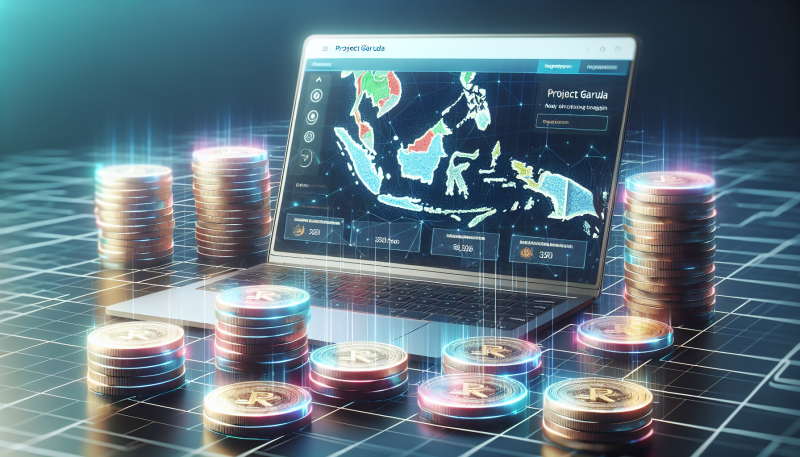
  • Indonesia Advances Bond-Backed Digital Rupiah in Project Garuda

    Indonesia Advances Bond-Backed Digital Rupiah in Project Garuda

    What happened?

    Bank Indonesia announced it is advancing a digital rupiah that blends CBDC features with stablecoin mechanics, backing each unit with tokenized government bonds and digital central bank securities. The rollout is part of Project Garuda and will begin with a wholesale interbank phase before expanding to retail use. BI says the design builds on a 2024 DLT proof-of-concept to improve settlement, transparency, and programmable payments.

    Who does this affect?

    Indonesian banks and payment providers are first in line because the wholesale phase targets interbank settlement and liquidity operations. It also directly affects bond markets and investors since government securities will be tokenized and used as the CBDC’s backing. Crypto firms, private stablecoin issuers, businesses, and everyday consumers will feel the impact later when a retail version offers a government-backed digital payment option.

    Why does this matter?

    This matters because a bond-backed CBDC can boost liquidity, speed up settlement, and cut transaction costs, making Indonesia’s bond and payments markets more efficient. Offering a sovereign, asset-backed alternative to private stablecoins could shift demand away from private crypto products, alter bank deposit flows, and change where digital transactions and trading activity happen. On the international front, a programmable, interoperable digital rupiah could influence capital flows, cross-border payment patterns, and investor views on Indonesian yields and FX, with potential knock-on effects for markets.

  • Crypto Market Dips as ETF Outflows and Fed Action Move Prices, Regulators Fine CryptoLink

    Crypto Market Dips as ETF Outflows and Fed Action Move Prices, Regulators Fine CryptoLink

    What happened?

    The global crypto market slid about 3% to $3.78 trillion with 8 of the top 10 coins down — Bitcoin fell ~3.5% to around $109k and Ethereum dropped ~3.6% to about $3,868. US spot BTC ETFs saw large outflows (~$470.7M) and ETH ETFs also had outflows (~$81.4M), though Solana ETFs recorded inflows. The Fed cut rates by 25 bps and said QT will end in December, signaling returning liquidity, while regulators fined CryptoLink for AML lapses.

    Who does this affect?

    Short-term traders and ETF investors feel the pinch from sudden outflows and increased volatility, which can trigger stop losses and margin calls. Institutional players and asset managers face shifting flows and heightened competition as firms file for new altcoin ETFs, while retail holders see portfolio dips and mixed altcoin performance. Crypto firms and service providers also face greater regulatory scrutiny and compliance costs after fines like the one against CryptoLink.

    Why does this matter?

    The market reaction matters because ETF outflows can pressure prices in the short term, amplifying volatility and investor caution. The Fed’s end of QT and rate cut mean liquidity could return, potentially fueling a broader rally later — but timing and distribution of that liquidity between Bitcoin, altcoins, and ETFs will shape who benefits. Overall, weaker sentiment (Fear & Greed at 34) plus regulatory actions keep the market choppy and make institutional flows and ETF moves the key drivers for near-term price action.

  • Cardano ADA Eyes Breakout From Three-Month Triangle With Potential 60% Rally Toward $1 in November

    What happened?

    Cardano (ADA) is testing a break above a three-month symmetrical triangle that could end a long accumulation phase. Analysts say a confirmed breakout might spark a roughly 60% rally toward the $1 level in November. Right now ADA trades around $0.63, is down about 3% on the day and over 20% for the month, but daily volume remains above $1 billion.

    Who does this affect?

    This matters to retail traders and investors who hold ADA or trade altcoins, since a big move could change short-term portfolio values. It also affects speculators and early buyers in related presales and memecoins like PEPENODE that often move with broader crypto sentiment. Institutional crypto funds, DeFi projects on Cardano, and developers focused on IoT/AI integrations could see capital flows and attention shift depending on ADA’s direction.

    Why does this matter?

    A confirmed breakout would likely boost market sentiment and draw fresh capital into ADA and correlated altcoins, increasing volatility and liquidity across the crypto market. Strong daily volume suggests any break could have outsized impact, potentially lifting prices and reviving interest in November if history repeats. Conversely, if key support around $0.595–$0.65 fails, downside risk could trigger wider selling and hurt short-term market confidence.

  • ICP at $3 Support Could Spark 5x Rally to $16, Analyst Says

    ICP at $3 Support Could Spark 5x Rally to $16, Analyst Says

    What happened?

    An analyst says Internet Computer (ICP) is a dormant giant that could explode and is being overlooked. He points to on-chain data showing ICP as the #1 blockchain by transaction volume, ahead of Solana and Ethereum. The token crashed from $4.40 to $2.80 on Oct 10 and is now sitting on a key $3 support level that will decide if it can recover.

    Who does this affect?

    This directly affects ICP holders and traders who are exposed to sharp price swings and are watching the $3 support. It matters to developers and apps built on the Internet Computer because growing real usage would validate the network. It also concerns investors in small-cap projects and presales like Pepenode, since capital could rotate into promising alt tokens if ICP shows strength.

    Why does this matter?

    If ICP holds $3 and rebounds toward $16 it could deliver a 5x move and, per the analyst, potentially far larger gains by 2030, which would reshuffle winners in the crypto market. A real usage-driven breakout would encourage capital to flow back into utility chains and real-app ecosystems instead of meme coins, changing altcoin leadership and volume patterns. Still, the recent crash and ongoing volatility mean big upside comes with big risk, and macro moves like Fed rate cuts can amplify both rallies and sell-offs.

  • YZi Labs Leads $11 Million Seed Round for VideoTutor, an AI-Driven Personalized Tutoring Platform

    YZi Labs Leads $11 Million Seed Round for VideoTutor, an AI-Driven Personalized Tutoring Platform

    What happened?

    YZi Labs led an $11 million seed round in VideoTutor, a startup that turns questions into personalized animated, voice-guided lessons, marking YZi Labs’ first AI software investment. The platform combines an LLM with a Manim-based renderer and proprietary tools like a Layout Manager and a fault-tolerant LLM loop to create precise, low-cost educational videos. VideoTutor hit rapid traction—more than 20,000 users and 20,000 videos in 10 days—and will use the funding to boost R&D, scale infrastructure, and expand globally.

    Who does this affect?

    Students and families who can’t afford traditional tutoring could get access to cheaper, personalized lessons across K–12, test prep, STEM, and language learning. Schools, learning platforms, and edtech companies are potential partners or customers, as evidenced by 1,000 API integration requests in the first days after launch. Traditional tutors and video-generation startups will face new competition as AI-driven, automated tutoring scales quickly and cuts costs.

    Why does this matter?

    Making high-quality, personalized lessons cheap and scalable could unlock a huge addressable market, especially where most students can’t afford conventional tutoring. If VideoTutor’s approach truly offers better visual clarity and semantic precision at lower costs, it could shift spending from human tutors and legacy content toward automated AI-driven instruction. For investors and edtech platforms, this signals growing momentum and capital flow into AI education, which could accelerate adoption, partnerships, and competition across the global learning market.

  • PUMP Posts Weekly Gains as Token Burns Shrink Supply and Dominate Solana Launchpad Market

    PUMP Posts Weekly Gains as Token Burns Shrink Supply and Dominate Solana Launchpad Market

    What happened? PUMP posted weekly gains and is burning tokens while dominating the Solana launchpad market.

    PUMP was one of the few tokens to book a weekly gain even as the broader market turned bearish ahead of the Fed decision. The platform commands roughly 60% of the Solana launchpad market and processed about $10.4 billion in trading volume over the past 30 days. At the same time, an ongoing token burn program has reduced circulating supply by roughly 10%, with burn rates and trading activity both increasing.

    Who does this affect? Holders, traders, and other projects in the Solana launchpad space.

    Long-term PUMP holders stand to benefit if the burns and community holding behavior create a genuine supply squeeze. Short-term traders face elevated volatility because trading volumes jumped about 30% and now represent a large slice of the circulating supply, signaling fast-moving liquidity and potential selling pressure. Competing launchpads and new presale projects may see shifting capital flows as investors chase the strongest performers on Solana.

    Why does this matter? It could spark a supply-driven price surge and shift altcoin market dynamics.

    If burns keep accelerating and buyer interest grows, PUMP could see meaningful upside — analysts point to a near-term target around $0.0061 and a possible move to $0.0075 if momentum continues. A rally in PUMP could pull more capital into Solana launchpads and help fuel broader altcoin demand, lifting liquidity and sentiment in the sector. But because trading volume now represents a big portion of supply, the market impact will depend on whether buying pressure outpaces potential large-scale selling, making the situation both opportunistic and risky.

  • Fed Rate Cut and End of QT Spark Liquidity in Crypto Markets with Uncertain Altcoin Rally

    Fed Rate Cut and End of QT Spark Liquidity in Crypto Markets with Uncertain Altcoin Rally

    What happened? The Fed cut rates 25 basis points and confirmed quantitative tightening ends in December.

    Markets reacted instantly — Bitcoin dipped to around $109K while most altcoins underperformed. Ending QT means fresh liquidity is set to flow back into markets, which is why people are already talking about a potential altcoin season. But analysts say the charts look more like a reset than a clean, predictable switch to a broad altcoin rally, so moves could be choppy.

    Who does this affect? Traders, investors, and crypto markets that are sensitive to liquidity and rate moves.

    Short-term spot and futures traders will feel the biggest impact as returning liquidity and rate cuts change risk flows and open interest surges, notably in XRP and SOL futures. Long-term Bitcoin holders may benefit from continued dominance while many altcoins remain well below their 2021 highs and could take longer to catch up. Speculative players hunting narratives — including meme coin investors eyeing projects like Maxi Doge — could also see big moves if capital rotates into higher-risk tokens.

    Why does this matter? More liquidity could push markets higher but the path and winners are uncertain, affecting prices and strategy.

    From a market-impact view, ending QT and ongoing rate cuts raise the odds of renewed rallies, but Bitcoin’s strength suggests a broader altcoin rally may lag until momentum shifts. Record futures open interest increases the chance of volatile swings and quick re-pricing in SOL, XRP and meme coins, with technical ranges pointing to possible targets like SOL toward $210–$225 and XRP testing $2.40–$2.60. That setup can fuel big gains but also sharp pullbacks, so position sizing and risk management will be crucial for anyone trading these moves.

  • Maybank, BNP Paribas and Marketnode Launch On-Chain Money Market Fund

    Maybank, BNP Paribas and Marketnode Launch On-Chain Money Market Fund

    What happened?

    Maybank, BNP Paribas and Marketnode launched Maybank’s Money Market Fund on-chain using Marketnode’s Gateway tokenization platform. BNP Paribas will act as transfer agent while Marketnode provides interoperable issuance and management across multiple networks. The move builds on Singapore’s push for regulated tokenization and signals growing institutional adoption of tokenized funds.

    Who does this affect?

    Retail and institutional investors in Asia could get easier and faster access to money market funds via on-chain shares. Banks, fund managers, custodians and transfer agents will need to update processes and infrastructure to support tokenized products. Crypto infrastructure providers and regulators in Singapore and the region will also be directly involved as they set standards and oversight for these offerings.

    Why does this matter?

    Tokenizing a mainstream money market fund can reduce frictions, speed up settlement and expand liquidity by making shares more accessible and tradable. If large banks keep launching tokenized funds, it could shift where short-term cash is parked, disrupt traditional distribution and custody models, and attract new capital into tokenized real-world assets. Broad adoption in regulated hubs like Singapore would help build interoperable markets, push competitors to innovate, and gradually change pricing, transparency and operational costs across the funds industry.