Category: News

  • SEC Chairman Announces Regulatory Changes to Boost Tokenization and Digital Asset Market in the U.S.

    SEC Chairman Announces Regulatory Changes to Boost Tokenization and Digital Asset Market in the U.S.

    “`html

    What happened?

    The SEC Chairman Paul Atkins announced on CNBC that the rules regarding digital assets in the U.S. have been unclear, but changes are coming with an imminent boom in tokenization. Tokenization is seen as the next step for increasing efficiency across markets and ensuring more public access to private markets. Atkins has promised to make regulatory processes more transparent and move away from “regulation by enforcement.”

    Who does this affect?

    This affects investors, companies, and financial institutions involved in or looking to enter the digital asset market in the United States. With the prospect of clearer regulations and tokenization, businesses and individuals may find new opportunities in both public and private markets related to digital finance. The changes could benefit proponents of cryptocurrency and blockchain technology as the SEC shifts toward a more supportive stance.

    Why does this matter?

    The announcement signals a potential market shift as the SEC moves towards supporting innovation in digital finance, which could lead to increased investment and growth in the sector. Tokenization’s rise, already showing a 260% increase, marks a significant trend towards digitized finance, potentially boosting the crypto market and opening doors for new financial products. This shift could help make the U.S. a leading hub for secure, efficient business operations in the digital asset market.

    “`

  • DeFi Development Corp Announces $100 Million Fundraising Plan Following SEC Filing Withdrawal

    DeFi Development Corp Announces $100 Million Fundraising Plan Following SEC Filing Withdrawal

    What happened?

    DeFi Development Corp, a U.S. public company focused on a Solana-based treasury strategy, announced its plan to raise $100 million through a private offering of convertible senior notes due in 2030. This announcement followed the company’s recent withdrawal of a $1 billion SEC filing due to disqualification issues. Despite the setback, DeFi Development Corp aims to fortify its Solana investments and stabilize its financial position.

    Who does this affect?

    This move primarily affects institutional investors, who are the intended buyers of the notes under Rule 144A of the Securities Act. It also impacts existing shareholders of DeFi Development Corp due to potential stock repurchase plans. Additionally, the broader crypto market, specifically those invested in Solana, is influenced as the company reinforces its strategic focus on SOL.

    Why does this matter?

    The fundraising initiative could have a significant impact on the market by potentially influencing the price of DeFi Development Corp’s stock and Solana itself. As interest in Solana ETFs grows, the move may position the company advantageously should these funds receive SEC approval. This strategy signals confidence in Solana’s future value, which could buoy investor sentiment and spark demand for SOL-related investments.

  • Trump Threatens Musk’s Deportation, Sparking Volatility in Cryptocurrency Markets

    Trump Threatens Musk’s Deportation, Sparking Volatility in Cryptocurrency Markets

    “`html

    What happened?

    In a surprising escalation, Donald Trump has threatened to “look into” the deportation of Elon Musk, amid their ongoing public feud. The rift between Trump and Musk could have serious implications, especially as Musk has been instrumental in boosting meme coins like Dogecoin and others. Investor sentiment around TRUMP coin has already taken a hit, with the coin experiencing a 5% daily loss amidst the uncertainty.

    Who does this affect?

    This situation primarily affects investors of the TRUMP coin and enthusiasts within the meme coin community who rely on high-profile endorsements for coin value boosts. It also impacts broader communities who follow and invest in cryptocurrencies influenced by personalities like Musk. Additionally, it may concern political audiences interested in Trump’s actions since they might result in unexpected market shifts linked to his statements.

    Why does this matter?

    The threat of deportation against Musk introduces volatility into the cryptocurrency market, especially for the TRUMP coin, whose recent decline reflects waning investor confidence. Elon Musk’s backing has historically provided significant momentum for meme coins; without his support, these coins could struggle to maintain or regain market strength. Investors and market participants now face increased uncertainty, as social sentiment plays a crucial role in cryptocurrency valuations.

    “`

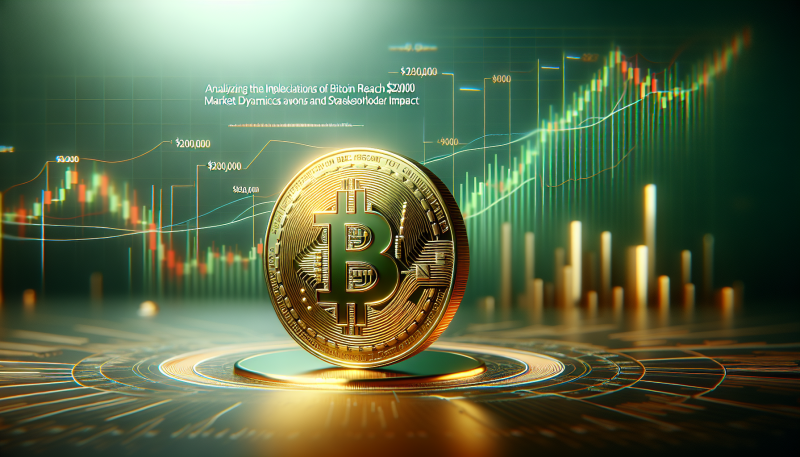
  • Analyzing the Implications of Bitcoin Reaching $200,000: Market Dynamics and Stakeholder Impact

    Analyzing the Implications of Bitcoin Reaching $200,000: Market Dynamics and Stakeholder Impact

    What happened?

    Bitcoin’s potential to reach $200,000 is analyzed in this article using AI to understand what might happen if it achieves this price point. It investigates the implications without predicting an exact date, exploring prior market cycles and behavior patterns that could emerge. The goal is to map potential outcomes such as changes in Bitcoin dominance, altcoin behavior, sector reactions, macro drivers, and psychological sentiment.

    Who does this affect?

    This milestone primarily affects investors and stakeholders within the cryptocurrency market, including both retail investors and institutional players. It will likely engage new classes of capital, attract global media attention, and impact asset rotation dynamics. Additionally, sector-specific shifts could impact Ethereum holders, altcoin investors, and traders involved in DeFi, memecoins, and metaverse ventures.

    Why does this matter?

    If Bitcoin reaches $200,000, it could significantly impact market capitalization, aligning with valuations of global blue-chip equities and sovereign debt. It may cause Bitcoin dominance to spike initially, drawing in significant institutional flows and driving media interest. This shift could lead to subsequent rotations into altcoins, influencing broader market dynamics and potentially triggering altcoin rallies, particularly in assets like Ethereum.

  • Germany Approves EURAU: The First Regulated Euro-Denominated Stablecoin

    Germany Approves EURAU: The First Regulated Euro-Denominated Stablecoin

    What happened?

    The EURAU stablecoin has become Germany’s first regulated euro-denominated digital currency after a joint venture between Deutsche Bank’s asset management arm DWS, Flow Traders, and Galaxy Digital obtained regulatory approval. The approval came in the form of an electronic money institution (EMI) license granted by Germany’s Federal Financial Supervisory Authority (BaFin) on July 1, 2025. The stablecoin complies with the European Markets in Crypto Assets (MiCA) regulatory framework, offering full collateralization and institutional-grade transparency through proof of reserves.

    Who does this affect?

    This development affects several stakeholders including financial institutions, fintech companies, treasury operations, and enterprise clients both within Europe and internationally. Institutional players, including Deutsche Bank, are key in driving this initiative, which will impact how these organizations facilitate cross-border settlements. The issuance of a fully regulated euro-backed stablecoin is significant for any organization that deals with euro transactions and seeks faster, more efficient payment solutions.

    Why does this matter?

    The introduction of EURAU is a major step forward for the digital assets market, particularly in Europe, as it brings more legitimacy and trust to euro-denominated digital currencies. With growing interest and regulation in the stablecoin space, it could lead to significant shifts in how traditional and digital financial services operate, possibly resulting in broader adoption of digital currencies. The market could see increased liquidity and reduced transaction costs, providing a more seamless and efficient financial system benefiting various sectors that rely on cross-border transactions.

  • Figma’s IPO Filing and Strategic Bitcoin Investments Signal Shift in Corporate Financial Strategies

    Figma’s IPO Filing and Strategic Bitcoin Investments Signal Shift in Corporate Financial Strategies

    “`html

    What happened?

    Figma, a leading design software company, has filed for an initial public offering (IPO) and disclosed significant investments in Bitcoin. Their filing includes a $69.5 million holding in Bitcoin ETFs and plans to invest an additional $30 million into cryptocurrencies. This marks a major strategic move as Figma highlights crypto as a core part of its financial strategy alongside traditional securities.

    Who does this affect?

    This decision primarily impacts Figma’s investors and stakeholders who are interested in the company’s financial strategies and future performance. Additionally, it affects the cryptocurrency market by adding a high-profile tech company’s investment and support. The move could also influence other corporations considering similar investment strategies in digital assets.

    Why does this matter?

    Figma’s substantial investment in Bitcoin ETFs signals increasing institutional adoption of cryptocurrencies in corporate treasuries, potentially boosting market confidence and stability. This move could encourage other tech companies to follow suit, amplifying demand and potentially affecting Bitcoin prices. Moreover, it reflects a shifting trend towards integrating crypto assets within mainstream financial operations, impacting broader market dynamics.

    “`

  • Bybit Launches MiCAR-Compliant Trading Platform for European Market Expansion

    Bybit Launches MiCAR-Compliant Trading Platform for European Market Expansion

    What happened?

    Bybit has launched its new platform, Bybit.eu, specifically designed for users in the European Economic Area (EEA). The platform operates under Bybit EU GmbH, which is fully licensed as a Crypto-Asset Service Provider (CASP) in accordance with the Markets in Crypto-Assets Regulation (MiCAR). This move marks a significant step for Bybit in expanding its presence and compliance in the European market.

    Who does this affect?

    The launch of Bybit.eu affects cryptocurrency traders and investors in the European Economic Area, providing them with a compliant and localized trading platform. High-volume traders can benefit from the VIP account management and advanced trading tools offered by the platform. Additionally, the provision of multilingual support in major European languages ensures that a broader user base can access tailored customer service.

    Why does this matter?

    Bybit’s launch of a MiCAR-compliant platform indicates its commitment to adhering to regulatory standards, which could enhance trust and appeal among European traders. This development may spur increased competition among crypto exchanges in Europe as they try to capture a growing market influenced by clearer regulations. Ultimately, the launch signals a potential shift in market dynamics, as more companies might follow suit and strengthen their operations in Europe due to regulatory clarity and rising adoption rates.

  • XRP Holds Steady at $2.20 Amid Market Challenges and Anticipated ETF Approvals

    XRP Holds Steady at $2.20 Amid Market Challenges and Anticipated ETF Approvals

    What happened?

    XRP is maintaining a price of $2.20 amid market challenges, including a general 2% downturn in the cryptocurrency market. Analysts predict a 95% chance of XRP ETFs gaining approval, and Ripple has launched an Ethereum-compatible sidechain to expand XRP Ledger use. These developments have positioned XRP for possible gains in the future, despite current price stagnation.

    Who does this affect?

    This situation impacts XRP investors, traders, and institutions accumulating the coin, as well as developers utilizing the XRP Ledger for Ethereum-compatible applications. The potential ETF approvals and new technological advancements could influence decisions for both long-term holders and speculative traders. Furthermore, the broader cryptocurrency market participants are likely watching these events to gauge overall market sentiment and opportunities.

    Why does this matter?

    The potential approval of XRP ETFs and the XRPL EVM launch could significantly boost XRP’s market value and adoption. This could drive institutional interest and capital inflow into the market, supporting prices and potentially triggering a broader rally within the crypto space. Approval of ETFs could set a precedent for other cryptocurrencies, affecting regulations, market stability, and investor confidence.

  • Pi Network Partners with Fiat-to-Crypto Platforms to Enhance Market Usability and Drive Demand

    Pi Network Partners with Fiat-to-Crypto Platforms to Enhance Market Usability and Drive Demand

    “`html

    What happened?

    Pi Network has partnered with fiat-to-crypto platforms Onramper and Onramp.money, allowing Pi to be purchased directly with fiat currency. This new development potentially boosts retail demand for Pi coins, which could improve the long-term price outlook. The market reacted positively to this news, showing a 5% daily gain as investor sentiment began to shift.

    Who does this affect?

    This affects current and potential investors in Pi Network, as well as businesses and merchants considering integrating Pi into their operations. The ability to buy Pi directly with fiat lowers barriers to entry for new investors and facilitates broader adoption among merchants by easing compliance challenges. Additionally, the partnership supports the broader Pi community by potentially increasing the coin’s usability and acceptance worldwide.

    Why does this matter?

    The integration with fiat-to-crypto platforms could have a significant impact on the Pi market by improving liquidity and attracting new buyers. As the demand for Pi rises, the coin could become more stable and valuable, encouraging further investments and integration into mainstream markets. Furthermore, these partnerships provide a legal and technological framework that could pave the way for listings on major exchanges like Binance, which could dramatically increase exposure and trading volume.

    “`

  • Ethereum’s Price Momentum: Can It Surpass $2,600 Resistance After Recent Rebound?

    Ethereum’s Price Momentum: Can It Surpass $2,600 Resistance After Recent Rebound?

    What happened?

    Ethereum recently rebounded by $200 after reaching a low at the $2,400 support level. This comeback followed a bearish pattern formation but was bolstered by institutional investments and increasing adoption of Layer-2 solutions. Now, traders are keenly observing if Ethereum can surpass the $2,600 resistance to trigger further price gains.

    Who does this affect?

    These developments impact a wide range of stakeholders including traders, investors, developers, and institutional entities involved with Ethereum. Traders are particularly affected as they anticipate market shifts based on Ethereum’s ability to break through resistance levels. Institutional investors and developers also have a vested interest in Ethereum’s performance and its ongoing technological advancements, which could influence their strategic decisions.

    Why does this matter?

    The potential rally in Ethereum’s price could significantly impact the broader cryptocurrency market, potentially elevating market sentiment and increasing capital inflow. A successful breakthrough past the $2,600 resistance might attract more institutional money, thereby enhancing liquidity and potentially driving up prices for other crypto assets tied to Ethereum. This movement reflects Ethereum’s pivotal role in the crypto ecosystem, especially given its domination in DeFi and smart contract applications.