
Category: News

  • XRP Ledger Launches EVM Sidechain and Expands Stablecoin Ecosystem to Enhance Market Presence

    XRP Ledger Launches EVM Sidechain and Expands Stablecoin Ecosystem to Enhance Market Presence

    What happened?

    The XRP Ledger introduced an EVM sidechain on its testnet, aiming to launch the mainnet in Q2. This sidechain will bring Ethereum smart contract capabilities to the XRP Ledger, leveraging wrapped XRP as gas for transactions. Additionally, XRP Ledger has expanded its stablecoin ecosystem with new assets like EURØP and USDB, strengthening its regional presence.

    Who does this affect?

    This development affects developers and businesses using the XRP Ledger who are interested in Ethereum compatibility for decentralized applications. It also impacts regional users where the new stablecoins, EURØP and USDB, are introduced, providing them with more diverse digital asset options. Furthermore, investors and crypto enthusiasts following XRP and Ripple developments will be keenly observing these changes.

    Why does this matter?

    The introduction of an EVM sidechain expands XRP Ledger’s market by integrating with Ethereum’s large developer community, potentially increasing its utility and adoption. By expanding its stablecoin offerings, the XRP Ledger strengthens its role in the global payments ecosystem, appealing to regional markets with currency-specific tokens. This could lead to increased demand for XRP and its associated technologies, impacting its value and positioning in the broader cryptocurrency market.

  • Michael Saylor Predicts Bitcoin Could Reach $1 Million as Market Conditions Improve

    Michael Saylor Predicts Bitcoin Could Reach $1 Million as Market Conditions Improve

    What happened?

    Michael Saylor, Executive Chairman of Strategy, stated in a Bloomberg interview that he believes the Bitcoin market is past the phase of “crypto winter” and expects its price to reach $1 million. According to Saylor, Bitcoin’s limited daily mining output combined with increased institutional buying pressure is poised to drive its value higher. He pointed out major institutions and governments are actively accumulating Bitcoin, indicating strong ongoing interest.

    Who does this affect?

    This situation primarily affects Bitcoin miners, institutional investors, and companies investing heavily in cryptocurrency. Investors and financial institutions stand to benefit from potential price increases if the demand for Bitcoin continues to grow. Additionally, public companies that have already invested in Bitcoin could see significant gains as the asset appreciates in value.

    Why does this matter?

    The bullish outlook on Bitcoin from figures like Michael Saylor can significantly influence market sentiment, potentially driving more investment into the cryptocurrency market. Increased institutional interest and government involvement may enhance Bitcoin’s legitimacy and stability as a financial asset. This dynamic could lead to greater volatility in Bitcoin prices, as seen with projections reaching up to $1 million, impacting broader financial markets and investor strategies.

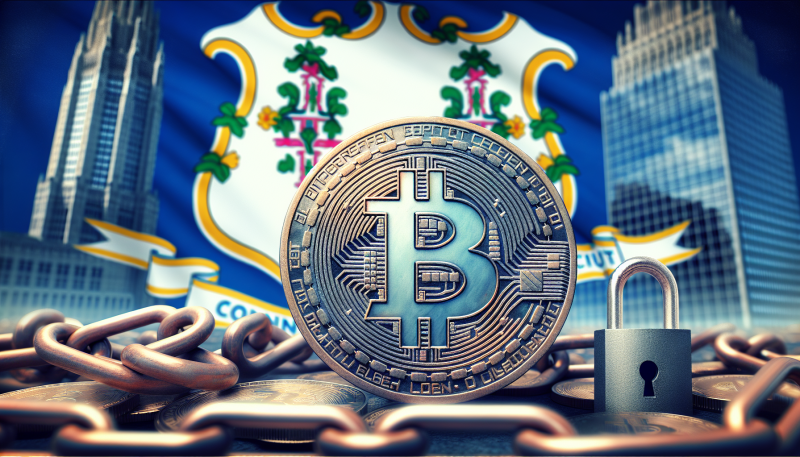
  • Connecticut Enacts Law Banning State Investment in Digital Assets and Strengthening Crypto Regulations

    Connecticut Enacts Law Banning State Investment in Digital Assets and Strengthening Crypto Regulations

    What happened?

    Connecticut has passed a new law prohibiting the state from investing in digital assets, including Bitcoin. The legislation, known as H.B. 7082, was unanimously approved by both the state’s House of Representatives and Senate. This law also updates Connecticut’s money transmission regulations to focus on crypto regulation, mandating that businesses disclose material risks of crypto transactions.

    Who does this affect?

    This law primarily affects the Connecticut state government and potentially any businesses engaged in crypto activities within the state. It restricts the state from holding or investing in virtual currencies and imposes requirements on money transmitters to enhance transparency. Additionally, the law impacts minors, as it mandates legal guardian verification for underage users engaging in crypto-related activities.

    Why does this matter?

    This legislative move reflects growing hesitation and concern over the volatility of cryptocurrencies as reserve assets, influencing Connecticut’s economic strategy compared to other states like Texas, which have embraced Bitcoin reserves. The decision could impact investor and business confidence in the state’s openness to digital asset innovation. By drawing a firm line against state-level crypto investments, Connecticut differentiates itself from the federal stance and other states endorsing crypto as part of their financial portfolios.

  • GameStop’s Bold Move: Purchasing $515 Million in Bitcoin Amid Revenue Decline

    GameStop’s Bold Move: Purchasing $515 Million in Bitcoin Amid Revenue Decline

    What happened?

    GameStop, once known for its role in the meme stock frenzy, has taken a significant step by purchasing $515 million worth of Bitcoin. This purchase involves acquiring 4,710 Bitcoins between May 3 and June 10, following the board’s earlier decision to adopt Bitcoin as a treasury reserve asset. The announcement coincided with disappointing Q1 revenue results, leading to a decline in GameStop’s share price.

    Who does this affect?

    This development primarily affects GameStop’s investors, employees, and customers, particularly those following the company’s strategic moves closely. Investors interested in GameStop will be impacted by the perceived risks and potential rewards associated with cryptocurrency investments. Additionally, the gaming industry watchers and those involved in digital asset markets will note GameStop’s evolving business strategy as part of broader industry trends.

    Why does this matter?

    The move into Bitcoin as a strategic asset highlights GameStop’s attempt to diversify its holdings and possibly revitalize its financial standing amidst declining traditional sales. The market has reacted cautiously, with GameStop’s stock price falling nearly 20% post-announcement, indicating investor skepticism about this shift. GameStop’s pivot could influence other companies considering digital assets, while also reflecting challenges faced by traditional retailers adapting to digital market transitions.

  • Czech Prime Minister Appoints New Justice Minister Amid Controversy Over Bitcoin Donation Scandal

    Czech Prime Minister Appoints New Justice Minister Amid Controversy Over Bitcoin Donation Scandal

    What happened?

    Czech Republic Prime Minister Petr Fiala appointed Eva Decroix as the new justice minister after Pavel Blažek resigned. This change follows a controversy involving a $45 million Bitcoin donation from a convicted criminal, Tomáš Jirčovský. The situation escalated as Blažek’s acceptance of the donation raised questions about legitimizing illicit assets and avoiding legal protocols.

    Who does this affect?

    This affects the Czech government, particularly the Ministry of Justice, and the Civic Democrat party led by Prime Minister Fiala. It also impacts the public trust in these political parties and institutions. Additionally, it has implications for the upcoming national elections, as opposition parties may leverage the scandal to criticize the ruling coalition.

    Why does this matter?

    Financial markets are sensitive to political stability, and scandals like this can lead to uncertainty and volatility. The Bitcoin transaction, meant to benefit the state, backfired by eroding public trust, potentially affecting investor confidence in the country’s governance. As the political landscape shifts ahead of elections, market stakeholders will be closely watching how the Czech government manages the fallout and restores confidence.

  • US SEC Requests Updates on Solana ETF Filings, Signaling Potential Approval and Market Impact

    US SEC Requests Updates on Solana ETF Filings, Signaling Potential Approval and Market Impact

    What happened?

    The US SEC has requested spot Solana ETF issuers to update their S-1 filings by June. They are asked to clarify procedures for in-kind redemption and may include staking as part of the products. The SEC plans to provide comments on the updated filings within 30 days of submission.

    Who does this affect?

    This development directly impacts companies like Grayscale, VanEck, 21Shares, Canary Capital, Bitwise, Franklin Templeton, and Fidelity, who have filed S-1s. Prospective investors in Solana and other altcoin ETFs are also affected as they await potential approval. Additionally, the crypto market participants and stakeholders closely monitoring SEC’s regulatory stance on crypto assets are observing these developments.

    Why does this matter?

    The SEC’s request signifies a step towards the potential approval of Solana ETFs, which could influence the cryptocurrency market positively by attracting institutional investments. With analysts predicting high odds of approval, especially for Solana and Litecoin, a successful rollout could set a precedent for other crypto assets. As these ETFs gain traction, they might enhance liquidity and foster mainstream adoption, impacting market dynamics significantly.

  • Bullish Files Confidential IPO Amid Growing Acceptance of Cryptocurrencies

    Bullish Files Confidential IPO Amid Growing Acceptance of Cryptocurrencies

    What happened?

    Bullish, a cryptocurrency exchange backed by billionaire investor Peter Thiel, has confidentially filed for a US initial public offering (IPO). This move comes as the platform aims to leverage an increased appetite for digital assets amid a friendlier political climate. The confidential filing allows Bullish to prepare for its IPO without having to disclose its financial details immediately.

    Who does this affect?

    The confidential IPO filing by Bullish primarily affects investors and stakeholders in the cryptocurrency market, particularly those interested in digital asset exchanges. It also impacts the financial sector, as traditional market players like Jefferies are involved as underwriters, indicating stronger ties between traditional finance and crypto markets. Additionally, the filing reflects the interests of influential figures such as Peter Thiel and his associates, who are invested in cryptocurrency advancements.

    Why does this matter?

    The potential listing of Bullish on the stock market is significant because it signals the growing acceptance and integration of digital assets in mainstream finance, driven by a more favorable political environment under the Trump administration. This momentum could lead to increased market activity, as seen with the surging value of Bitcoin and successful IPOs by other crypto companies like Circle. Such developments indicate a broader trend of cryptocurrencies gaining legitimacy and support from both policymakers and investors, which could reshape the financial landscape.

  • American Bitcoin Launches with Political Backing, Impacting Cryptocurrency Markets

    American Bitcoin Launches with Political Backing, Impacting Cryptocurrency Markets

    What happened?

    A new company, American Bitcoin (ABTC), backed by Donald Trump Jr. and Eric Trump, has entered the cryptocurrency sector. Since its launch on April 1st, ABTC has accumulated over 215 Bitcoins, valued at $23 million, as confirmed by an SEC filing on June 6th. The company focuses not just on mining but on accumulating Bitcoin long-term, integrating with Gryphon Digital Mining for a public listing.

    Who does this affect?

    The move by ABTC primarily affects Bitcoin investors, crypto markets, and political observers interested in the intersection of politics and digital currencies. It will also impact players in the Bitcoin mining industry due to ABTC’s unique strategy focusing on accumulation rather than liquidating mined assets. Moreover, it influences regulators and policymakers who are navigating the cryptocurrency landscape amidst political involvement.

    Why does this matter?

    This development matters because it introduces political influence into the cryptocurrency market, which could affect Bitcoin’s value and volatility. ABTC’s strategy to hold Bitcoin rather than sell it adds to the demand-side pressure, potentially reducing supply on exchanges, leading to a bullish market sentiment. Such political backing could also sway public and investor opinion, possibly increasing Bitcoin adoption and fostering regulatory discussions.

  • Russia Proposes New Regulations to Crack Down on Illegal Crypto Mining

    Russia Proposes New Regulations to Crack Down on Illegal Crypto Mining

    What happened?

    Russia’s Ministry of Digital Development, Communications, and Mass Media has introduced new proposals that could lead to illegal crypto miners facing fines and confiscation of their coins. The proposal is currently under interdepartmental review, but if approved, it will empower law agencies and courts to seize cryptocurrencies from illegal miners. These proposed regulations aim to amend the country’s Code of Administrative Offenses, effectively making illegal mining a criminal offense.

    Who does this affect?

    The new rules will impact individuals and corporations involved in illegal crypto mining activities in Russia. Fines will range from 100,000 to 2 million rubles depending on whether offenders are individuals, entrepreneurs, or corporations. This regulation also affects those participating in mining pools and those using crypto as a payment tool outside the Central Bank’s oversight, potentially leading to severe financial penalties and loss of mined crypto assets.

    Why does this matter?

    This development could significantly impact the crypto market in Russia by reducing illegal mining activities, thereby potentially affecting the availability and distribution of cryptocurrencies. With increased regulation and the threat of confiscation, there may be a decline in unauthorized mining operations, which could influence global crypto supply and prices. Additionally, these measures could deter businesses from engaging in crypto-related transactions, impacting the broader adoption and integration of cryptocurrencies in the Russian economy.

  • U.S. House Agriculture Committee Approves CLARITY Act to Define Digital Asset Regulations

    U.S. House Agriculture Committee Approves CLARITY Act to Define Digital Asset Regulations

    What happened?

    The U.S. House Agriculture Committee approved the Digital Asset Market Structure Clarity Act, known as the CLARITY Act, by a vote of 47–6 on June 10. The bill aims to define the regulatory status of digital assets in the U.S. and is now moving to the House Financial Services Committee for further consideration. This legislation seeks to clarify whether digital assets are classified as securities or commodities, which will determine the jurisdiction of the SEC or CFTC.

    Who does this affect?

    The CLARITY Act affects entrepreneurs, investors, and companies operating in the digital asset and cryptocurrency space, who seek clear regulatory guidelines. It also impacts regulators at the SEC and CFTC, as their jurisdiction over digital assets may be defined by the act. Additionally, lawmakers and stakeholders within the financial industry are closely watching the progress of this legislation, as it could set precedents for future regulations.

    Why does this matter?

    This legislation could significantly impact the crypto market by providing clearer rules and reducing regulatory uncertainty, potentially encouraging more participation and investment in the space. The outcome could influence how digital assets are traded and managed, affecting market dynamics and strategies for businesses involved with cryptocurrencies. A well-defined regulatory framework might also pave the way for more extensive mainstream adoption and possible adjustments in market valuations.