Category: News

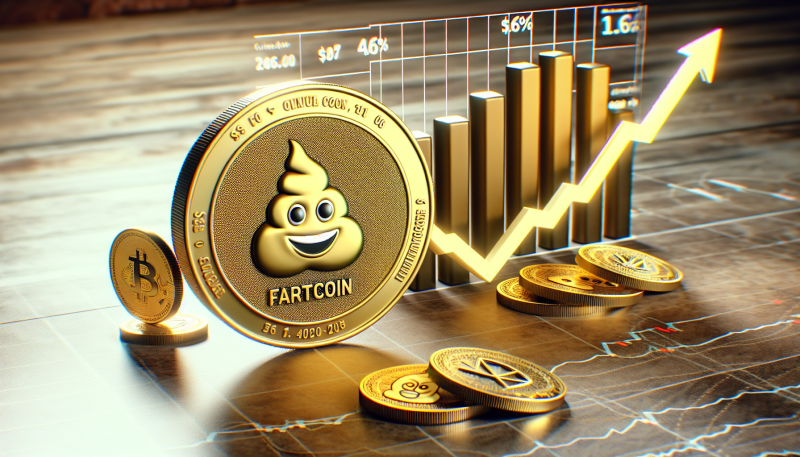
  • Fartcoin Defies Collapse Predictions with 16% Surge, Impacting Memecoin Market Dynamics

    Fartcoin Defies Collapse Predictions with 16% Surge, Impacting Memecoin Market Dynamics

    What happened?

    Fartcoin, a memecoin on the Solana blockchain, avoided a predicted collapse by bouncing off the $1 level with a 16% increase. Driven by an impressive daily trading volume of $1.5 billion, traders are now hopeful the coin might reach the $3 mark. Despite starting as an internet joke, Fartcoin has become Solana’s second-largest memecoin, surprising even its skeptics with substantial support from whale wallets and unexpected approval from Solana’s co-founder.

    Who does this affect?

    This development significantly impacts speculative traders, particularly those involved in the memecoin market. Investors who have supported Fartcoin are witnessing substantial returns and potential further gains if the coin hits its projected targets. Moreover, major exchanges like Coinbase and crypto influencers are watching closely, as their engagement with Fartcoin influences its legitimacy and price dynamics.

    Why does this matter?

    The situation underscores the volatile yet lucrative nature of the memecoin market and its influence on broader cryptocurrency trends. The intense trading activity around Fartcoin at over $1.5 billion daily showcases its liquidity and appeal among investors, potentially setting a precedent for future memecoin developments. The growing interest suggests a shifting market dynamic where unconventional assets can rapidly gain significant traction, impacting market stability and attracting both risk-taking speculators and institutional attention.


  • Cardano Launches Cardinal Protocol to Introduce Bitcoin-Native DeFi on Its Network

    Cardano Launches Cardinal Protocol to Introduce Bitcoin-Native DeFi on Its Network

    What happened?

    Cardano founder Charles Hoskinson announced a new protocol called Cardinal, which brings Bitcoin-native DeFi to the Cardano network. This allows users to leverage Bitcoin’s liquidity while benefiting from Cardano’s smart contract capabilities and lower transaction fees. Cardinal introduces a trust-minimized model for wrapping BTC without the use of centralized custodians.

    Who does this affect?

    The launch of Cardinal primarily affects cryptocurrency users and investors interested in decentralized finance (DeFi). It’s significant for those who currently rely on Bitcoin and are looking for more options to utilize their assets in a decentralized way. Developers focusing on cross-chain applications may also find new opportunities with this integration.

    Why does this matter?

    This development could impact the market by positioning Cardano as a strong player in the multi-chain DeFi arena, challenging existing protocols like Ethereum. It comes at a time when there’s increased demand for trustless financial alternatives following several custodial platform failures. As a result, Cardinal might attract more users and developers to Cardano, potentially affecting ADA’s market valuation and adoption.

  • XRP Sees Resurgence in Long-Term Holder Accumulation Amid Market Rebound

    XRP Sees Resurgence in Long-Term Holder Accumulation Amid Market Rebound

    What happened?

    XRP has experienced a shift in investor behavior, with long-term holders beginning to stockpile the token again after weeks of profit-taking and selloffs. This change comes as XRP posted a 10% weekend rebound from a monthly low, sparking renewed bullish sentiment and price prediction debates. The accumulation trend among long-term holders suggests a potential breakout may be on the horizon for XRP.

    Who does this affect?

    This development primarily affects investors and traders of XRP, including long-term holders who are adjusting their strategies in light of recent market movements. It also impacts those involved in the cryptocurrency market, particularly those focused on XRP, as they must navigate the changing sentiment and potential opportunities for profit. Additionally, it influences analysts and market observers who track these trends to forecast future price movements and guide investment decisions.

    Why does this matter?

    The increased accumulation by long-term holders and the consistent positive funding rate in XRP’s derivatives market indicate a building bullish sentiment, which could lead to significant market impact if a breakout occurs. This shift might result in increased trading volume and volatility for XRP, potentially driving its price upwards and affecting related markets. As such, this trend is crucial for investors and analysts to monitor, as it could signal an impending price surge or trend reversal in the cryptocurrency market.

  • Aave Surges Past $300 Amid DeFi Boom and Trump-Linked Loans; Caution Advised on Overbought Conditions

    Aave Surges Past $300 Amid DeFi Boom and Trump-Linked Loans; Caution Advised on Overbought Conditions

    “`html

    What happened?

    Aave ($AAVE) has seen a significant surge, exceeding the $300 mark following a 20% price increase as Decentralized Finance (DeFi) borrowing volumes reached $17 billion. The surge was further fueled by Trump-linked loans and discussions at the White House, causing traders to set ambitious targets of $1,000 for the token. However, traders are advised to exercise caution as overbought indicators suggest a potential market pullback before reaching new highs.

    Who does this affect?

    This significant market movement affects investors and traders involved with Aave and other related DeFi tokens, as they could see fluctuating asset values based on the recent developments. Institutional players have also shown increased interest, with World Liberty Financial, connected to Donald Trump, making substantial transactions through Aave’s platform. Additionally, entities like the Ethereum Foundation that engage in DeFi strategies are impacted as they leverage Aave for lending activities.

    Why does this matter?

    The surge in Aave’s price and activity reflects a broader shift in the cryptocurrency market towards risk-on assets, coinciding with Bitcoin’s rally. This upward trend signifies growing confidence and participation in the DeFi sector, potentially drawing more investors to these digital assets. However, the market impact may face headwinds due to technical analysis indicating possible resistance levels and overbought conditions, which could affect trading strategies moving forward.

    “`

  • Franklin Templeton Launches Intraday Yield Feature to Revolutionize Tokenized Securities Trading

    Franklin Templeton Launches Intraday Yield Feature to Revolutionize Tokenized Securities Trading

    What happened?

    Franklin Templeton, a global investment company, launched a new feature called Intraday Yield on its Benji Technology Platform. This innovative feature allows investors to calculate and receive yield from tokenized securities in real-time, even if the security is traded during the day. This advancement aims to maximize earning potential by allowing investments around the clock.

    Who does this affect?

    The introduction of Intraday Yield impacts both retail and institutional investors who utilize Franklin Templeton’s Benji Technology Platform. This includes banks, asset managers, hedge funds, corporate treasurers managing reserves, and venture capital firms looking for advanced funding tools. The feature benefits anyone involved in trading or managing token-based investments.

    Why does this matter?

    This development is significant for the market as it introduces a novel way of calculating and distributing yield, setting a potential new industry standard in blockchain-based investments. The ability to realize yield in real-time could attract more investors to tokenized markets, enhancing liquidity and accelerating the adoption of blockchain technology in traditional financial systems. As tokenized investments become more mainstream, this could lead to increased transparency and efficiency in the financial markets.

  • SEC Chairman Advocates for Innovation in Decentralized Finance by Easing Regulations on Engineers and Digital Assets

    SEC Chairman Advocates for Innovation in Decentralized Finance by Easing Regulations on Engineers and Digital Assets

    What happened?

    SEC Chairman Paul Atkins announced a major shift in regulatory approach, asserting that engineers should not be bound by securities laws and advocating for the right to self-custody digital assets. During a roundtable titled “DeFi and the American Spirit,” he criticized previous SEC methods that stifled innovation and used legal threats against developers. His speech marks a new direction for the SEC, aiming to foster innovation within decentralized finance.

    Who does this affect?

    This change impacts engineers, developers, and companies involved in decentralized finance and blockchain technologies, particularly those previously targeted by SEC regulations. It also influences investors and users of digital assets who seek more freedom and fewer constraints on self-custody. The broader crypto market, including platforms like Binance, Coinbase, and Ripple, will feel the effects as they may face fewer legal hurdles in the United States.

    Why does this matter?

    This policy shift could significantly impact the crypto market by encouraging growth and innovation within the United States. By reducing legal barriers for engineers and developers, the SEC is fostering an environment where new financial products can develop more freely. This move might position America as a leading hub for blockchain technology, potentially attracting global investment and boosting the economy through technological advancements.

  • Crypto Market Sees Gains as Bitcoin and Ethereum Rise, New Innovations Enhance Trading Experience

    Crypto Market Sees Gains as Bitcoin and Ethereum Rise, New Innovations Enhance Trading Experience

    What happened?

    The crypto market has experienced an upswing, with a 0.7% increase in global cryptocurrency market capitalization over the past 24 hours, reaching $3.57 trillion. Notable tokens such as Bitcoin and Ethereum have registered price increases, while Uniswap and Aave are among the top gainers with double-digit growth percentages. Additionally, 1inch launched the Pathfinder Core Algorithm to improve swap rates, and Compass Mining revealed a new brand identity.

    Who does this affect?

    This development impacts various stakeholders in the cryptocurrency ecosystem, including traders, investors, and companies involved in crypto mining and decentralized exchange operations. Traders benefit from the improved market conditions and the enhanced efficiency in swaps provided by 1inch’s new algorithm. Companies like Compass Mining, through their rebranding efforts, aim to strengthen their market presence and customer service operations.

    Why does this matter?

    These updates have significant implications for the crypto market, influencing trading activities and investor sentiment. The market turning green signals potential bullish trends, encouraging more investments. Innovations like the Pathfinder Core Algorithm enhance the trading experience, while actions such as the takedown of illegal markets increase regulatory oversight, aiming to build trust and establish crypto as a secure investment option.

  • Cathie Wood Predicts Bitcoin Could Reach $1.5 Million in Five Years, Impacting Global Financial Markets

    Cathie Wood Predicts Bitcoin Could Reach $1.5 Million in Five Years, Impacting Global Financial Markets

    What happened?

    Bitcoin is capturing attention due to a bold forecast from Cathie Wood, CEO of Ark Invest, suggesting it could reach $1.5 million within five years. This predicted 15x increase is driven by Bitcoin’s scarcity, security, and growing institutional interest. Wood compares Bitcoin’s potential impact to the early equity markets, highlighting its evolution into a “new asset class.”

    Who does this affect?

    This prediction affects a wide range of stakeholders, including retail and institutional investors who are increasingly interested in Bitcoin. It also impacts financial markets as institutions consider Bitcoin a strategic investment. Potential price increases will also influence those involved in Bitcoin mining and cryptocurrency trading.

    Why does this matter?

    The market impact is significant as a potential surge to $1.5 million would transform Bitcoin’s role in the global economy. Such a change would bolster its status as a store of value and attract more institutional investment. This could lead to shifts in financial strategies globally, affecting various sectors linked to cryptocurrency adoption.

  • The Smarter Web Company Expands Bitcoin Holdings Amid Growing Corporate Adoption Trends

    The Smarter Web Company Expands Bitcoin Holdings Amid Growing Corporate Adoption Trends

    What happened?

    The Smarter Web Company, a UK-listed technology firm, announced its acquisition of an additional 45.32 BTC as part of their ongoing strategy known as “The 10 Year Plan” to incorporate Bitcoin into their treasury. Since starting its Bitcoin purchases in April, this recent acquisition has increased the company’s Bitcoin holdings by nearly 55%. At the time of purchase, the total investment amounted to $4,736,000 with an average price of $104,935 per Bitcoin.

    Who does this affect?

    This move primarily affects The Smarter Web Company’s shareholders and stakeholders, who are directly impacted by the company’s financial strategies and investments. It also impacts other market participants who track Bitcoin adoption trends among publicly traded companies, potentially influencing investor sentiment toward Bitcoin. Additionally, it contributes to the growing trend of corporate adoption of Bitcoin, which can indirectly affect other companies considering similar treasury strategies.

    Why does this matter?

    The acquisition highlights the increasing corporate interest in Bitcoin as a strategic asset, potentially influencing market perceptions and valuation trends. With Bitcoin’s price volatility and supply concerns amid peak market greed reflected in the Bitcoin Fear and Greed Index reaching 71, such corporate actions can contribute to price fluctuations and market dynamics. This trend also signifies a shift in financial strategies, with more companies adopting digital assets as part of their long-term financial planning, possibly affecting the broader cryptocurrency market.

  • Bitcoin Faces Volatility and Supply Reduction Amid Speculative Trading Dynamics

    Bitcoin Faces Volatility and Supply Reduction Amid Speculative Trading Dynamics

    What happened?

    Bitcoin has experienced recent volatility, leaving traders uncertain as they speculate on future price movements. A shift from the US dollar to Bitcoin is noticeable, although technical analysis suggests a potential price pullback to $92,000. Meanwhile, Bitcoin’s available supply on exchanges has seen a significant reduction, decreasing by 30%.

    Who does this affect?

    This situation impacts a variety of stakeholders including individual cryptocurrency investors, institutional investors, and financial analysts. Traders who have recently moved from traditional currencies to Bitcoin may face uncertainty due to mixed market indicators. Additionally, institutions considering investments in Bitcoin may reassess their strategies in light of technical signals and price trends.

    Why does this matter?

    The current trends in Bitcoin trading could have significant market implications, influencing investor behavior and overall market dynamics. If the predicted pullback occurs, it could dampen recent optimism and affect confidence in Bitcoin as an asset class. Conversely, continued demand amidst reduced supply could push prices higher, affecting broader financial markets and possibly leading to increased inflationary pressures through rising asset valuations.