Category: News

  • Crypto markets stabilize ahead of inflation data as XRP, ETH and ADA eye rally; Snorter presale raises millions

    Crypto markets stabilize ahead of inflation data as XRP, ETH and ADA eye rally; Snorter presale raises millions

    What happened?

    Markets dipped ahead of Friday’s U.S. inflation report, but XRP, ETH and ADA have stabilized after earlier falls. Technical indicators suggest these three could rally over the weekend if the inflation data comes in positively. At the same time, Solana presale token Snorter raised about $5.4 million and is preparing to launch a sniping bot that could drive demand for its SNORT token.

    Who does this affect?

    This affects crypto traders and investors holding XRP, ETH and ADA who are watching for a catalyst to re-enter or add to positions. Institutional investors and ETF buyers matter too, since growing ETH inflows and upcoming XRP/ADA ETF interest can shift large amounts of capital. Speculative investors and early backers of presale projects like Snorter could see outsized gains or risks when the token lists.

    Why does this matter?

    If inflation prints well, ETF inflows and renewed institutional buying could push XRP, ETH and ADA significantly higher, boosting market sentiment and liquidity. Large ETF-driven moves can amplify price momentum, attract more retail and institutional capital, and help stabilize major tokens. Meanwhile, high-interest presale listings like SNORT can concentrate speculative flows and create short-term rallies that ripple across smaller tokens and the broader market.


  • Tokenized Gold Debate: Is It On-Chain or Just a Trust-Based Instrument?

    Tokenized Gold Debate: Is It On-Chain or Just a Trust-Based Instrument?

    What happened?

    A public debate erupted after Binance founder Changpeng “CZ” Zhao said tokenized gold isn’t truly “on-chain.” He was responding to Peter Schiff’s announcement that he’s launching a blockchain-based tokenized gold platform where users can buy, transfer, and redeem physical gold. The argument comes as tokenized-gold markets have surged — roughly $3.75 billion in market cap with big spikes in trading volume amid a rally in physical gold.

    Who does this affect?

    Crypto investors and more than 150,000 tokenized-gold holders and active addresses are directly affected because questions about custody and trust could change how they view these tokens. Issuers and custodians like Tether, Paxos, and the vault operators that back these tokens face increased scrutiny since the model relies on third-party reserves and audits. Institutional players building RWA products, exchanges, and regulators also have a stake in how these assets are defined and treated.

    Why does this matter?

    If investors start seeing tokenized gold as a “trust me” instrument rather than a true on-chain asset, demand and liquidity for these tokens — and related RWA products — could dry up, weighing on prices and trading volumes. On the other hand, continued adoption and big initiatives (like a proposed $200M XAUT treasury) could deepen liquidity and pull more institutional safe-haven capital into crypto markets. How this debate is resolved will influence regulatory attention and capital flows between physical gold, gold tokens, and other crypto assets, so it could shift broader market dynamics.

  • Tucker Carlson questions Bitcoin’s origins and calls it a possible scam

    What happened?

    Conservative commentator Tucker Carlson suggested that Bitcoin’s anonymous creator, Satoshi Nakamoto, might be linked to U.S. intelligence agencies and called Bitcoin a possible “scam.” He said he prefers gold and questioned trusting an asset with an unknown founder who controls billions in Bitcoin. His comments came at a Turning Point USA event while Bitcoin trades near $108,800 amid rising institutional interest.

    Who does this affect?

    Everyday crypto investors might feel uneasy when a prominent media figure casts doubt on Bitcoin’s origins and motives, which can sway public sentiment. Institutional investors and ETF buyers are also watching because reputation and regulatory narratives can influence flows and compliance decisions. Crypto advocates, miners, and developers are affected too since they have to counter misinformation and reassure users about Bitcoin’s open-source nature.

    Why does this matter?

    Rhetoric linking Satoshi to intelligence agencies can create short-term headline-driven volatility as some investors react emotionally. But with U.S.-approved ETFs and growing institutional adoption, the long-term market impact is likely limited unless regulators step in or big wallet movements occur. Overall, expect brief sentiment swings and PR battles rather than a fundamental change to Bitcoin’s adoption trajectory unless new evidence or policy shifts emerge.

  • Whale Transfers and Alleged Manipulation Create Volatility as Bitcoin Eyes 126k or 92k

    Whale Transfers and Alleged Manipulation Create Volatility as Bitcoin Eyes 126k or 92k

    What happened?

    Over the last 30 days Binance saw $5.56 billion in whale transfers of more than 1,000 BTC, including $1.07 billion on October 21 as Bitcoin spiked and then pulled back. Allegations also surfaced that Binance coordinated with market maker Wintermute to manipulate prices and contributed to about $19 billion of retail liquidations during the October 10 crash. At the same time on-chain data show exchange outflows trending negative while spot volumes and concentrated inflows surged, creating a conflicting picture of accumulation versus distribution.

    Who does this affect?

    Large holders and whales moving coins to or from exchanges could be building positions or setting up liquidations, so they have the most direct influence on price swings. Retail traders face heightened risk of forced liquidations and volatility, especially after the alleged October 10 squeeze and the big bursts of inflows on specific days. Exchanges, market makers, miners tied to big transfers like LuBian, and institutional investors watching ETF flows and capital rotation signals are all implicated by these moves and accusations.

    Why does this matter?

    Big, concentrated flows and manipulation claims increase short-term volatility and can distort price discovery, which could either topple a rally or set up a new leg higher depending on whether flows are accumulation or sell-side. Technical setups like a potential Wyckoff reaccumulation and unfilled CME gaps mean the market could break toward about $126k or fall toward $92k, so the coming weeks are likely to be decisive. If even a small share of capital shifts from gold to Bitcoin as some managers suggest, that rotation could dramatically amplify upside, while continued manipulation concerns could hurt retail confidence and draw regulatory attention.

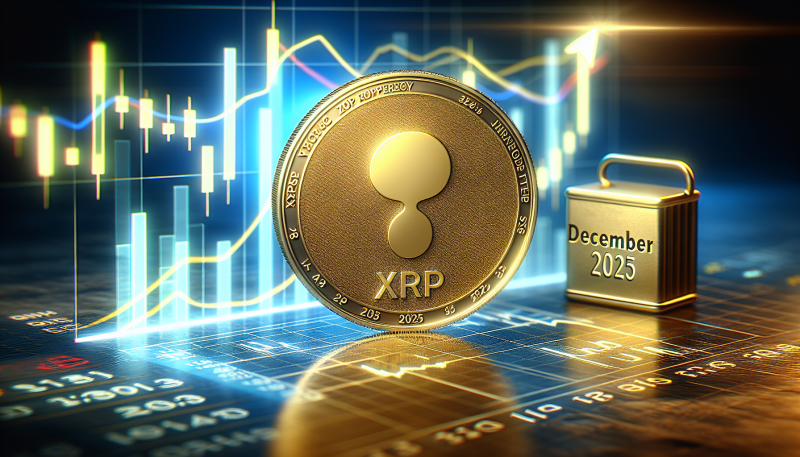
  • XRP Could Jump to $5-$12 by December 2025 as ETFs and Corporate Treasuries Lock Up Supply

    XRP Could Jump to $5-$12 by December 2025 as ETFs and Corporate Treasuries Lock Up Supply

    What happened?

    Crypto analyst Zach Rector, who has nearly 90,000 followers on X, says XRP could surge into double digits because dozens of ETFs and corporate treasuries are expected to lock up large amounts of XRP. He argues that those parked coins will create a supply shock that drives prices much higher. Rector’s bullish target is roughly $5–$12 by December 2025, though he warns a government shutdown could delay the move into 2026.

    Who does this affect?

    Retail XRP holders and traders could see big gains or sharp volatility depending on how much supply gets locked away. Institutional players, ETF issuers, and companies considering XRP for corporate treasuries would be directly involved in creating that supply squeeze. Exchanges, market makers, and DeFi liquidity providers would also feel the impact through tighter liquidity and wider spreads if circulating supply falls.

    Why does this matter?

    If ETFs and treasuries truly lock up a significant share of XRP, reduced circulating supply could trigger rapid price appreciation, squeeze shorts, and redirect capital into XRP and related crypto ETFs. That kind of move would reshape market flows, lift comparable altcoins, and attract more institutional attention to crypto products. But if approvals are delayed or inflows are smaller than expected, XRP could stay range-bound, so investors should watch ETF rollouts, on-chain supply changes, and liquidity metrics closely.

  • Ledger Rebrands as Ledger Signers, Launches Nano Gen5 with Noah On-Ramp, Renames Ledger Live to Ledger Wallet, and Expands Enterprise Multisig

    Ledger Rebrands as Ledger Signers, Launches Nano Gen5 with Noah On-Ramp, Renames Ledger Live to Ledger Wallet, and Expands Enterprise Multisig

    What happened?

    Ledger rebranded its hardware devices as “Ledger signers” and launched the Ledger Nano Gen5, which is now available to order. The new device adds NFC, Bluetooth, an E Ink touchscreen with Clear Signing and Transaction Check, and includes a Ledger Recovery Key in the box. Ledger also renamed Ledger Live to Ledger Wallet, added a cash-to-stablecoin feature (Noah) for instant USD/EUR to USDC conversion, and unveiled Ledger Enterprise Multisig for institutional use.

    Who does this affect?

    Everyday crypto holders who want easier, on-the-go signing, stronger identity protection, and FIDO2 passkey support will see direct benefits. DeFi users and newcomers who want a fast fiat-to-USDC on-ramp will find the Noah integration useful. Institutions, custodians, DAOs and crypto-native businesses are targeted by Ledger Multisig, and competitors like Trezor face increased product pressure.

    Why does this matter?

    Lowering friction between fiat and stablecoins and making signing simpler should increase on-chain activity and USDC flows, which matters for DeFi liquidity. A bigger push into enterprise and clearer consumer UX could shift market share in hardware wallets and custody solutions. Overall, stronger security features and broader use cases may boost user trust and institutional adoption, which is generally bullish for crypto infrastructure and market growth.

  • Institutions Pile Into ETH and BTC ETFs as Ether Tests $4,000 and Market Eyes Potential Rally

    Institutions Pile Into ETH and BTC ETFs as Ether Tests $4,000 and Market Eyes Potential Rally

    What happened? Institutional buyers kept piling into ETH and BTC ETFs during a recent pullback.

    Institutional investors bought the dip this week, with ETH ETFs taking in about $141.7 million and Bitcoin ETFs adding roughly $477 million. That accumulation came as Ethereum retested a key $4,000 support and formed a two-month bull-flag pattern. Momentum indicators are mixed, so a short pullback toward $3,700–$3,800 is possible without a near-term catalyst like a U.S. interest rate cut.

    Who does this affect? Investors across the board — institutions, traders, and retail holders — stand to be impacted.

    Institutions and ETF holders benefit from cheaper entry and renewed conviction that could anchor longer-term flows into crypto markets. Active traders face continued volatility around support and resistance levels as technicals and inflows battle for control. Retail HODLers and DeFi participants may see more capital rotate into altcoins and on-chain projects, while self-custody wallets and token presales (like $BEST) attract users looking for early opportunities.

    Why does this matter? Strong ETF inflows and institutional accumulation can shift market structure and fuel a broader rally.

    Continued institutional buying helps stabilize prices, narrows supply on exchanges, and increases the odds of a breakout that some scenarios project could push ETH substantially higher (potentially toward $8,000 if momentum and macro align). That dynamic can ignite renewed risk appetite, driving flows into altcoins, DeFi, and crypto services, amplifying market breadth. Still, near-term downside risks and mixed momentum mean any sustained rally will likely depend on macro catalysts like interest-rate easing.

  • EU sanctions package bans Russian LNG, tightens banking and crypto rules, and targets the shadow fleet

    EU sanctions package bans Russian LNG, tightens banking and crypto rules, and targets the shadow fleet

    What happened?

    The EU approved a major sanctions package that bans Russian LNG imports, tightens rules on banks and crypto platforms, and targets the so‑called “shadow fleet” of vessels evading restrictions. The move came hours after the US announced penalties on Russia’s biggest oil firms, signaling coordinated pressure from Washington and Brussels. Short‑term LNG contracts must end within six months and long‑term deals will be wound down by January 2027, while hundreds of ships and crypto channels face new blacklists and limits.

    Who does this affect?

    The measures hit Russian energy companies like Rosneft and Lukoil, banks, crypto projects (including ruble‑backed tokens like A7A5), and shipping operators tied to the shadow fleet. They also affect European utilities and buyers that relied on Russian gas and will need replacement supplies or to renegotiate contracts. Financial institutions, exchanges, insurers, and intermediaries that move money or cargo across borders will face tougher compliance and potential bans.

    Why does this matter?

    Markets are likely to see higher European gas and LNG prices as Russian supply is phased out and demand shifts to the global market. Energy companies, shippers, and insurers may face revenue losses and higher costs, while alternative suppliers and traders could capture market share. Financial and crypto markets will face tighter liquidity for sanctioned flows, higher compliance costs, and increased volatility in oil, gas, and crypto‑related assets.

  • Crypto Market Ticks Higher but Caution Persists as ETF Outflows and On-Chain Signals Point to a Slower Rally

    Crypto Market Ticks Higher but Caution Persists as ETF Outflows and On-Chain Signals Point to a Slower Rally

    What happened? The crypto market ticked higher but the tone is cautious.

    The overall crypto market cap rose about 1.3% to roughly $3.8 trillion with 80 of the top 100 coins up and $190 billion in trading volume. Bitcoin is trading near $109,789 (+1.7%) and Ethereum around $3,875 (+0.3%), while some altcoins posted big one-day gains. At the same time ETFs saw notable outflows and on-chain and options data point to fading momentum and growing market caution.

    Who does this affect? Traders, ETF investors, and traditional asset managers are all watching closely.

    Retail and institutional traders face higher short-term volatility and the risk of liquidations as sentiment sits in the fear zone. ETF holders and managers felt the impact directly with multi-million-dollar outflows from US BTC and ETH spot ETFs. Legacy asset managers entering crypto, like T. Rowe Price, and ETF issuers are also affected since flows and sentiment will shape demand for their products.

    Why does this matter? Because flows, on-chain signals, and upcoming macro data will drive market direction and volatility.

    ETF outflows and weak spot demand reduce buying pressure, making it harder for prices to sustain rallies and increasing the chance of a longer consolidation or pullback. On-chain indicators and elevated implied volatility suggest the recovery will depend on renewed spot demand and easing volatility-driven hedging. With key macro events like the US CPI coming up, traders should expect quick swings that can either trigger more selling or present buying opportunities depending on the data.

  • Class-Action Alleges Meteora Co-Founder Ran Celebrity-Endorsed Memecoin Pump-and-Dump Scheme

    Class-Action Alleges Meteora Co-Founder Ran Celebrity-Endorsed Memecoin Pump-and-Dump Scheme

    What happened?

    A class-action lawsuit accuses Meteora co-founder Benjamin Chow and associates of running a coordinated fraud that used celebrity endorsements from Melania Trump and Javier Milei to pump-and-dump multiple memecoins and steal at least $57 million from retail investors. The complaint says insiders used Meteora’s Solana-based liquidity pools, whitelist and freeze controls, and a central coordinating wallet to corner token supplies and create fake price spikes. Plaintiffs are asking for disgorgement of profits, treble damages under RICO, and a court-appointed receiver to take control of the upgradeable smart contracts.

    Who does this affect?

    Retail crypto buyers who jumped into $MELANIA, $LIBRA and similar tokens were directly harmed, many losing large portions of their investments when insider wallets dumped positions. It also drags down the reputations of the public figures whose names were used, plus investors, builders and services in the Solana and broader DeFi ecosystems. Exchanges, influencers, and future token projects that rely on celebrity marketing or upgradeable/centralized contract features will face more scrutiny and legal risk going forward.

    Why does this matter?

    This case hurts market trust in memecoins and celebrity-backed tokens, which can reduce retail demand and make these markets far more volatile and fragile. If regulators and courts act, we could see stricter listings, more enforcement, and higher compliance costs that lower liquidity and slow new token launches. That shift would push capital away from risky meme-style projects and toward more transparent, regulated crypto products, driving price pressure and repricing risk across related tokens and platforms.