Category: News

  • JPMorgan Chase to Allow Cryptocurrency ETFs as Collateral for Loans, Marking a Shift in Traditional Finance

    JPMorgan Chase to Allow Cryptocurrency ETFs as Collateral for Loans, Marking a Shift in Traditional Finance

    What happened?

    JPMorgan Chase has announced a new policy that allows select clients to use cryptocurrency exchange-traded funds (ETFs) as collateral for loans. The initiative begins with BlackRock’s iShares Bitcoin Trust and is expected to expand to other funds in the future. This marks a significant shift in the bank’s approach to digital assets, integrating them into more traditional financial services.

    Who does this affect?

    The change primarily affects JPMorgan’s trading and wealth management clients who hold cryptocurrencies. These clients can now count their digital assets towards their net worth when being assessed for credit and loans. This will impact private banking clients across various wealth brackets, providing them with increased flexibility and borrowing capacity.

    Why does this matter?

    This move by JPMorgan signifies a growing acceptance of digital assets in traditional finance, potentially influencing market dynamics and product offerings in the banking sector. By considering crypto ETFs as collateral, the bank is acknowledging their value and integrating them into mainstream financial frameworks. This integration could lead to broader regulatory discussions and adjustments affecting the cryptocurrency market and its role in financial planning and lending practices.


  • Moroccan Police Arrest Crypto Kidnapping Suspect Amid Growing Security Concerns

    Moroccan Police Arrest Crypto Kidnapping Suspect Amid Growing Security Concerns

    What happened?

    Moroccan police arrested Badiss Mohamed Amide Bajjou in Tangier following an Interpol Red Notice. French authorities suspect Bajjou of orchestrating a series of crypto-related kidnappings. A second suspected organizer remains at large, allegedly recruiting young people online to carry out attacks.

    Who does this affect?

    The arrests primarily impact individuals involved with cryptocurrency, particularly entrepreneurs and investors in France. Many young people have been implicated in the kidnappings, as French prosecutors have charged 25 individuals aged between 16 and 23. Crypto holders worldwide are also becoming increasingly aware of offline threats related to their digital wealth.

    Why does this matter?

    This development highlights the growing security challenges associated with crypto wealth and its visibility. The market faces increased scrutiny as the transparency of blockchain can expose wealth-holders to targeted crime, leading to discussions about strengthening security protocols. This could potentially affect investment in cryptocurrencies, as well as push for new regulations and safety measures to protect digital asset holders.

  • Elizabeth Warren Challenges Crypto Bill to Prevent Political Profiteering from Stablecoins

    Elizabeth Warren Challenges Crypto Bill to Prevent Political Profiteering from Stablecoins

    What happened?

    Senator Elizabeth Warren is challenging a provision in the GENIUS Act that exempts certain crypto wallet providers from oversight, potentially benefiting former President Donald Trump. Warren introduced an amendment to prevent sitting presidents and their families from profiting off stablecoins or wallet infrastructure. Fellow Democrats are concerned the bill could legitimize influence peddling in the crypto industry under the guise of innovation.

    Who does this affect?

    The proposed changes to the GENIUS Act could significantly impact former President Trump and his family, as they have interests in the cryptocurrency sector. The amendments also affect policymakers and regulators focused on ensuring transparency and preventing political figures from exploiting crypto markets. The broader crypto industry is also affected, as the changes could lead to increased regulatory scrutiny.

    Why does this matter?

    The outcome of this debate could reshape how cryptocurrencies and stablecoins are regulated in the U.S., potentially influencing market dynamics. If Warren’s amendment passes, it could impose stricter ethical standards and financial disclosures, impacting investor confidence and market operations. On the other hand, the ongoing controversy might delay much-needed regulatory clarity for stablecoin markets, affecting businesses and investors waiting for clear rules.

  • Moscow Exchange Launches BlackRock Bitcoin Futures ETF, Signaling Shift in Cryptocurrency Acceptance

    Moscow Exchange Launches BlackRock Bitcoin Futures ETF, Signaling Shift in Cryptocurrency Acceptance

    What happened?

    On June 4, 2025, the Moscow Exchange launched trading of BlackRock’s Bitcoin Futures ETF, making it available to qualified investors. This introduction integrates digital assets into Russia’s traditional financial markets, indicating a growing interest in cryptocurrencies despite underdeveloped regulations. The new futures contract, known as IBIT-9.25, demonstrates institutional players’ commitment to Bitcoin, even in regions with emerging crypto regulatory frameworks.

    Who does this affect?

    This development primarily impacts qualified investors who have access to the new Bitcoin futures contract on the Moscow Exchange. It also influences institutions and financial entities interested in Bitcoin-related products, particularly within Russia. Furthermore, Russian crypto users and investors must navigate increased scrutiny from local authorities due to compliance and surveillance concerns.

    Why does this matter?

    The launch of BlackRock’s Bitcoin Futures ETF in Moscow could have significant market implications by enhancing the legitimacy and appeal of digital assets within institutional finance. It signals a cautious shift towards accepting cryptocurrency financial products in traditional markets, potentially stimulating broader market participation. However, the balance between innovation and regulatory control may lead to heightened tensions, affecting investor confidence and market dynamics in Russia’s evolving crypto landscape.

  • Pakistan’s Bold Move to Harness Unused Electricity for Bitcoin Mining and AI amid Economic Challenges

    Pakistan’s Bold Move to Harness Unused Electricity for Bitcoin Mining and AI amid Economic Challenges

    “`html

    What happened?

    Pakistan has announced an ambitious plan to redirect 2,000 megawatts of unused electricity to power Bitcoin mining and AI data centers. They are seeking U.S. technical support and investment as they aim to formalize their $25 billion informal crypto economy. However, Pakistan faces challenges, including potential violations of IMF loan agreements and existing bans on cryptocurrency transactions.

    Who does this affect?

    This initiative primarily impacts the Pakistani government, which must navigate between economic modernization goals and existing legal frameworks. It affects investors and companies that could benefit from or face risks due to potential regulatory changes in Pakistan’s crypto environment. The general public is also impacted, as the success or failure of these efforts could influence energy availability and economic opportunities in the country.

    Why does this matter?

    The outcome of Pakistan’s strategy could have significant market implications, both domestically and internationally. Successful implementation may attract investments, boost economic growth, and position Pakistan as a key player in the digital asset space. However, failure or regulatory missteps could exacerbate fiscal issues, disrupt international financial aid, and deter future investments.

    “`

  • Magic Eden’s $ME Token Surges 20% Amid Solana NFT Market Rally, But Long-Term Recovery Remains Uncertain

    Magic Eden’s $ME Token Surges 20% Amid Solana NFT Market Rally, But Long-Term Recovery Remains Uncertain

    What happened?

    Magic Eden’s token ($ME) unexpectedly surged by 20% in a Solana NFT market rally, despite previously experiencing months of stagnation. However, the token still remains 90% below its all-time high, leaving many investors at a loss. This recent price increase follows a significant decline after a black swan event in April, raising questions about whether this is a sustainable recovery or just a temporary rebound.

    Who does this affect?

    This development primarily affects Magic Eden investors and stakeholders in the Solana NFT ecosystem. Early investors in $ME who bought in at higher prices are still facing substantial losses, though recent buyers may see short-term gains. Additionally, participants in the broader NFT market may experience knock-on effects due to the renewed interest and speculative trading around the Magic Eden platform.

    Why does this matter?

    The $ME token’s rally could have broader implications for the market if it signals renewed investor confidence or interest in NFTs, potentially influencing market momentum. This could lead to increased trading activity on Magic Eden and other associated platforms, impacting liquidity and prices in both positive and negative ways. A sustained recovery might encourage new participants, while a failure to maintain current levels could lead to further sell-offs and market volatility.

  • Bitget Wallet Integrates Solana Pay, Enhancing Cryptocurrency Payment Solutions for Users and Merchants

    Bitget Wallet Integrates Solana Pay, Enhancing Cryptocurrency Payment Solutions for Users and Merchants

    What happened?

    Bitget Wallet, a non-custodial crypto wallet provider, has integrated Solana Pay into its system for its global users. This integration allows users to pay using stablecoins like USDC and other Solana-based tokens by simply scanning a QR code. It removes intermediaries from the payment process, enabling direct transactions between wallets and merchants.

    Who does this affect?

    This affects Bitget Wallet users who can now make efficient and cost-effective payments using Solana’s network. Merchants who accept Solana Pay can receive payments without the need for third-party services. Moreover, regions like Southeast Asia and Latin America may see an increase in adoption due to future compatibility with national QR code standards.

    Why does this matter?

    The integration of Solana Pay in Bitget Wallet could lead to increased adoption of cryptocurrency for real-world transactions. It enhances the utility of digital currencies, making them more practical for everyday commerce beyond just trading. Additionally, this move signals a growing market trend towards integrating blockchain technology with traditional payment systems to simplify and secure transactions globally.

  • Whales Accumulate Altcoins Amid Cryptocurrency Market Slowdown, Signaling Potential Rebound

    Whales Accumulate Altcoins Amid Cryptocurrency Market Slowdown, Signaling Potential Rebound

    “`html

    What happened?

    The cryptocurrency market experienced a slowdown in trading activity at the end of May after a price surge. Despite this lull, large investors, known as “whales,” are accumulating altcoins like Dogecoin, Sui Network, and Solaxy in anticipation of a rebound in June. These actions suggest potential upward movement for these altcoins, especially Dogecoin, which saw an addition of 30 million tokens by whale-sized wallets.

    Who does this affect?

    This situation primarily affects major cryptocurrency investors, traders, and holders of altcoins such as Dogecoin, Sui Network, and Solaxy. Retail investors may also be influenced as whale activity can set market trends, encouraging them to follow suit. Additionally, developers and analysts keeping an eye on emerging technologies like Sui Network and Solaxy could see opportunities for growth and innovation within these platforms.

    Why does this matter?

    The accumulation of altcoins by whales could signal a significant market impact, potentially leading to a new altcoin season. If whale activities spark bullish momentum, altcoin prices could rise, attracting more retail investors and contributing to market volatility. Particularly, Solaxy’s emergence as Solana’s first Layer-2 scaling solution can enhance investor confidence in scalable blockchain solutions, potentially driving further investment and development in the space.

    “`

  • WIF Token Surge: A Potential Catalyst for the Meme Coin Market

    WIF Token Surge: A Potential Catalyst for the Meme Coin Market

    What happened?

    Last week, the WIF token experienced a significant 20% price rally followed by a slight cooldown, indicating notable volatility in its spot price. Despite earlier profit-taking and panic selling that affected its 330% rally from mid-April, WIF has rebounded strongly, outperforming other meme coins. This resurgence positions WIF as a potential “best crypto to buy” contender once again.

    Who does this affect?

    The key stakeholders impacted include existing WIF investors, potential buyers looking for new opportunities in meme coins, traders involved in derivative markets, and anyone following cryptocurrency trends. Traders who speculate on WIF are particularly engaged, as open interest has increased by 20% since the start of the month, reflecting growing speculative activity. Investors interested in meme coins or looking for high-risk, high-reward opportunities might see WIF’s gains as a signal to explore entry points.

    Why does this matter?

    This development is crucial for the market because it illustrates a shift toward more speculative investments, with WIF demonstrating considerable growth and potentially catalyzing similar rallies across the meme coin sector. The positive momentum, highlighted by technical indicators such as the MACD and RSI, suggests a potential breakout, which if realized, could have a significant impact on investor sentiment and market valuations. A successful bullish run could lead WIF to achieve a 115% increase from current levels, boosting confidence in similar assets and possibly signaling the start of another meme coin boom.

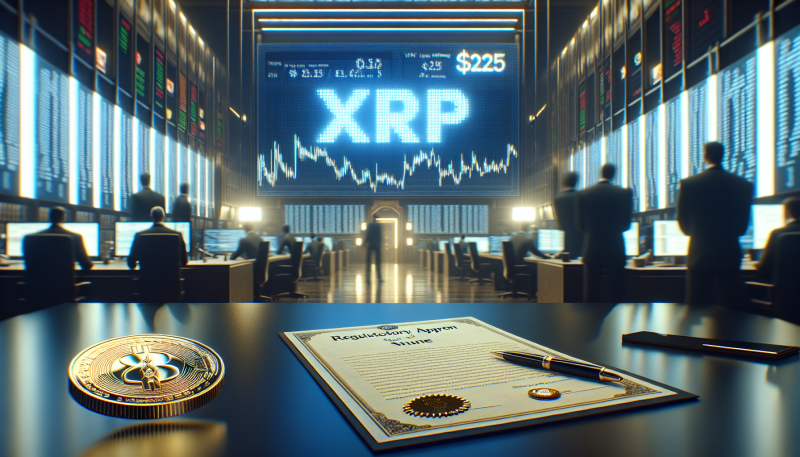
  • XRP Price Surges to $2.25 Amid Regulatory Approval and Market Resilience

    XRP Price Surges to $2.25 Amid Regulatory Approval and Market Resilience

    What happened?

    The price of XRP increased to $2.25 today, even as the overall crypto market declined by 2.5% over the past 24 hours. This upward movement for XRP is partially attributed to Ripple announcing regulatory approval for its RLUSD stablecoin in Dubai and the denial by CEO Brad Garlinghouse of acquisition rumors about Circle. The potential end of Ripple’s legal battle with the SEC this year further contributes to a positive long-term outlook for XRP.

    Who does this affect?

    This development primarily affects XRP investors and the broader Ripple community, who may experience a boost in confidence concerning the coin’s future prospects. Investors in the wider cryptocurrency market might also be interested as XRP’s performance could indicate trends for other cryptocurrencies, especially those affected by regulatory news. Additionally, financial regulators and institutions in Dubai and other regions involved in crypto regulations could feel the impact of these developments.

    Why does this matter?

    Market impact could be significant given XRP’s current momentum and the ongoing regulatory developments. With XRP showing resilience amidst market declines and gaining regulatory approval in strategically important regions like Dubai, it underscores the increasing credibility and potential growth of XRP. These moves could lead to greater investor interest and a possible increase in the market value of XRP, influencing broader trends in the cryptocurrency market as other coins react to similar regulatory and market conditions.