Category: News

  • Cryptocurrency Market Fluctuates Amid Strategic Partnerships and Technological Advances

    Cryptocurrency Market Fluctuates Amid Strategic Partnerships and Technological Advances

    “`html

    What happened?

    The cryptocurrency market has seen another fluctuation, with its total market capitalization dropping by 1% to $3.45 trillion. While most top coins are performing well, XRP saw a slight decline of 1.5%, whereas Ethereum and Cardano experienced gains. Additionally, Sui announced its integration with BitVM, Metalpha partnered with Zeus Network on Solana, and Futureverse upgraded GameTree users to crypto wallets.

    Who does this affect?

    This news primarily affects cryptocurrency investors and holders, especially those engaged with Bitcoin, Ethereum, Cardano, and XRP. It also impacts users of the Sui blockchain, Metalpha’s institutional clients on Solana, and GameTree’s 1.5 million users now introduced to crypto wallets. Furthermore, DeFi participants and developers involved in these partnerships may also see changes in their opportunities and strategies.

    Why does this matter?

    The current market movements indicate both volatility and growth potential in the cryptocurrency space, affecting trading decisions and investment strategies. The integration of Bitcoin-backed assets into new ecosystems could enhance BTC utility and market liquidity. Meanwhile, initiatives like GameTree’s shift to web3 wallets can drive user adoption and integration of blockchain technology in gaming, creating ripple effects across these markets.

    “`

  • Shutter Network Proposes Encrypted Mempool for BNB Chain to Combat Maximal Extractable Value Attacks

    Shutter Network Proposes Encrypted Mempool for BNB Chain to Combat Maximal Extractable Value Attacks

    What happened?

    Shutter Network has proposed a threshold-encrypted mempool for the BNB Chain to protect against Maximal Extractable Value (MEV) activities like front-running and sandwich attacks. This system plans to ensure transaction order finality before content visibility and support both encrypted and regular transactions. The initiative aims to reduce centralization risks by decentralizing the decryption process to prevent single-party control over transactions.

    Who does this affect?

    This proposal targets anyone involved in the BNB Chain ecosystem, including validators, builders, and users who are vulnerable to MEV attacks such as traders on decentralized exchanges. The initiative is designed to protect user interests by reducing interference and manipulation, providing a fairer trading environment. The BNB Good Will Alliance supports this ethical drive, aiming to benefit the broader community by ensuring secure and reliable transaction processing.

    Why does this matter?

    The implementation of an encrypted mempool could significantly impact the BNB Chain’s market by enhancing its security and credibility, attracting more users and developers to the platform. By mitigating harmful MEV practices, the proposal seeks to create a more equitable environment for all participants, potentially increasing transaction efficiency and reducing costs. Furthermore, this move aligns with a broader industry trend towards decentralization and transparency, which could influence similar measures in other blockchain networks.

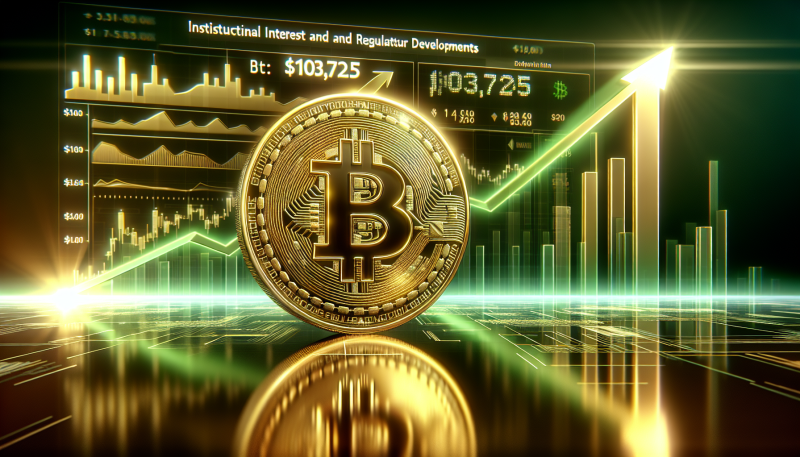
  • Bitcoin Surges to $103,725 Amidst Institutional Interest and Regulatory Developments

    Bitcoin Surges to $103,725 Amidst Institutional Interest and Regulatory Developments

    What happened?

    Bitcoin’s price has risen to $103,725, increasing by 1.09% in the last 24 hours, driven by shifting macroeconomic and institutional narratives. JPMorgan analysts are optimistic, predicting Bitcoin could outperform gold in the second half of 2025 due to strong institutional activity. Big firms are aggressively accumulating Bitcoin, and regulatory moves in several US states might establish Bitcoin as a core treasury asset.

    Who does this affect?

    This development primarily affects investors and traders in the cryptocurrency market, especially those holding or considering acquiring Bitcoin. It’s also significant for institutions looking to diversify their portfolios with digital assets, as well as regulators and policymakers tracking the acceptance of cryptocurrencies. Additionally, traditional safe-haven asset holders, like gold investors, might find these shifts noteworthy as they consider rebalancing their investments.

    Why does this matter?

    This matters because the increased institutional interest and potential regulatory support can drive Bitcoin’s price higher, offering significant returns compared to traditional assets like gold. The crypto derivatives market is maturing, which may attract more risk-averse institutional investors, impacting global market dynamics. A shift from gold to Bitcoin by major players could lead to substantial changes in asset allocation strategies across markets worldwide.

  • Growing Institutional Adoption of Stablecoins Signals Major Shift in Financial Industry

    Growing Institutional Adoption of Stablecoins Signals Major Shift in Financial Industry

    What happened?

    A recent report from Fireblocks reveals a growing trend in the financial industry, with 90% of institutions either using or planning to use stablecoins. Out of 295 executives surveyed from banks, fintech firms, and payment processors, nearly half are already implementing stablecoins for payments, and others are on the brink of launching stablecoin initiatives. This shift underscores an increased institutional interest in stablecoins as an alternative to traditional financial systems.

    Who does this affect?

    This trend impacts a wide range of stakeholders including traditional banks, fintech companies, payment processors, and ultimately, their customers. Banks are leveraging stablecoins for cross-border transfers and other payment flows, making it crucial for them to adapt to remain competitive. It also affects businesses and consumers who stand to benefit from more efficient financial transactions.

    Why does this matter?

    The adoption of stablecoins has significant implications for the financial markets, as these digital assets are seen as key to modernizing outdated financial infrastructures. Faster settlement times, reduced transaction costs, and enhanced security are some benefits driving this change, creating a competitive edge over fintech rivals. As more institutions integrate stablecoins, the market is predicted to grow significantly, potentially reaching a valuation of $2 trillion by 2030, according to Citigroup’s forecasts.

  • Bitstamp Secures CASP License Under EU MiCA Regulation, Opening Doors for Regulated Crypto Trading in Europe

    Bitstamp Secures CASP License Under EU MiCA Regulation, Opening Doors for Regulated Crypto Trading in Europe

    What happened?

    Bitstamp, a longstanding cryptocurrency exchange, has secured the Crypto Asset Service Provider (CASP) license under the EU’s Markets in Crypto-Assets (MiCA) regulation. This license was granted on May 16, 2025, by Luxembourg’s financial regulator, allowing Bitstamp to operate a MiCA-regulated trading platform and offer crypto custody services across the EU. This milestone follows Bitstamp’s acquisition of a MiFID license for operating a Multilateral Trading Facility less than a year ago.

    Who does this affect?

    The new CASP license primarily impacts Bitstamp and its European user base, including both retail and institutional investors who now have access to regulated crypto trading and custody services across Europe. The authorization also affects other crypto exchanges looking to operate in the EU, as they must comply with similar regulations to maintain market access. Regulatory bodies within the EU are also involved, overseeing compliance and enforcement according to MiCA standards.

    Why does this matter?

    The approval of Bitstamp’s CASP license under MiCA is significant for the crypto market as it facilitates regulated growth and stabilizes the digital asset ecosystem within the European Union. By enabling cross-border operations through the European Passport system, the license reduces regulatory fragmentation and encourages other firms to align with MiCA. This movement towards a unified regulatory framework is likely to attract more institutional participation and investment in the EU’s crypto markets.

  • Bitcoin Approaches All-Time High Despite Low Public Interest

    Bitcoin Approaches All-Time High Despite Low Public Interest

    What happened?

    The price of Bitcoin is currently just 5% below its all-time high, around $104,000. Despite this impressive rally, the public seems largely unfazed, as indicated by relatively low search interest scores on Google. An infographic from Cryptonews shows that high volatility and significant price changes do not necessarily correspond to increased search behavior.

    Who does this affect?

    This affects both individual retail investors and large institutional investors who are monitoring Bitcoin’s market activity. The dynamics between search interest, price volatility, and investor behavior are important for anyone involved in Bitcoin trading or investing. Additionally, the role of institutional investors like pension funds and asset managers is becoming more pronounced in influencing market trends.

    Why does this matter?

    The disconnect between Bitcoin’s current high price and the low search interest could signal a market opportunity, as quiet periods often precede significant market movements. The long-term correlation between search volume and price movements implies that an increase in public interest might drive future price increases. Moreover, the entry of institutional capital through mechanisms like Bitcoin ETFs underscores the evolving nature of market influences and potential growth drivers in the crypto space.

  • Dogwifhat Soars 182.5%, Leading the Meme Coin Market Amid Short Squeeze Frenzy

    Dogwifhat Soars 182.5%, Leading the Meme Coin Market Amid Short Squeeze Frenzy

    What happened?

    Dogwifhat (WIF) has surged to the top of the meme coin leaderboard with a massive 182.5% increase over the past month. This rise coincides with what appears to be the start of a new bullish cycle for Solana-based meme coins, placing WIF among the biggest winners. A short squeeze seems to have caused this spike, as heavily one-sided market positions led to blown-up short orders and frantic buying pressure.

    Who does this affect?

    The primary individuals affected by Dogwifhat’s surge are cryptocurrency traders and investors who have been involved in meme coins, particularly those who were betting against this market. Additionally, the sudden rise impacts both short sellers who were caught off guard and those looking to invest in or trade meme coins for potential gains. The market movement also attracts new interest from speculative investors drawn to the possibility of quick returns in a volatile environment.

    Why does this matter?

    This surge in Dogwifhat’s price matters because it highlights the volatile nature of meme coins and the potential for rapid gains or losses, marking a significant impact on the cryptocurrency market landscape. It demonstrates how market sentiment can shift quickly, with short squeezes leading to large-scale buy-ins that drive prices up. The continued interest and trading in such coins could affect broader market trends, influencing investor behavior and potentially setting the stage for further speculative trading in similar cryptocurrencies.

  • Shiba Inu Sees 30% Price Surge as Meme Coins Make Strong Comeback in Q2 2025

    Shiba Inu Sees 30% Price Surge as Meme Coins Make Strong Comeback in Q2 2025

    What happened?

    Shiba Inu (SHIB) has seen a significant price increase of nearly 30% in the past month, as meme coins are making a strong comeback in the second quarter of 2025. Influencers like Josef Rakich have highlighted SHIB’s rapid market cap growth from $4 billion to $41 billion in just a few days. The revival of meme coins suggests a potential bullish cycle similar to 2021, offering promising prospects for their future growth.

    Who does this affect?

    This development primarily affects investors and traders involved in the cryptocurrency market, especially those who invest in meme coins like Shiba Inu and Dogecoin. It also impacts the communities built around these tokens, whose members closely follow their price movements and market trends. Additionally, it influences companies and platforms that facilitate trading and provide technical analysis on such digital assets.

    Why does this matter?

    The resurgence of meme coins like Shiba Inu can significantly impact the cryptocurrency market by attracting new investors and driving up demand. As interest grows, it can lead to increased trading volumes, affecting overall market liquidity and volatility. This trend could potentially signal the beginning of a new bullish cycle, benefiting established tokens like SHIB while influencing investor behavior and investment strategies in the broader crypto space.

  • Solana (SOL) Defies Market Trends with 1.5% Price Increase Amid Bullish Signals

    Solana (SOL) Defies Market Trends with 1.5% Price Increase Amid Bullish Signals

    What happened?

    The price of Solana (SOL) has increased by 1.5% in the last 24 hours, reaching $172, and this rise comes even as the overall crypto market is experiencing a slight downturn. Over the past week, SOL has climbed 4%, and over the past month, it’s up by 38%, achieving a 6% gain year over year. Notably, a bullish signal—a forthcoming golden cross on its 1-day chart—suggests the potential for further upward movement.

    Who does this affect?

    This development primarily affects Solana investors, traders, and those with a stake in the cryptocurrency market that tracks SOL’s performance. Moreover, it impacts other projects and tokens based on the Solana network, like Solaxy (SOLX), which benefit from the network’s increasing prominence and investor interest. Large transactions, such as a recent one involving $278 million worth of SOL, hint at broader institutional and whale-level participation, indicating their influence on market dynamics.

    Why does this matter?

    The potential formation of a golden cross—a positive technical indicator—may signal significant upward momentum for SOL, influencing investor sentiment and potentially driving higher demand and trading volumes. As SOL approaches resistance levels and with the expectation of network improvements through updates like Firedancer, market analysts anticipate substantial returns, potentially pushing SOL’s value towards $200 or beyond. Consequently, Solana’s growth can affect competitive positioning within the crypto markets, impacting market capitalizations and investor strategies across digital assets.

  • Cryptocurrency Market Reacts to Coinbase Hack Amid Easing U.S.-China Trade Tensions

    Cryptocurrency Market Reacts to Coinbase Hack Amid Easing U.S.-China Trade Tensions

    What Happened?

    The cryptocurrency market experienced slight turbulence following a hack on Coinbase, with the market down by 1.3% in the past 24 hours. Despite this dip, the overall market capitalization has grown by 3% over the week and 26% over the month to stand at $3.4 trillion. Meanwhile, U.S.-China trade tensions eased with an agreement to pause certain tariffs, providing a positive backdrop for crypto trading.

    Who Does This Affect?

    The developments impact a variety of stakeholders in the cryptocurrency space, including traders, investors, and major cryptocurrencies like Bitcoin, Ethereum, Solana, Ripple, and Cardano. The hack specifically affects Coinbase users and those holding assets on the exchange, prompting discussions about security measures and custodial solutions. Additionally, the broader investor community is affected by price fluctuations and sentiment changes driven by the recent news.

    Why Does This Matter?

    These events carry significant implications for the cryptocurrency market, affecting asset prices and investor confidence. Bitcoin and Ethereum have shown resilience with gains despite the hack, indicating strong market fundamentals and investor interest. However, ongoing geopolitical developments, such as U.S.-China trade negotiations, also play a critical role in shaping market dynamics, influencing both volatility and potential growth opportunities in the coming months.