
Category: News

  • Metaplanet Boosts Bitcoin Holdings to Over 6,700 BTC, Surpassing El Salvador and Leading Asian Investments

    Metaplanet Boosts Bitcoin Holdings to Over 6,700 BTC, Surpassing El Salvador and Leading Asian Investments

    What Happened?

    Tokyo-listed investment firm Metaplanet has significantly increased its Bitcoin holdings by purchasing an additional 1,241 BTC for approximately $126 million. This acquisition brings Metaplanet’s total Bitcoin holdings to 6,796 BTC, surpassing El Salvador’s state-owned Bitcoin treasury. Metaplanet remains the largest publicly traded Bitcoin holder in Asia and aims to expand its holdings to 10,000 BTC by the end of 2025.

    Who Does This Affect?

    This development affects various stakeholders, including Metaplanet’s shareholders, who might be impacted by the firm’s aggressive Bitcoin strategy. Other companies in Asia considering similar investments may also feel pressure to act as interest in Bitcoin grows among institutions. Furthermore, this move affects global Bitcoin markets by reducing supply and possibly influencing investor sentiment toward digital assets.

    Why Does This Matter?

    This significant Bitcoin purchase by Metaplanet highlights a growing trend among public companies to use Bitcoin as a treasury reserve asset. Such moves can affect the market by increasing demand and potentially driving up Bitcoin prices. Continued institutional interest in Bitcoin, as evidenced by major acquisitions from companies like Strategy, signifies confidence in the cryptocurrency’s future despite market volatility.

  • Ramp and Stripe Launch the First Stablecoin-Backed Corporate Cards for Simplified Cross-Border Transactions

    Ramp and Stripe Launch the First Stablecoin-Backed Corporate Cards for Simplified Cross-Border Transactions

    What happened?

    Ramp, a corporate card and financial operations platform, has expanded its partnership with Stripe to introduce the first stablecoin-backed corporate cards. These cards come with integrated spend management software aimed at simplifying cross-border transactions for businesses. The solution addresses current challenges such as slow payment settlement times, high transaction fees, fiat currency volatility, and complex card issuance regulations.

    Who does this affect?

    The launch of stablecoin-backed corporate cards is set to benefit businesses operating across borders, particularly those in regions with volatile local currencies. Companies that frequently engage in international trade can leverage these cards to achieve faster transactions and lower costs. The initial rollout focuses on Latin America, with plans to expand availability to Europe, Africa, and Asia, offering a stable and streamlined payment solution for global enterprises.

    Why does this matter?

    This partnership between Ramp and Stripe has significant implications for the market as it introduces a new way to handle international business finances. By reducing transaction costs and minimizing currency risk, businesses can expect improved cash flow management and reduced operational complexities. As the stablecoin market grows, projected to reach $2 trillion by 2030, the integration of stablecoins into corporate finance could revolutionize international commerce, making markets more accessible and efficient.

  • US and China Agree to Temporarily Reduce Tariffs, Signaling Easing of Trade Tensions

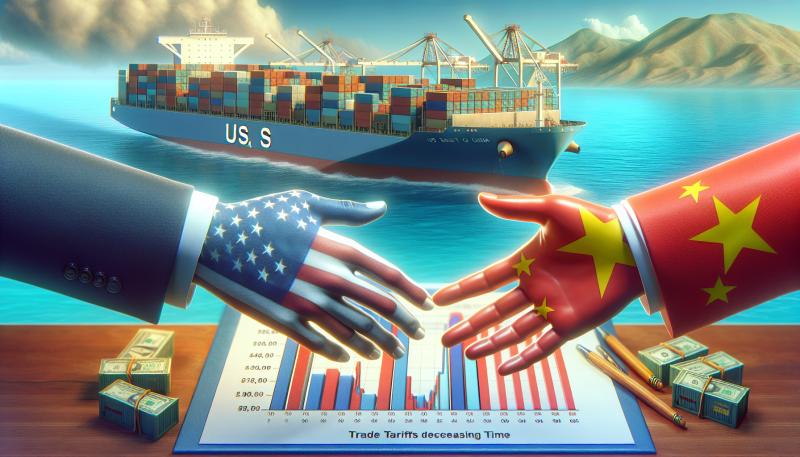
    US and China Agree to Temporarily Reduce Tariffs, Signaling Easing of Trade Tensions

    What happened?

    The United States and China have agreed to temporarily reduce tariffs on each other’s goods, indicating a potential easing of trade tensions. The agreement, announced through a joint statement in Geneva, sets a 90-day period for both nations to negotiate further economic cooperation. As part of the deal, the U.S. will lower tariffs on Chinese imports from 145% to 30%, while China will reduce duties on American goods from 125% to 10%.

    Who does this affect?

    This agreement primarily affects businesses and consumers in the United States and China, who have faced increased costs due to the high tariffs. Global markets, including stocks and cryptocurrencies, are also impacted as investors react positively to the news. Additionally, companies heavily involved in cross-border trade could see improvements in their operations and profitability due to decreased tariff burdens.

    Why does this matter?

    The temporary tariff reductions have sparked optimism in global markets, with indices such as the Hang Seng and cryptocurrencies like Bitcoin experiencing significant gains. A potential easing of trade tensions between two of the world’s largest economies could lead to increased global trade and economic stability. If negotiations lead to a longer-term agreement, it may further boost equity and digital asset markets, indicating a bullish outlook among investors.

  • Federal Prosecutors Deny Evidence Withholding in Case Against Samourai Wallet Co-Founders Amid Regulatory Scrutiny

    Federal Prosecutors Deny Evidence Withholding in Case Against Samourai Wallet Co-Founders Amid Regulatory Scrutiny

    What happened?

    Federal prosecutors denied allegations that they withheld crucial evidence in their case against the co-founders of Samourai Wallet, a crypto mixing service. The accusations hinge on a conversation with FinCEN where officials suggested Samourai might not require a Money Services Business (MSB) license. Despite this, the founders, arrested for allegedly running an unlicensed money-transmitting business, have pleaded not guilty.

    Who does this affect?

    This situation primarily affects the co-founders of Samourai Wallet, Keonne Rodriguez and William Hill, as they face potential legal consequences. It also has implications for the crypto community and other crypto mixing services, highlighting regulatory gray areas. Additionally, it involves federal agencies like FinCEN and the Department of Justice, which are navigating how to manage cryptocurrency regulations.

    Why does this matter?

    The case highlights the complex regulatory environment for cryptocurrencies and could set precedents affecting how crypto services are classified under U.S. law. A significant market impact could follow if the courts decide in favor of or against stricter regulations for similar services. As regulation of the crypto sector evolves, outcomes like these may influence investor confidence and the operations of crypto-related businesses.

  • IOTA Foundation Launches TWIN Foundation to Revolutionize Global Trade Management

    IOTA Foundation Launches TWIN Foundation to Revolutionize Global Trade Management

    What happened?

    The IOTA Foundation, in collaboration with the World Economic Forum and four other global partners, has launched the TWIN Foundation to manage the Trade Worldwide Information Network (TWIN), a decentralized, open-source platform aimed at streamlining global trade. The TWIN Foundation’s co-founders include the Tony Blair Institute for Global Change, TradeMark Africa, the Global Alliance for Trade Facilitation, and the Chartered Institute of Export and International Trade. This coalition aims to enhance efficiency, transparency, and inclusivity in global trade by leveraging expertise in policy, technology, and development.

    Who does this affect?

    The launch of TWIN primarily affects international traders, governments, and businesses involved in cross-border commerce. It seeks to assist developing markets and smaller exporters who struggle with fragmentation and inefficiency in global trade. The initiative also offers a platform for innovators and provides governments with tools for improved border management, thereby benefiting various stakeholders in the global trade ecosystem.

    Why does this matter?

    This initiative is significant for the market as it introduces new efficiencies and business models by fostering a globally connected network of trade ecosystems. By utilizing decentralized technologies and IOTA’s recent Rebased upgrade, TWIN aims to drive collaboration, innovation, and efficiency in trade operations. Furthermore, its focus on counterbalancing perceived inefficiencies in existing trade policies could potentially reshape market dynamics and foster more inclusive international trade practices.

  • Bitcoin Surges Past $105,000 Amid Positive Trade Talks and Market Optimism

    Bitcoin Surges Past $105,000 Amid Positive Trade Talks and Market Optimism

    What happened?

    Bitcoin surged past the significant $105,000 mark due to positive news surrounding U.S.-China trade talks and increased enthusiasm for cryptocurrencies. The value peaked at $105,706, showcasing a breakout from its previous range of $103,000 to $105,000. This move was supported by easing global recession fears as the U.S. considered reducing tariffs on Chinese imports.

    Who does this affect?

    This development affects cryptocurrency investors, traders, and financial markets observing Bitcoin as an asset class. As the largest cryptocurrency, Bitcoin’s price movements often influence sentiment and investment decisions across the broader digital currency landscape. Additionally, stakeholders in the U.S. and China are impacted by the trade discussions that have helped boost confidence in the market.

    Why does this matter?

    The increase in Bitcoin’s price above $105,000 is significant as it signals potential bullish momentum which can influence market trends and investor behavior. Should Bitcoin maintain this level, it could lead to further rallies, impacting investment portfolios and encouraging more participation in the crypto market. Conversely, failure to hold could lead to corrections, testing support levels and affecting short-term trading strategies.

  • Leadership Shakeup at DeGods: Frank DeGods Resigns as CEO, New Leaders Announced

    Leadership Shakeup at DeGods: Frank DeGods Resigns as CEO, New Leaders Announced

    What happened?

    Rohun Vora, known as Frank DeGods, resigned as CEO of the DeGods NFT project after leading it for three years. He announced that @0x_chill and @pastagotsauce will take over leadership, though their real identities remain undisclosed. Despite a period of personal reflection, Vora emphasized that his departure was free of any legal troubles.

    Who does this affect?

    The leadership change primarily affects the DeGods community and its stakeholders, including content creators and investors involved with the project. It also impacts the NFT space broadly due to DeGods’ prominence as one of Solana’s top collections. Furthermore, those interested in the future direction of DeGods under new management may experience shifts in focus or strategy.

    Why does this matter?

    Vora’s resignation raises questions about market confidence in DeGods and could influence its value and standing in the NFT marketplace. The project’s recent technical and artistic setbacks, combined with leadership changes, might affect investor sentiment and market performance. Community discussions on governance and tokenomics remain critical, potentially impacting DeGods’ long-term success and stability.

  • Tinian Advances Plans for First U.S. Government-Issued Stablecoin

    Tinian Advances Plans for First U.S. Government-Issued Stablecoin

    What happened?

    Tinian, a small island in the Northern Mariana Islands, is moving forward with plans to create its own stablecoin after the territory’s Senate overrode a veto from Governor Arnold Palacios. The Senate voted 7-1 in favor of legislation that would allow the Tinian government to issue licenses for internet casinos and establish a dollar-backed “Tinian Stable Token.” If passed by the House of Representatives, Tinian could become the first U.S. public entity to launch a government-issued stablecoin.

    Who does this affect?

    The creation of the Tinian Stable Token affects the residents and economy of Tinian, potentially providing a new avenue for economic growth and diversification. It also impacts the broader stablecoin market and regulatory landscape in the United States as it advances discussions on government-backed cryptocurrencies. Furthermore, it may set a precedent for other U.S. territories or states considering similar initiatives, like Wyoming.

    Why does this matter?

    This development could have significant implications for the cryptocurrency market by introducing a new form of government-backed digital currency within the U.S. framework. It highlights ongoing debates and interest in stablecoin regulation, especially considering the potential market growth projected by companies like Citigroup. Successfully launching a stablecoin in Tinian could influence regulatory approaches and inspire similar initiatives, contributing to the predicted expansion of the stablecoin market.

  • Power Theft for Cryptocurrency Mining Surges 300% in Malaysia, Threatening Energy Stability and Public Safety

    Power Theft for Cryptocurrency Mining Surges 300% in Malaysia, Threatening Energy Stability and Public Safety

    What happened?

    Power thefts in Malaysia, primarily due to illegal cryptocurrency mining, have surged by 300% between 2018 and 2024. Tenaga Nasional Berhad (TNB) identified a significant increase in illegal mining activities as global crypto transactions gained popularity. In collaboration with various enforcement agencies, TNB has actively shut down illegal operations to maintain the stability of the power grid.

    Who does this affect?

    This issue impacts TNB and its financial resources, as the company has lost about 520 million Ringgit ($121 million) due to electricity theft. The illegal mining syndicates often operate from rented locations like shops or homes, affecting property owners and local communities. Additionally, these activities pose a risk to public safety and infrastructure by overriding and damaging electrical systems.

    Why does this matter?

    The rise in electricity theft for illegal crypto mining poses a threat to the energy market by straining resources and increasing costs for legitimate consumers. TNB’s response with advanced smart meters and proposed legal actions could set a precedent for tackling crypto-related energy theft globally. Effective measures may stabilize energy distribution and restore confidence in regulatory systems handling such crimes.

  • Phishing Attack Targets Ledger’s Discord Community, Raising Security Concerns in Crypto Space

    Phishing Attack Targets Ledger’s Discord Community, Raising Security Concerns in Crypto Space

    What happened?

    Ledger’s Discord server was targeted in a phishing attack after an attacker took control of a community moderator’s account. The attacker used this access to send out scam links that tricked users into revealing their 24-word recovery phrases. The messages falsely claimed there was a security vulnerability and directed users to a fake website posing as an official Ledger site.

    Who does this affect?

    This event affects Ledger’s user community, especially those active on Discord who may have been exposed to the phishing message. It also raises concerns for any users using Discord as a means to get support from Ledger. However, no confirmed losses of user funds have been reported as a result of this incident.

    Why does this matter?

    This phishing attack highlights ongoing cybersecurity challenges facing crypto companies and the potential risks to users’ digital assets. While the immediate financial impact seems contained, such incidents can damage trust between the company and its users. The broader market impact includes increased scrutiny of security practices across crypto platforms and heightened awareness among users about potential scams.