Category: News

  • Pi Coin Experiences 80.6% Decline as Circulating Supply Increases, Sparking Investor Concerns

    Pi Coin Experiences 80.6% Decline as Circulating Supply Increases, Sparking Investor Concerns

    What happened?

    Pi Coin (PI) has dropped another 2%, reaching a current price of $0.5795 due to an increasing circulating supply. Since its all-time high of $2.98 in February, PI has experienced an 80.6% decline, disappointing early adopters. Despite this, technical indicators suggest that PI may be entering a consolidation phase, as per the Wyckoff Theory.

    Who does this affect?

    This situation affects Pi Coin holders and investors who have seen the value of their investment decline significantly. It also impacts potential new investors considering entering the market at this time of potential opportunity. Additionally, retail traders could be influenced by fear of missing out if a significant price movement occurs.

    Why does this matter?

    The market impact of this situation is significant as it highlights the volatility and potential for both risk and reward within cryptocurrency investments. A positive breakout could signal a shift in market sentiment, potentially leading to gains for those who invest at current low prices. However, failure to break key resistance levels might prolong the current downturn, affecting investor confidence and market dynamics.


  • Cryptocurrency Market Downturn: Impacts, Opportunities, and Future Outlook

    Cryptocurrency Market Downturn: Impacts, Opportunities, and Future Outlook

    What happened?

    The cryptocurrency market is experiencing a downturn, with a 2.4% decrease in market capitalization to $3.01 trillion and a continued decline in trading volume. Most of the top 10 cryptocurrencies, including Dogecoin and XRP, have seen price drops, though Binance Coin remains stable. Despite the broader market decline, some coins like Monero and Tether Gold are performing well, while others such as Virtuals Protocol have seen significant losses.

    Who does this affect?

    This situation affects cryptocurrency investors and traders who are witnessing a decline in the value of their holdings, especially those invested in the major cryptocurrencies such as Bitcoin and Ethereum. Institutional players and DeFi platforms are impacted by the RedStone and Securitize partnership, as it introduces new composable assets to the space. Additionally, participants in the Chainlink ecosystem stand to benefit from the new rewards program, which incentivizes active involvement.

    Why does this matter?

    The current downturn in the crypto market might create caution among investors, potentially affecting future investments and the overall market sentiment. However, the RedStone and Securitize initiative can boost the DeFi sector by allowing for the integration of institutional-grade assets, which could drive innovation and liquidity. The launch of Chainlink’s rewards program might enhance community engagement and support the network’s growth, while ForteXchain empowers more accessible real estate investment through tokenization, expanding market participation.

  • Bitcoin Shows Signs of Strength Amidst Institutional Demand Despite Recent Decline

    Bitcoin Shows Signs of Strength Amidst Institutional Demand Despite Recent Decline

    What happened?

    Bitcoin experienced a small decline of 0.5% from a recent peak, yet signs point to potential strength in 2025 due to strong institutional demand. Notably, Bitcoin ETFs received a net inflow of over $4.5 billion between April 22 and May 2, indicating growing interest during a consolidation period. Furthermore, open interest in Bitcoin futures increased by 21% since March, highlighting robust activity in the futures market.

    Who does this affect?

    The developments impact institutional investors, retail traders, and entities with vested interests in cryptocurrency markets. Institutional players like ETFs and major firms, such as Michael Saylor’s Strategy, are showing significant engagement via large-scale Bitcoin acquisitions. Retail investors could be affected by these movements as rising institutional investment often signals broader market confidence and potential shifts in asset value.

    Why does this matter?

    The active institutional participation and the increase in futures open interest highlight growing confidence in Bitcoin as a long-term investment. This trend could lead to increased market stability and potentially higher valuations in the future, impacting both traditional and crypto markets. Additionally, despite geopolitical tensions causing capital flow into stable traditional assets, Bitcoin’s dominance in the crypto market is rising, suggesting a shift towards perceived lower-risk digital currencies.

  • Worldcoin’s $WLD Faces 7% Drop Amid Regulatory Scrutiny and Biometric Data Concerns

    Worldcoin’s $WLD Faces 7% Drop Amid Regulatory Scrutiny and Biometric Data Concerns

    What happened?

    Worldcoin’s cryptocurrency, $WLD, saw its price drop by 7% to $0.8745 following renewed regulatory scrutiny in Kenya. The Kenyan High Court ordered Worldcoin to permanently delete all biometric data collected in the country due to privacy concerns. Global backlash against Worldcoin’s data practices has led to legal challenges and regulatory scrutiny across several countries.

    Who does this affect?

    This affects the stakeholders of Worldcoin, including users who provided biometric data, investors holding $WLD tokens, and the project’s leadership team. Countries like Germany and Kenya have already taken action, which could impact the ability for consumers in those regions to interact with the platform. Additionally, Worldcoin’s operations in other scrutinizing jurisdictions may face future restrictions, influencing broader user engagement and project growth.

    Why does this matter?

    The regulatory challenges faced by Worldcoin have significant implications for the crypto market, especially regarding projects reliant on data collection. If similar regulatory pressures persist globally, it could affect investor sentiment and alter the trajectory of crypto projects that utilize personal data. However, despite these challenges, Worldcoin’s recent pivot towards more privacy-conscious verification methods has sparked renewed market optimism, reflected in a notable trading volume surge following a positive listing announcement from Coinbase.

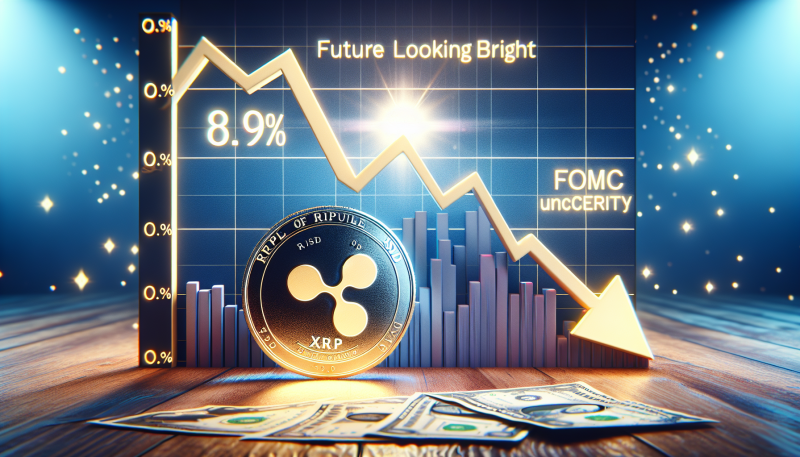
  • XRP Faces 8.9% Drop Amid FOMC Uncertainty, But Future Looks Bright with Ripple USD Adoption

    XRP Faces 8.9% Drop Amid FOMC Uncertainty, But Future Looks Bright with Ripple USD Adoption

    What happened?

    XRP has experienced a decline over the past week, losing 8.9% in value due to bearish sentiment before the Federal Open Market Committee (FOMC) meeting. This meeting brings uncertainty as investors are wary of how the U.S. central bank might respond to recent economic reports. Despite this downturn, there is optimism surrounding XRP’s future due to growing adoption of Ripple’s new stablecoin, Ripple USD (RLUSD).

    Who does this affect?

    This situation affects XRP investors and traders who are concerned about short-term price fluctuations and market sentiment. It also impacts companies and individuals adopting Ripple’s new stablecoin, RLUSD, as it could influence demand for XRP as a utility token on the network. Moreover, potential investors in upcoming crypto projects like MIND of Pepe may reassess their strategies in light of XRP’s performance.

    Why does this matter?

    The market impact stems from the influence of XRP’s price movements, which can signal broader trends in the cryptocurrency industry. The potential for increased XRP adoption through RLUSD may boost its long-term outlook, providing stability and growth potential for the market. Additionally, the performance of new projects like MIND of Pepe showcases shifting investor interest, which might redefine investment opportunities amid fluctuating established tokens like XRP.

  • BlackRock’s $20 Million Ethereum ETF Inflows Signal Growing Institutional Interest

    BlackRock’s $20 Million Ethereum ETF Inflows Signal Growing Institutional Interest

    What happened?

    BlackRock’s Ethereum ETF attracted $20 million in inflows during a single day of trading, indicating significant interest from institutional investors. This move took place amid a volatile week for Ethereum, which ended with a 3% loss in its trading value. The ETF now represents nearly 2% of the total Ethereum market cap, highlighting BlackRock’s confidence in Ethereum as a key crypto asset.

    Who does this affect?

    This development primarily affects institutional investors and large stakeholders who are interested in cryptocurrency markets. Retail investors who hold Ethereum might also see changes in the token’s value as institutions continue to invest heavily. Additionally, developers and projects built on the Ethereum network could benefit from increased attention and value stability.

    Why does this matter?

    The strong backing of Ethereum by a major financial player like BlackRock could have a substantial impact on the market, potentially reducing volatility and improving liquidity due to long-term holdings. This level of institutional investment could signal increased legitimization and maturation of the crypto market, attracting more traditional investors. Furthermore, if this trend continues, it could lead to upward pressure on Ethereum’s price, enhanced by the upcoming network upgrades that aim to improve functionality and scalability.

  • Corporate Investment in Bitcoin Could Reach $330 Billion by 2029, Transforming Market Dynamics

    Corporate Investment in Bitcoin Could Reach $330 Billion by 2029, Transforming Market Dynamics

    What happened?

    A research and brokerage firm, Bernstein, projects that corporations might allocate up to $330 billion into Bitcoin by 2029. This potential investment surge is largely driven by businesses looking to emulate MicroStrategy’s Bitcoin treasury strategy. The forecast suggests that this corporate interest will be led mainly by small, low-growth companies seeking alternative paths for value creation.

    Who does this affect?

    This initiative affects public companies, particularly those with large cash reserves and limited reinvestment opportunities, as they look to Bitcoin as a hedge and growth strategy. Investors in these companies may experience fluctuations in stock prices and returns aligned with Bitcoin’s performance. The broader cryptocurrency market could also be impacted, with increased institutional investment potentially bolstering Bitcoin’s value and credibility.

    Why does this matter?

    The anticipated corporate investment in Bitcoin could have significant market impacts, potentially increasing Bitcoin’s price and solidifying its role as a mainstream financial asset. Increased adoption by publicly listed companies might lead to higher acceptance of Bitcoin in traditional finance. However, the success of these investments largely depends on the future performance of Bitcoin itself, making it a pivotal factor in market dynamics over the next few years.

  • Concerns Grow Over Crypto Regulation as Congress Faces Legislative Challenges

    Concerns Grow Over Crypto Regulation as Congress Faces Legislative Challenges

    What happened?

    Bitwise CIO Matt Hougan has raised concerns about Congress’s ability to pass essential crypto regulation, warning of a challenging summer for the industry if legislative progress stalls. Despite optimism for crypto’s future and significant potential gains under the current administration, Hougan stresses that these prospects are fragile without legal clarity from Congress. He highlights the importance of codifying crypto measures into law to ensure industry stability.

    Who does this affect?

    This situation impacts several stakeholders, including cryptocurrency investors, companies within the digital asset sector, and broader financial markets. It also affects policymakers and legislators who are involved in shaping the regulatory environment around cryptocurrencies. Finally, it impacts the general public, which stands to benefit from or be affected by changes in how digital currencies are regulated.

    Why does this matter?

    The outcome of this legislative process is crucial for the market, as it determines the regulatory landscape that will govern the future of digital assets. Without clear regulations, the crypto market may face instability, creating challenges for investors and businesses looking to innovate. Additionally, the delay or failure in passing crucial legislation could hamper the US’s ability to lead in the global crypto market, potentially affecting economic growth and innovation in the financial sector.

  • Ethereum Whale Accumulates $BONE Tokens Ahead of Potential Shibarium Airdrop, Sparking Market Speculation

    Ethereum Whale Accumulates $BONE Tokens Ahead of Potential Shibarium Airdrop, Sparking Market Speculation

    What happened?

    An Ethereum whale has accumulated 1.7 million $BONE tokens worth over $500,000 in a five-day span, possibly in anticipation of an upcoming Shibarium airdrop. This activity was flagged by a member of the Shiba Inu community, Javier Olmedo, who noted the consistent daily purchases by a new wallet. The whale’s buying strategy raises questions about potential privileged information related to Shibarium’s airdrop plans.

    Who does this affect?

    The accumulation of $BONE tokens affects the Shiba Inu ecosystem, especially investors and holders of BONE and SHIB tokens. The whale’s actions could influence market sentiment and prices, impacting retail investors who might follow suit based on perceived insider knowledge. Entities involved in the Shibarium project, such as K9 Finance DAO, are also affected by the heightened attention and speculation stemming from the whale’s moves.

    Why does this matter?

    This whale activity matters for the cryptocurrency market as it suggests institutional or large-scale investor interest in the Shiba Inu ecosystem. The potential Shibarium airdrop and the strategic accumulation of $BONE could lead to increased demand and price fluctuations, impacting the broader crypto market’s perception of Shiba Inu tokens. Additionally, the ongoing token burns contribute to the deflationary mechanics of BONE, affecting its supply and potentially its long-term value proposition.

  • Solana’s Price Dips Amid Market Decline, but Resilience and Security Patching Sparks Investor Confidence

    Solana’s Price Dips Amid Market Decline, but Resilience and Security Patching Sparks Investor Confidence

    What happened?

    Solana’s price dropped by 1.5% over the past day amid a general market decrease of 3%. Despite this dip, SOL has risen by 21% over the last month due to market recovery. This price action follows news that the Solana Foundation patched a serious bug that could have led to major exploits.

    Who does this affect?

    This news affects Solana investors and traders who are closely following the asset’s price movements. The patching of the vulnerability also impacts developers and the broader Solana community, emphasizing the importance of network security. Additionally, competitive blockchain communities, such as Ethereum supporters, who may view Solana’s rapid fix as a sign of centralization, are affected.

    Why does this matter?

    The swift patching of the bug suggests strong network security, potentially stabilizing investor confidence despite criticisms of centralization. The Solana market’s minor drop compared to the broader market indicates resilience, and it highlights how swiftly addressing vulnerabilities can mitigate negative price impact. Overall, Solana’s potential for a bullish reversal could lead to price targets of $200 by summer, with even higher prospects if market conditions improve.