Category: News

  • Memecoin Market Pullback: $TRUMP Token Surges Amid Profit-Taking and Regulatory Concerns

    Memecoin Market Pullback: $TRUMP Token Surges Amid Profit-Taking and Regulatory Concerns

    What happened?

    The memecoin market experienced a pullback as traders took profits following a recent rally, reducing the sector’s market capitalization by 3.68% to $52.2 billion. Politically themed memecoins like $TRUMP surged despite this trend, with the token seeing an increase of 60% after the announcement of an exclusive event for its holders. The $TRUMP token, associated with former U.S. President Donald Trump, now leads politically themed memecoins, briefly reaching over $14.5 billion in market cap before retracing significantly.

    Who does this affect?

    This development impacts several groups: traders and investors in the memecoin market, particularly those holding $TRUMP tokens, who are incentivized to maintain their positions to attend an exclusive dinner. It also affects the broader cryptocurrency community, which is observing the dynamics of politically themed tokens. Additionally, U.S. lawmakers and regulators are concerned about potential implications for campaign financing and regulation due to the association with a political figure.

    Why does this matter?

    The rise of the $TRUMP token highlights volatility and speculation within the memecoin market, impacting investor sentiment and potentially leading to increased scrutiny from regulators. Traders and analysts warn of potential price manipulation risks, given the high concentration of token supply in developers’ hands and large, unknown holders. This situation could lead to a significant market impact if investors rush to sell, driven by fears of a coordinated sell-off or changes in regulatory oversight, affecting not only $TRUMP but potentially the broader memecoin and cryptocurrency markets.

  • Divergence in Bitcoin Market: Long-Term Accumulation vs. Short-Term Selling

    Divergence in Bitcoin Market: Long-Term Accumulation vs. Short-Term Selling

    What happened?

    The Bitcoin market is currently showing a divergence between long-term and short-term holders, with long-term holders accumulating over 635,000 Bitcoin since January, while short-term holders are selling off. Traders have also shown increasing optimism through strategic options trading, despite some caution about calling the return of the bull cycle. Additionally, BTC has surged above $94,000 due to aggressive buying on Binance and institutional accumulation.

    Who does this affect?

    This development affects a wide range of stakeholders in the cryptocurrency market, including both individual retail investors and larger institutional players. Long-term holders might see continued growth in their investments, while short-term holders might be missing out on potential future gains. The market dynamics also impact traders using derivatives and options, as well as platforms like Binance where increased buying activity is noted.

    Why does this matter?

    The current trends in the Bitcoin market are significant because they affect overall market sentiment and potential price movements. The accumulation by long-term holders can provide stability and support for further upward price trends, influencing both new and existing investors. Meanwhile, strategic trading activities in options markets could lead to shifts in implied volatility and market perception, potentially driving more investors toward cryptocurrencies.

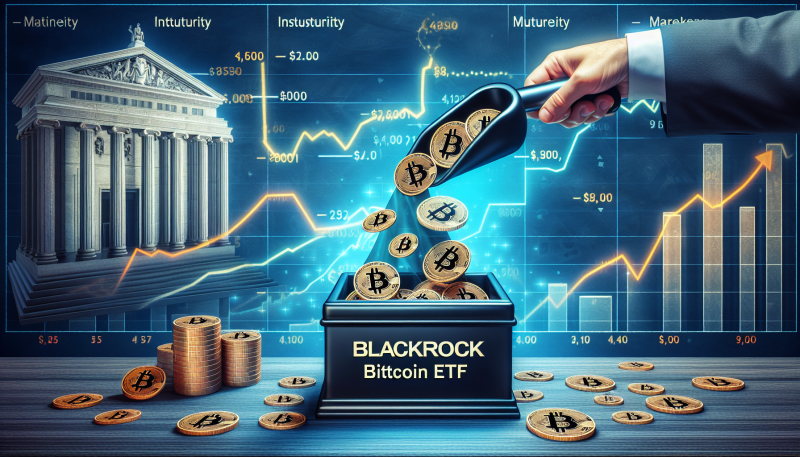
  • Massive Inflows into BlackRock’s Bitcoin ETFs Signal Growing Institutional Confidence and Market Maturity

    Massive Inflows into BlackRock’s Bitcoin ETFs Signal Growing Institutional Confidence and Market Maturity

    What happened?

    BlackRock’s iShares Bitcoin Trust (IBIT) received a massive $643 million in net inflows on a single day, the largest since January 21. This contributed to a total of $917 million flowing into all U.S.-listed spot Bitcoin ETFs within that day. The surge in inflows is attributed to renewed investor confidence and Bitcoin’s emerging role as a hedge against inflation and geopolitical risks.

    Who does this affect?

    This significant inflow affects institutional investors and funds looking for exposure to Bitcoin through exchange-traded products. It also impacts retail investors who may see increased stability and growth in Bitcoin-linked financial products. Additionally, companies and analysts observing Bitcoin’s performance will need to consider its growing institutional acceptance and potential as a risk diversification tool.

    Why does this matter?

    The massive inflows into Bitcoin ETFs, led by BlackRock’s IBIT, indicate significant institutional interest, suggesting greater market maturity and acceptance of Bitcoin as a legitimate asset class. This could lead to increased liquidity and price stability for Bitcoin, influencing broader adoption and integration into traditional financial systems. However, ongoing macroeconomic uncertainties and the potential for market corrections highlight the need for cautious optimism moving forward.

  • Revolut Achieves Record Annual Profit of $1 Billion, Expands Banking Services for Customers

    Revolut Achieves Record Annual Profit of $1 Billion, Expands Banking Services for Customers

    What happened?

    Revolut, a major fintech company, has reported an annual profit surpassing $1 billion for the first time. The company’s net profit in 2024 reached £1.1 billion ($1.5 billion), a substantial 149% increase compared to the previous year. This growth is primarily driven by its wealth division and crypto trading resurgence, as well as significant revenue increases from subscription services and customer deposits.

    Who does this affect?

    This development affects Revolut’s 11 million customers in the U.K., who stand to gain access to new traditional banking products like loans and mortgages as the company transitions into a licensed bank there. It also impacts investors and stakeholders within Revolut, who benefit from the company’s growing profitability and valuation. Additionally, competitors like Monzo and Starling may feel the pressure as Revolut expands its services and market presence.

    Why does this matter?

    This surge in profitability and expansion into traditional banking highlights Revolut’s increasing influence in the financial market, potentially attracting more customers and investors. The company’s innovations in crypto trading through platforms like Revolut X position it as a formidable player against established crypto exchanges. As Revolut continues to grow and innovate, other fintech and banking institutions might need to adapt to compete effectively in an evolving financial landscape.

  • Jack Mallers Appointed CEO of New Bitcoin-Centric Company Twenty One, Backed by Tether and SoftBank

    Jack Mallers Appointed CEO of New Bitcoin-Centric Company Twenty One, Backed by Tether and SoftBank

    What happened?

    Crypto payments firm Strike founder Jack Mallers has been appointed CEO of a new Bitcoin-centric company called Twenty One, backed by Tether and SoftBank. The company will launch with over 42,000 Bitcoin, making it the third-largest Bitcoin treasury worldwide. Mallers will continue his role at Strike while leading the effort to promote Bitcoin’s adoption and reinforce its value.

    Who does this affect?

    The formation of Twenty One significantly impacts investors and stakeholders in the crypto industry, particularly those interested in Bitcoin investments. It affects current and potential Bitcoin holders as the company aims to increase its Bitcoin holdings and build financial products based on Bitcoin. Shareholders and institutional investors looking for Bitcoin-native investment opportunities will also be directly influenced.

    Why does this matter?

    This venture could substantially impact the market by pushing Bitcoin further into mainstream financial systems and increasing its perceived legitimacy as an asset class. With considerable backing from Tether and SoftBank, the venture is poised to influence Bitcoin’s price trajectory and market behavior through substantial investments. By prioritizing Bitcoin accumulation over speculation, the company aims to build long-term value and transform how Bitcoin is integrated into traditional markets.

  • Prosecutors Seek 6.5-Year Sentence for Avi Eisenberg in $110 Million Mango Markets Fraud Case

    Prosecutors Seek 6.5-Year Sentence for Avi Eisenberg in $110 Million Mango Markets Fraud Case

    What Happened?

    U.S. federal prosecutors are aiming for a prison sentence of up to 6.5 years for Avraham “Avi” Eisenberg. Eisenberg was found guilty of wire fraud, commodities fraud, and market manipulation related to the $110 million exploit on Mango Markets in 2022. Prosecutors emphasize the severity of his crimes that defrauded investors and forced the closure of Mango Markets, arguing for a strict sentence to deter future misconduct.

    Who Does This Affect?

    The sentencing of Avi Eisenberg directly affects the investors who lost money due to his fraudulent activities on Mango Markets. The closure of Mango Markets impacts its users, who were asked to close positions to avoid further losses. Additionally, this case sends a message to the broader decentralized finance (DeFi) community regarding accountability and legal repercussions for market manipulation.

    Why Does This Matter?

    This case highlights the risks associated with decentralized finance platforms and the severe consequences of exploiting such vulnerabilities. The proposed harsh sentence could set a precedent for how similar cases are handled in the future, potentially influencing investor trust and participation in the DeFi market. A significant court ruling like this could lead to increased regulatory scrutiny and impact market dynamics in the cryptocurrency space.

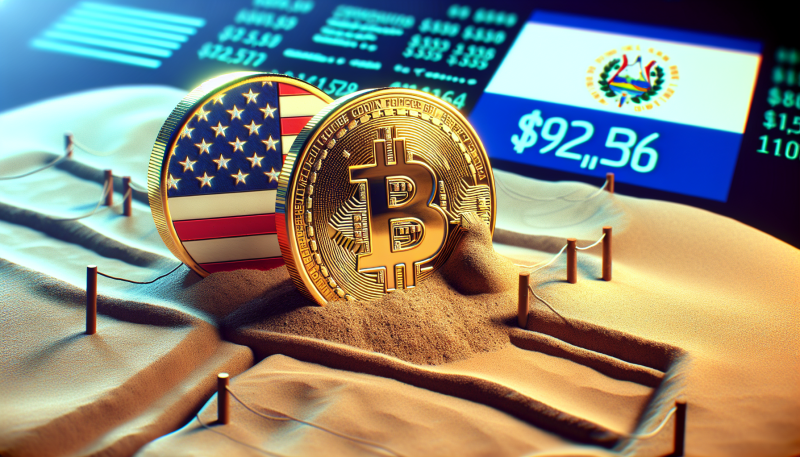
  • Bitcoin Approaches $92,536 as U.S. and El Salvador Explore Cross-Border Crypto Regulatory Sandbox

    Bitcoin Approaches $92,536 as U.S. and El Salvador Explore Cross-Border Crypto Regulatory Sandbox

    What happened?

    Bitcoin’s price is hovering around $92,536 after a slight dip, with much attention focused on regulatory developments. The U.S. SEC and El Salvador’s CNAD are discussing creating a crypto sandbox for U.S. brokers to issue non-security tokens under El Salvador’s legal framework. This initiative marks a significant moment in crypto regulation, suggesting a shift towards more collaborative cross-border crypto policies.

    Who does this affect?

    This development primarily affects U.S. and Salvadoran regulatory bodies, crypto brokers, and investors interested in legally issuing tokens in both countries. It may also influence other countries observing the economic and regulatory implications of such cross-border collaborations. Additionally, Bitcoin investors and enthusiasts could see changes in market dynamics as more institutional access might be facilitated through these regulatory changes.

    Why does this matter?

    The proposal could significantly impact market structures by potentially easing access to token issuance outside the usual U.S. regulatory constraints. For Bitcoin, this could mean increased legitimacy and investment opportunities, as seen in institutional interest and parallel developments in other countries like Russia. These regulatory shifts may encourage more traditional financial players to integrate crypto strategies, possibly leading to greater market stability and growth.

  • FBI Reports Alarming Rise in Cryptocurrency Fraud: $9.3 Billion Lost in 2024

    FBI Reports Alarming Rise in Cryptocurrency Fraud: $9.3 Billion Lost in 2024

    What happened?

    The FBI reported a significant rise in cryptocurrency fraud, with over 149,000 complaints in 2024 leading to $9.3 billion in losses, primarily from investment scams and extortion. This marks a 66% increase from the previous year’s $5.6 billion. Ransomware targeting critical infrastructure also saw a notable rise, with complaints growing by 9% compared to 2023.

    Who does this affect?

    Elderly Americans were the most affected demographic, with those aged 60 and older reporting over $2.83 billion in losses. Victims within the 50 to 59 age group also suffered significant losses totaling $1.18 billion. California experienced the highest state-level losses at over $1.39 billion, followed by Texas with $738 million in losses.

    Why does this matter?

    The substantial increase in crypto fraud impacts both individual investors and the broader financial market, highlighting vulnerabilities that bad actors exploit. Investment fraud, particularly schemes like “pig butchering,” constitute a primary threat by targeting victims through relationship-building to promote fraudulent crypto investments. The persistence of these scams underscores the need for enhanced regulation and oversight in the cryptocurrency space to safeguard against significant financial losses and potential personal crises, as evidenced by suicide intervention referrals.

  • ZKsync Recovers $5 Million in Stolen Tokens After Security Breach

    ZKsync Recovers $5 Million in Stolen Tokens After Security Breach

    What happened?

    ZKsync Association recently managed to recover $5 million in stolen tokens after a security breach involving its airdrop distribution contract. The hacker responsible for the exploit returned 90% of the stolen assets, valued at nearly $5.7 million due to price increases, accepting a 10% bounty as part of the agreement. The ZKsync Security Council confirmed the funds were returned within a 72-hour safe harbor window, resolving the incident.

    Who does this affect?

    This incident affects the ZKsync community and participants in its token ecosystem, reassuring them of the protocol’s security measures. Matter Labs assured users that no personal funds were compromised during the breach, maintaining trust among its user base. Additionally, it highlights the effectiveness of using bounties as a remediation strategy for similar incidents.

    Why does this matter?

    The incident underscores the critical link between blockchain security and market confidence, as timely resolution of breaches can mitigate adverse market impacts. Despite the positive resolution, ZK tokens experienced a slight dip, reflecting ongoing market sensitivity to security issues. However, this recovery showcases the potential for price appreciation post-breach, with both ZK tokens and Ether seeing significant gains since the hack.

  • Shaquille O’Neal Settles Lawsuit Over FTX Endorsement Amid Growing Legal Risks for Celebrity Investors

    Shaquille O’Neal Settles Lawsuit Over FTX Endorsement Amid Growing Legal Risks for Celebrity Investors

    What happened?

    Shaquille O’Neal has reached a settlement in a lawsuit with investors who lost money in the collapse of the cryptocurrency exchange FTX. The settlement details, which remain confidential for now, will be made public once approval is sought from the court. O’Neal was one of several celebrities involved in legal action due to promoting FTX before its sudden bankruptcy.

    Who does this affect?

    The settlement primarily impacts investors who suffered financial losses from FTX’s collapse and were part of the class-action lawsuit. It also affects other celebrities and public figures named in similar lawsuits against FTX for their promotional activities. Moreover, it underlines the growing scrutiny on celebrities endorsing financial products, especially in volatile markets like cryptocurrency.

    Why does this matter?

    This settlement highlights the increasing legal risks for celebrities endorsing financial products, particularly in the rapidly evolving cryptocurrency market. It may discourage future celebrity endorsements without thorough vetting of the platforms or products they promote. The broader implications could lead to stricter regulations and oversight on crypto-related promotions, affecting how the market operates and is perceived by potential investors.