
Category: News

  • ESMA Warns of Crypto-Asset Risks to Financial Stability Amid Market Uncertainty

    ESMA Warns of Crypto-Asset Risks to Financial Stability Amid Market Uncertainty

    What happened?

    The European Securities and Markets Authority (ESMA) has issued a warning about the risks that crypto-assets pose to financial stability. ESMA Executive Director Natasha Cazenave highlighted these concerns during a speech at the European Parliament, amid broader market chaos influenced by geopolitical tensions. While welcoming the implementation of the Markets in Crypto-Assets Regulation (MiCA), she emphasized that no crypto-asset can be considered safe.

    Who does this affect?

    The warning affects investors in crypto-assets, as they are urged to exercise caution amidst the ongoing market hype. It also concerns financial institutions within the EU, especially those considering engaging with crypto-related activities. Despite the growing attention on cryptos, over 95% of EU banks currently do not engage in crypto activities.

    Why does this matter?

    ESMA’s warning highlights potential risks to financial markets given their current volatility and the increasing influence of crypto-assets. Although cryptos still represent a small fraction of global financial assets, the rapid developments and recent surges in market values like Bitcoin could catalyze wider financial instability. This is crucial when considering the tumultuous market environment, creating an urgency for regulators to continuously monitor these developments closely.

  • Argentina’s Congress Launches Investigation into Libra Token Collapse Amidst Political Fallout

    Argentina’s Congress Launches Investigation into Libra Token Collapse Amidst Political Fallout

    “`html

    What happened?

    Argentina’s lower house of Congress has voted to start an investigation into government officials involved with the controversial Libra token. The investigation follows a failed Senate attempt and aims to uncover any misconduct related to the token’s launch and sudden crash. President Javier Milei’s promotion of the token on social media earlier this year led to the token’s collapse shortly after, sparking this inquiry.

    Who does this affect?

    The investigation affects several senior officials in Milei’s administration, who will be examined for their roles in the Libra token incident. This includes key figures such as Economy Minister Luis Caputo and Justice Minister Mariano Cúneo Libarona, who may be called upon to provide testimony and documentation. Investors in the Libra token, who suffered significant financial losses, are also directly impacted by this situation.

    Why does this matter?

    The collapse of the Libra token and subsequent investigation highlights the volatile nature of cryptocurrencies and the potential risks when political leaders engage with digital assets. The incident, dubbed “Cryptogate,” adds legal and political pressure on Milei’s administration and raises concerns about market manipulation and trust in digital currencies. This situation underscores the potential impact on Argentina’s already unstable economic environment, with significant repercussions for market confidence and investor sentiment.

    “`

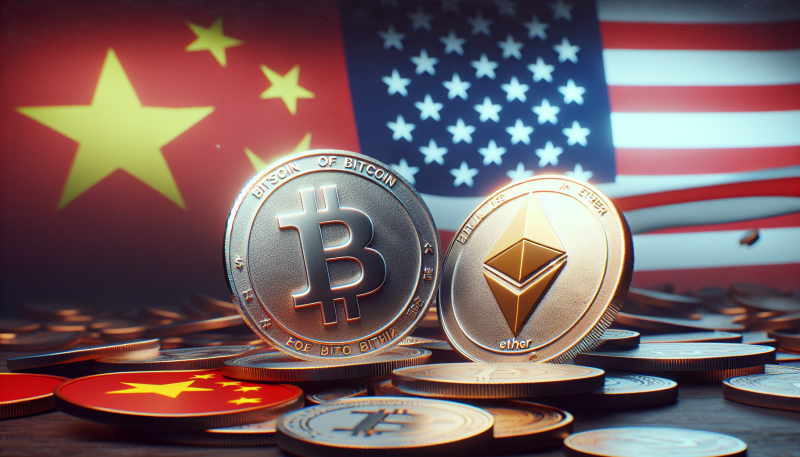
  • Bitcoin and Ether Decline Amid Escalating US-China Trade Tensions

    Bitcoin and Ether Decline Amid Escalating US-China Trade Tensions

    What happened?

    Bitcoin and Ether experienced significant declines as the US-China trade war tensions increased, causing new tariffs to be announced by President Trump. The broader cryptocurrency market followed suit, reflecting a 7.2% drop in total market capitalization amid fading hopes for a resolution to the tariff dispute. This decline parallels similar struggles in traditional markets, which also faced downturns due to trade tensions.

    Who does this affect?

    This situation impacts both cryptocurrency investors and participants in traditional financial markets, as both sectors are experiencing increased volatility and uncertainty. Investors holding assets such as Bitcoin, Ether, and stocks could face potential losses, especially if market conditions continue to deteriorate. The wider economic implications of escalated trade tensions between the US and China can also affect global businesses and consumers.

    Why does this matter?

    The pronounced impact on cryptocurrency and stock markets underscores their interconnectedness during times of economic stress. As trade tensions escalate, market confidence is eroded, which might lead to decreased investments and selloffs in these markets. Additionally, an upcoming inflation report poses further risks, potentially intensifying market volatility and influencing central bank policies.

  • Russia Introduces Tax Calculator for Crypto Miners to Clarify Taxation Framework

    Russia Introduces Tax Calculator for Crypto Miners to Clarify Taxation Framework

    What happened?

    The Russian Federal Tax Service (FTS) has introduced a new tax calculator for crypto miners in Russia. This tool will allow miners to calculate taxes on digital currencies by providing them with exchange rate data and the minimum closing prices of popular cryptocurrencies on foreign trading platforms. The FTS has also published information to help taxpayers determine income from digital currency transactions through market quotes and daily trading volumes.

    Who does this affect?

    This new tax tool is designed specifically for crypto miners operating in Russia. It affects both individual and corporate entities engaged in cryptocurrency mining, especially those using over 6,000 kWh of electricity per month, as they are required to register with the FTS. Miners who do not comply with the registration requirement may face fines, while operators of mining infrastructure are also given specific guidelines to follow.

    Why does this matter?

    This development has significant implications for the crypto market in Russia, as it provides a clearer framework for taxation in the crypto mining sector. By formalizing the taxation process for crypto miners, the Russian government stands to increase its revenue from this industry, which has previously promised substantial earnings. The introduction of these regulations could influence the operations and profitability of crypto mining companies within the country and might lead to more standardized practices in the sector.

  • U.S. Increases Tariffs to 104% in Trade War with China, Triggering Market Turbulence and Economic Fears

    U.S. Increases Tariffs to 104% in Trade War with China, Triggering Market Turbulence and Economic Fears

    What happened?

    The U.S. escalated its trade war with China by increasing tariffs to 104%, causing significant tremors in the financial markets. Major stock indexes such as the Nasdaq, S&P 500, and Dow Jones Industrial Average dropped over 1-2% each. This move, defended by President Trump as a necessary economic measure, has triggered fears of a possible recession and has drawn criticism due to its potential to damage global alliances.

    Who does this affect?

    The increased tariffs impact multiple stakeholders including American consumers, businesses reliant on Chinese goods, and global markets. Investors are particularly affected as both traditional and cryptocurrency markets have seen declines, with Bitcoin dropping over 3%. Additionally, the policy impacts international relations, particularly between the U.S. and China, as well as other countries caught in the crossfire of this trade dispute.

    Why does this matter?

    The escalation of tariffs has potentially far-reaching implications for the market, sparking anxiety over an economic downturn. Stock markets responded negatively, showing vulnerability to trade policies and geopolitical tensions. However, there is an argument that the instability might increase interest in cryptocurrencies as investors seek resilient stores of value during periods of economic stress.

  • Trump’s Tariff Policies Could Drive Increased Interest in Cryptocurrencies, Says Binance CEO

    Trump’s Tariff Policies Could Drive Increased Interest in Cryptocurrencies, Says Binance CEO

    What happened?

    Richard Teng, Binance’s CEO, commented on U.S. President Donald Trump’s new tariff policies, suggesting they might boost interest in cryptocurrencies. Trump’s tariffs aim to impose a minimum of 10% on goods from most countries, causing volatility in global markets, including crypto. According to Teng, while these tariffs create short-term market disruptions, they could increase the demand for digital assets as a non-sovereign value store.

    Who does this affect?

    The new tariffs primarily impact international trade and businesses involved in importing goods into the U.S. Investors, particularly those dealing with cryptocurrencies, might see increased volatility in their portfolios. Additionally, American consumers and businesses could face higher costs, while global markets may experience instability as they adjust to these changes.

    Why does this matter?

    The tariff policies could have significant implications for financial markets by increasing uncertainty and shifting capital towards decentralized systems like crypto. As economic tensions rise, investors might seek alternatives that are less susceptible to government actions, potentially boosting the crypto market. If confidence in traditional financial systems wanes, this could accelerate the adoption of blockchain-based assets as part of a broader economic strategy.

  • Dubai Pioneers Blockchain Integration in Real Estate with Revolutionary Tokenization Initiative

    Dubai Pioneers Blockchain Integration in Real Estate with Revolutionary Tokenization Initiative

    “`html

    What happened?

    Dubai has taken a significant step by integrating blockchain technology into its real estate sector. The Dubai Land Department (DLD) and the Dubai Virtual Assets Regulatory Authority (VARA) have partnered to link the city’s real estate registry with property tokenization. This initiative marks a global first and aims to modernize property transactions in Dubai, aligning with the city’s strategic D33 agenda.

    Who does this affect?

    This development primarily affects investors, particularly smaller ones who may benefit from easier access to real estate markets. Real estate professionals and regulatory bodies in Dubai are also impacted as they navigate new digital infrastructure for transactions. Ultimately, the integration could offer more liquidity and improved investment opportunities for individuals looking to enter the property market.

    Why does this matter?

    The integration of blockchain into Dubai’s real estate sector can significantly impact the market by setting a global standard for tokenized property ownership. It offers potential growth in transaction volume, aiming to reach AED 1 trillion, and could double Dubai’s GDP within a decade. By improving regulatory clarity and making property investment more accessible, it could attract global interest and spur economic growth through innovation in virtual assets.

    “`

  • Vote-Buying Scandal in Arbitrum DAO Elections Exposes Governance Vulnerabilities

    Vote-Buying Scandal in Arbitrum DAO Elections Exposes Governance Vulnerabilities

    What happened?

    A major incident occurred in the Arbitrum DAO elections where hitmonlee.eth used Lobby Finance to buy votes, exposing vulnerabilities in token-weighted governance. For 5 ETH (~$10k), hitmonlee.eth acquired the voting power of 19.3 million ARB tokens, surpassing seasoned DAO delegates like Wintermute. The votes were used to elect CupOJoseph to a key committee, highlighting how easily and cheaply vote-buying can influence elections.

    Who does this affect?

    This situation impacts the Arbitrum DAO community, including token holders and governance participants who rely on the integrity of DAO processes. It raises concerns among decentralized platforms that utilize similar token-weighted voting systems. Additionally, it sets a precedent for other DAOs, potentially affecting their governance structures and trust within their communities.

    Why does this matter?

    The controversy has significant market implications as it questions the security and fairness of decentralized governance models. Affected platforms might face decreased confidence from investors and users, leading to potential shifts in market movements. How Arbitrum addresses this issue could influence future governance practices across the crypto industry, impacting token valuation and the overall perception of blockchain decentralization.

  • Cryptocurrency Adoption in Singapore: A Shift Towards Digital Payments Among Young Consumers

    Cryptocurrency Adoption in Singapore: A Shift Towards Digital Payments Among Young Consumers

    What happened?

    In Singapore, cryptocurrency is becoming a popular payment method as over half of crypto owners use digital currencies for regular purchases. The adoption is primarily driven by younger generations, including Gen Z and millennials, who demonstrate higher ownership and usage rates. Despite some challenges such as complexity and limited acceptance, major companies like Sony are beginning to accept crypto payments, showcasing a shift towards digital currencies in everyday transactions.

    Who does this affect?

    This trend affects a range of individuals and businesses in Singapore, particularly young people who are leading the charge in cryptocurrency usage. It impacts companies adopting these payment methods, offering them new ways to engage with tech-savvy consumers. Additionally, traditional financial institutions and regulatory bodies have to adapt to these changes as digital currencies become more integrated into the economy.

    Why does this matter?

    The rising trend of cryptocurrency usage in Singapore could significantly impact the market by driving fintech innovation and challenging traditional banking systems. It encourages more businesses to explore and implement digital payment solutions, potentially changing consumer spending habits. As major companies like Sony embrace crypto payments, this may influence others to follow suit, accelerating the transformation of cryptocurrencies from speculative assets to practical financial tools.

  • BTC Bull Token Gains Traction Amid Bitcoin Market Dip

    BTC Bull Token Gains Traction Amid Bitcoin Market Dip

    “`html

    What Happened?

    The Bitcoin market experienced a dip to $74,000 and struggled to reach $80,000. Despite this, the BTC Bull Token project has attracted significant interest, surpassing $4.5 million in presale funding. The token offers a simplified approach to integrating Bitcoin with DeFi, rewarding holders when Bitcoin’s price rises.

    Who Does This Affect?

    This development primarily impacts investors and cryptocurrency enthusiasts interested in Bitcoin and decentralized finance (DeFi). It presents an opportunity for those looking to capitalize on Bitcoin’s potential growth without dealing with complex DeFi protocols. Additionally, it provides an option for retail investors who seek yield from their investments without navigating technical challenges.

    Why Does This Matter?

    The rise of BTC Bull Token and its streamlined approach could influence the broader cryptocurrency market by introducing more investors to Bitcoin-backed DeFi solutions. As the project gains traction, it may drive demand for similar straightforward investment alternatives, potentially impacting Bitcoin’s price and the development of user-friendly DeFi platforms. Moreover, it highlights a growing trend of integrating traditional cryptocurrencies with DeFi to unlock additional value for holders.

    “`