
Category: News

  • Increase in Bitcoin Address Poisoning Attacks Raises Concerns for Users and Market Stability

    Increase in Bitcoin Address Poisoning Attacks Raises Concerns for Users and Market Stability

    What happened?

    Jameson Lopp, co-founder of Bitcoin storage firm Casa, has raised alarms about an increase in “poisoning” attacks on Bitcoin addresses. Attackers create Bitcoin addresses similar to the victim’s recently used addresses and inject small amounts of crypto to deceive users into unintentionally using these spoofed addresses. This kind of attack primarily thrives during times when Bitcoin transaction fees are low, making them economically viable for attackers.

    Who does this affect?

    This issue mainly impacts Bitcoin holders who are not careful with address verification during transactions. Victims might unknowingly copy a compromised address from their transaction history, potentially leading to financial losses. The warning is particularly crucial for those engaging frequently with Bitcoin transactions and using their transaction histories for copying addresses.

    Why does this matter?

    The rise in Bitcoin address poisoning attacks can destabilize trust in Bitcoin transactions and storage safety, impacting market confidence. If users feel insecure about the integrity of their addresses, it could lead to reduced Bitcoin adoption and slower transaction volumes, affecting the overall cryptocurrency market. It’s vital for users to adopt best practices like not reusing addresses and being vigilant about verifying transaction addresses to safeguard their assets and support market stability.
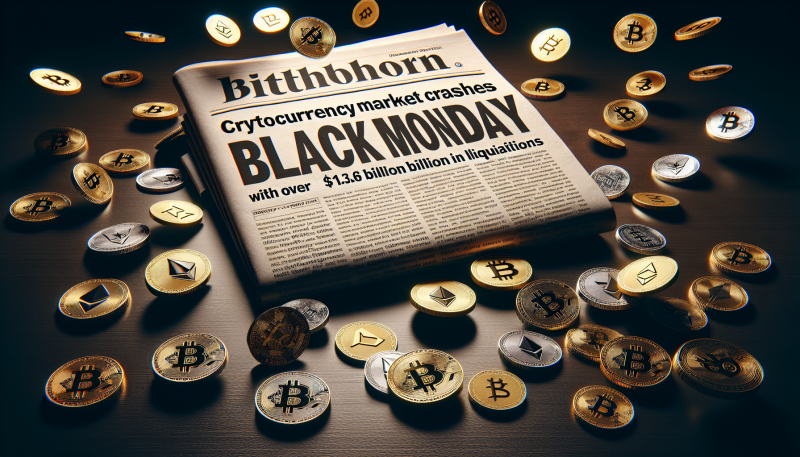

  • Cryptocurrency Market Crashes on “Black Monday” with Over $1.36 Billion in Liquidations

    Cryptocurrency Market Crashes on “Black Monday” with Over $1.36 Billion in Liquidations

    What happened?

    The cryptocurrency market suffered a massive crash referred to as “Black Monday,” with total liquidations exceeding $1.36 billion in just 24 hours. Bitcoin led the downturn, dropping to nearly $75,000 and triggering forced liquidations across various cryptocurrencies, causing the entire market to plunge by nearly 13%. The crash coincided with significant drops in global stock markets, influenced by President Trump’s new tariffs.

    Who does this affect?

    This crash primarily affected long-positioned futures traders who faced severe losses, with over $1.2 billion in long bets being wiped out, especially in Bitcoin. Other major cryptocurrencies like Ethereum, Solana, and XRP also experienced heavy liquidations, together accounting for close to $730 million in trader losses. Institutional and retail investors both felt the ripple effects as mid-cap and low-cap tokens plummeted between 10% and 20%, reflecting widespread market instability and fear.

    Why does this matter?

    The dramatic decline in cryptocurrency values has broader implications on market sentiment, potentially indicating increased volatility and uncertainty in financial markets. The concurrent drop in U.S. stock markets, linked to macroeconomic challenges and trade tensions, suggests a potential widespread financial fallout that could affect global economic stability. This situation might lead to tightened regulatory scrutiny, reduced investor confidence, and further sell-offs if economic conditions do not stabilize.

  • Hong Kong to Unveil Comprehensive Virtual Asset Policy Framework by Year-End

    Hong Kong to Unveil Comprehensive Virtual Asset Policy Framework by Year-End

    ### What happened?

    Hong Kong is planning to release a more detailed virtual asset policy framework by the end of the year. The new policy aims to enhance the use of Web3 technologies to bolster traditional financial services, support the real economy, and improve digital asset applications. This initiative builds on prior commitments to regulate and innovate in the virtual asset space while ensuring market integrity.

    ### Who does this affect?

    The policy changes will impact virtual asset trading platforms, custodial services, and other businesses involved in digital assets in Hong Kong. It is particularly significant for organizations seeking licenses under the city’s regulatory framework, as well as investors and companies involved with stablecoins and ETFs. These developments also affect financial institutions and businesses looking to leverage Web3 technology under the supervision of regulatory bodies.

    ### Why does this matter?

    The introduction of a comprehensive virtual asset policy framework in Hong Kong could position the city as a leading hub for blockchain and Web3 innovation in the Asia-Pacific region. By providing clear regulations and licensing opportunities, the policy aims to attract investment and foster a thriving ecosystem for digital assets. This move may influence market stability and growth, potentially setting a benchmark for other regions considering similar regulations in the rapidly evolving virtual asset sector.

  • Ark Invest’s $13.4 Million Coinbase Purchase Signals Confidence Amid Crypto Market Downturn

    Ark Invest’s $13.4 Million Coinbase Purchase Signals Confidence Amid Crypto Market Downturn

    What happened?

    Investor Cathie Wood’s Ark Invest has made a major purchase of Coinbase shares worth $13.4 million across three exchange-traded funds (ETFs). This investment occurred during a time when crypto markets were experiencing a downturn due to global market pressures. In addition to this, Ark Invest also acquired shares in Amazon, continuing their strategy of investing during dips.

    Who does this affect?

    This move primarily impacts investors and stakeholders in Coinbase and the broader cryptocurrency market. Ark Invest’s actions may influence other investors considering similar strategies or reassessing their positions in tech and blockchain-related stocks. Additionally, shareholders in Ark Invest’s ETFs could see changes in their portfolio value based on the performance of these new acquisitions.

    Why does this matter?

    Ark Invest’s purchase of Coinbase shares highlights a significant vote of confidence in the crypto industry despite recent market volatility. This move could signal a potential upside for investors who believe in the long-term viability of cryptocurrencies and related technologies. Furthermore, Ark’s strategy of buying during market dips could impact investor sentiment, potentially stabilizing or even boosting market confidence in the tech and crypto sectors.

  • Conor McGregor’s $REAL Token Presale Fails to Reach Target, Leading to Refunds for Investors

    Conor McGregor’s $REAL Token Presale Fails to Reach Target, Leading to Refunds for Investors

    What happened?

    A crypto token called $REAL, launched by MMA fighter Conor McGregor, did not meet its fundraising target in a recent presale, resulting in full refunds to participants. The presale aimed to distribute 60 million $REAL tokens but raised only $392,315 in USDC, which was less than 40% of its minimum target. The developers confirmed that all bids would be refunded and stated that the project is not over.

    Who does this affect?

    The failed presale affects the 668 participants who took part in the auction, as they will receive refunds instead of the $REAL tokens they expected. It also impacts Conor McGregor’s brand, as he promoted the token to his massive following. Additionally, it affects the backing organizations such as Animoca Brands and KuCoin Labs, which supported the initiative.

    Why does this matter?

    This event signals potential caution for the crypto market, highlighting the challenges even high-profile projects face amid volatile conditions. The broader crypto sector has been experiencing sharp declines, and skepticism about new ventures like $REAL could dampen investor enthusiasm further. This situation serves as a reminder of the high risks involved in crypto investments, especially in meme and utility tokens tied to personal brands or specific entertainment sectors.

  • Bitcoin Plummets 6% Amid Market Volatility and Tariff Announcements

    Bitcoin Plummets 6% Amid Market Volatility and Tariff Announcements

    What happened?

    Bitcoin experienced a sharp decline over the weekend, dropping 6% to $77,730 due to market volatility triggered by new tariffs announced by US President Donald Trump. This decline is part of a broader sell-off that saw US equities face their steepest drop since 2020 and extended the downturn to digital assets. Bitcoin’s value fell below the key $78,000 level for the first time in weeks, reflecting its 28% drop from its January all-time high.

    Who does this affect?

    The market downturn affects a wide array of investors and traders involved in both equities and digital assets. Major cryptocurrencies such as Ethereum, XRP, and Solana also faced significant losses, indicating a challenging environment for crypto investors. With over 318,000 traders liquidated in just one day, the impact on those holding leveraged positions has been particularly severe.

    Why does this matter?

    This market turmoil highlights the interconnectedness between traditional equity markets and cryptocurrency values, as Bitcoin’s movements increasingly mirror major tech stocks. The fear of a global trade war instigated by tariff announcements increases recession concerns, evidenced by Goldman Sachs raising US recession odds. Although short-term market stress is apparent, some experts argue for Bitcoin’s long-term potential, yet traders are closely monitoring critical support levels that could indicate further corrections.

  • Conor McGregor Launches New Meme Coin “REAL” Amidst Cryptocurrency Market Shifts

    Conor McGregor Launches New Meme Coin “REAL” Amidst Cryptocurrency Market Shifts

    What Happened?

    Conor McGregor, the MMA champion, has launched a new meme coin called “REAL” on April 5, entering the cryptocurrency market. The project is positioned as more than just a celebrity-backed token, emphasizing transparency, integrity, and a long-term vision. The launch uses a sealed-bid auction method to prevent bot sniping and insider manipulation, ensuring fair participation.

    Who Does This Affect?

    This affects cryptocurrency investors, especially those interested in meme coins and alternative assets, looking for new opportunities amidst economic instability. It also impacts fans of Conor McGregor who may be interested in following his new venture. Additionally, it involves communities engaged with Real World Gaming DAO, which collaborates with McGregor to bridge digital innovation and real-life sports experiences.

    Why Does This Matter?

    The launch of REAL comes at a time when the meme coin market has cooled off, yet traders still see potential for speculative gains. With over $11 trillion wiped from U.S. equities due to economic pressures, investors might turn to crypto as an alternative. While Bitcoin remains stable, the volatility of meme tokens like REAL could lead to rapid market changes, making them attractive yet risky investments.

  • Thai SEC Files Complaint Against OKX for Operating Without License, Impacting Cryptocurrency Market

    Thai SEC Files Complaint Against OKX for Operating Without License, Impacting Cryptocurrency Market

    What happened?

    The Thai Securities and Exchange Commission has filed a criminal complaint against cryptocurrency exchange OKX, accusing it of operating without the necessary license in Thailand since 2021. OKX is alleged to have collected transaction fees and promoted its services to Thai users unlawfully. Thailand’s Economic Crime Division will investigate this case, which also involves accusations against nine individuals who promoted OKX on social media.

    Who does this affect?

    This legal action affects OKX and the nine individuals accused of promoting its services in Thailand. Thai investors who used OKX could face financial risks due to inadequate know-your-customer (KYC) and anti-money laundering (AML) procedures. The broader cryptocurrency industry in Thailand is also impacted as the SEC tightens control over digital asset platforms.

    Why does this matter?

    This case underscores the growing regulatory scrutiny on cryptocurrency exchanges, potentially affecting market trust and investor confidence. If convicted, OKX faces severe penalties, including fines and imprisonment, which could disrupt its operations. This situation also highlights global regulatory challenges faced by crypto exchanges, as seen in past actions against other major players like Binance and Bybit.

  • Significant Revenue Decline Hits Decentralized Finance Sector in March

    Significant Revenue Decline Hits Decentralized Finance Sector in March

    What happened?

    The decentralized finance (DeFi) sector experienced a significant drop in revenue in March, with a decline across major DeFi protocols on various blockchains. Notably, Solana-based platforms collectively earned around $42 million, down 55% from February and 75% from January. Ethereum-based protocols also faced a downturn, generating $24.5 million in March, marking a 52% decrease from February.

    Who does this affect?

    This decrease in revenue impacts a wide array of stakeholders in the DeFi ecosystem, including developers, investors, and users who rely on these protocols for financial services. Popular protocols like PancakeSwap, Aave, Curve, and Compound have seen substantial reductions in income, affecting their operational and developmental capabilities. Users and investors in the DeFi market may face reduced returns and increased uncertainty due to this declining trend.

    Why does this matter?

    The drop in DeFi revenues signals broader market challenges and has significant implications for the overall crypto economy, as reflected by the 40% decline in the GMCI’s DeFi Index this year. Reduced user engagement and transaction volume contribute to a downtrend, which could deter new investments and innovations in the space. Additionally, regulatory uncertainties add to market anxiety, potentially shifting talent and development efforts to more favorable regions, impacting the industry’s growth and future prospects.

  • Traders Bet on 61% Chance of US Recession in 2025 Following Trump’s Tariff Announcement

    Traders Bet on 61% Chance of US Recession in 2025 Following Trump’s Tariff Announcement

    What Happened?

    Traders on the Kalshi prediction market have placed a 61% probability on the United States entering a recession in 2025 after President Donald Trump announced a significant tariff order. The tariffs include a 10% blanket tax on all imports and reciprocal tariffs targeting trade partners that impose duties on U.S. goods. This announcement caused immediate financial market turbulence, resulting in a massive sell-off that wiped out over $5 trillion in shareholder value.

    Who Does This Affect?

    The potential recession and new tariff policies affect a wide range of stakeholders, including investors, businesses, and consumers. Investors are experiencing a hit to their portfolios with market values plummeting, and businesses face increased costs and trade uncertainties. Consumers might see higher prices on imported goods, affecting purchasing power and economic confidence.

    Why Does This Matter?

    This development is significant because it suggests a growing fear of a potential economic downturn, which can lead to broader impacts on the global economy. The financial markets are reacting negatively, indicating investor concerns and potential risk aversion, which can further impact equities and risk assets like cryptocurrencies. Additionally, the possibility of a trade war could exacerbate economic uncertainty and potentially slow down economic growth worldwide.