
Category: News

  • SEC Integrates Elon Musk’s DOGE in Regulatory Overhaul Amid Restructuring Efforts

    SEC Integrates Elon Musk’s DOGE in Regulatory Overhaul Amid Restructuring Efforts

    What Happened?

    The U.S. Securities and Exchange Commission (SEC) has allowed Elon Musk’s Department of Government Efficiency (DOGE) to access its systems and data, integrating DOGE representatives as internal staff for network and system purposes. This move is part of a broader initiative where DOGE officials will work alongside the SEC through a newly established liaison team. DOGE’s involvement with the SEC comes amid a significant restructuring and cost-cutting effort across federal governments, following Donald Trump’s return to the presidency.

    Who Does This Affect?

    This development affects SEC employees, who must navigate working with DOGE representatives while adhering to new oversight structures. It also impacts companies and stakeholders in the financial markets who rely on the SEC for regulatory enforcement and transparency. Lastly, it affects the general public, as changes in SEC policy can influence market stability and investor protection.

    Why Does This Matter?

    The entry of DOGE into the SEC signals a potential shift in how financial regulations are enforced, particularly regarding the crypto market. By integrating Musk’s DOGE, known for efficiency-focused reforms, there could be a reduced emphasis on aggressive regulation, aligning with a more crypto-friendly stance. This shift may lead to uncertainty in market confidence as questions arise about maintaining the balance between cost efficiencies and robust oversight.
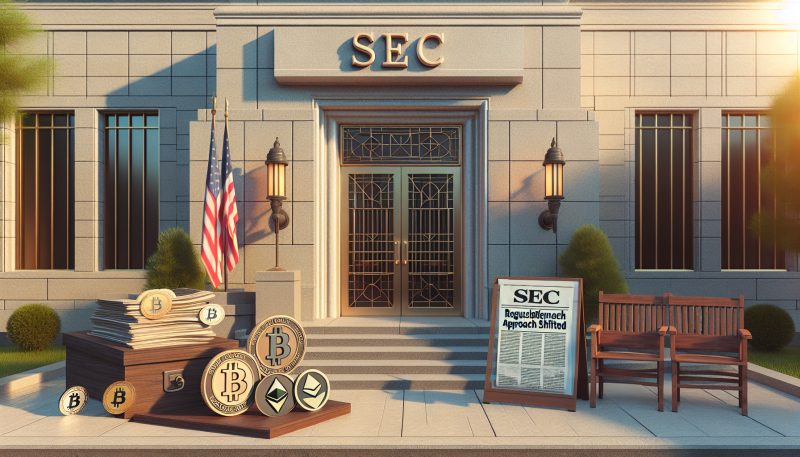

  • SEC Shifts Regulatory Approach by Dropping Legal Cases Against Major Crypto Firms

    SEC Shifts Regulatory Approach by Dropping Legal Cases Against Major Crypto Firms

    “`html

    What happened?

    The U.S. Securities and Exchange Commission (SEC) dropped its legal cases against major crypto firms Kraken, Consensys, and Cumberland DRW. This decision marks a significant shift in the SEC’s regulatory approach, moving from aggressive enforcement to potentially more cooperative tactics. The SEC stated that this move is aimed at reforming its regulatory framework rather than commenting on the merits of the original claims.

    Who does this affect?

    This decision primarily affects the crypto firms involved: Kraken, Consensys, and Cumberland DRW, as it releases them from ongoing legal pressures. It also has broader implications for the entire cryptocurrency industry, as it signals a change in how the SEC may deal with other companies in the future. Additionally, investors and stakeholders in these firms might experience changes in confidence and market dynamics due to the removal of regulatory threats.

    Why does this matter?

    This development matters because it could positively impact the crypto market by reducing legal uncertainties and fostering a more favorable environment for innovation. A softer regulatory stance might boost investor confidence, though the long-term implications depend on how the SEC continues to regulate the industry. By opening the door to dialogue and clearer guidelines, the market could see more stability and growth, assuming these changes lead to tangible and consistent policy updates.

    “`

  • Stablecoins Surge: Transforming Financial Markets and Regulatory Landscapes

    Stablecoins Surge: Transforming Financial Markets and Regulatory Landscapes

    What happened?

    The stablecoin market has experienced significant growth over the past year, with stablecoins increasingly integrating into traditional financial systems. A report by Keyrock and Centrifuge revealed that stablecoins circulated more than $208 billion, facilitating $4 trillion in transactions, marking a 45% increase year-over-year. This growth is attributed to developments such as the rise of tokenized US Treasuries and new legislative efforts in the US to regulate stablecoins, which aim to align these digital assets with national financial interests.

    Who does this affect?

    This development primarily affects financial institutions, cryptocurrency markets, and regulatory bodies. Institutions like Circle and Tether, along with traditional finance players like Fidelity Investments, are at the forefront of this stablecoin expansion. Regulatory changes also impact fintechs, banks, and consumers who use or invest in these digital assets, as they seek clarity and security in stablecoin usage and integration into traditional finance.

    Why does this matter?

    The growth and integration of stablecoins could significantly impact the financial markets by offering a transparent and efficient alternative for transactions and asset management. As stablecoin adoption increases, it may alter liquidity flows and payment methods globally, necessitating robust regulatory frameworks to mitigate potential financial stability risks. This growing connection between crypto and traditional finance is reshaping market dynamics, potentially leading to more competitive and diverse financial services.

  • GameStop’s Shift to Bitcoin Investment Sparks Stock Plunge and Store Closures

    GameStop’s Shift to Bitcoin Investment Sparks Stock Plunge and Store Closures

    What happened?

    GameStop has announced that its board voted to adopt Bitcoin as part of its company reserves and is planning to raise $1.3 billion for this investment. The announcement led to a significant drop in GameStop’s stock price by 25% during intraday trading, as investors reacted negatively. Additionally, GameStop plans to close down several stores, following a trend of reducing their physical presence due to the rise of digital game downloads.

    Who does this affect?

    This move affects GameStop’s investors, who are concerned about the company’s shift away from its traditional business model. It also impacts employees and customers who rely on GameStop’s physical stores, as more closures are expected. Furthermore, this decision could affect the broader retail and crypto markets, influencing other companies considering similar strategies.

    Why does this matter?

    The market impact of GameStop’s decision to invest in Bitcoin is significant, as it reflects a shift in strategy that may not align with investor expectations. The negative market reaction highlights concerns about the viability of such a move during a period when Bitcoin prices are unstable. This move also raises questions about GameStop’s future direction and the potential risks of tying company value to volatile cryptocurrency assets.

  • FCA Raises Alarm Over Young Investors Turning to Cryptocurrency Amid Regulatory Debate

    FCA Raises Alarm Over Young Investors Turning to Cryptocurrency Amid Regulatory Debate

    What happened?

    The Financial Conduct Authority (FCA), a British regulator, has raised concerns about the increasing number of young people investing in cryptocurrencies rather than traditional financial products like stocks and bonds. The FCA warns that these investments are highly risky, and young people might lose all their money. However, some lawmakers disagree, advocating for policies to make the UK a global hub for cryptoassets.

    Who does this affect?

    This situation primarily affects young British investors, as many choose cryptocurrency as their first investment product. It also impacts digital asset firms operating in the UK, which face stringent regulations and scrutiny from the FCA. Lawmakers and policymakers are also involved, as they debate the balance between innovation in crypto markets and consumer protection.

    Why does this matter?

    The FCA’s cautious approach could significantly influence the UK’s position in the global crypto market. Stricter regulations might deter some crypto businesses from operating in the UK, potentially impacting the country’s leadership in financial innovation. Balancing consumer protection with fostering a favorable environment for legitimate crypto businesses is crucial for maintaining economic competitiveness and attracting investment.

  • Toncoin Surges 2.5% Amid Market Decline, Backed by Major VC Investments

    Toncoin Surges 2.5% Amid Market Decline, Backed by Major VC Investments

    What happened?

    Toncoin (TON) experienced a 2.5% increase over the past 24 hours, reversing its previous downtrend amid a broader market decline in other cryptocurrencies. The trading volume for TON surged by 82.2% to $399 million, which is about 4% of its market cap. Notably, significant investments from major venture capital firms like Sequoia and Benchmark are backing The Open Network (TON).

    Who does this affect?

    This development impacts Toncoin investors and stakeholders, as well as users of Telegram who use TON for in-app purchases. It also affects developers and potential projects that might consider building on the TON network compared to alternatives like Solana. Larger crypto market participants and institutional investors may also be affected, particularly those watching emerging networks and their growth potential.

    Why does this matter?

    The rise in TON’s price and trading volume suggests growing investor confidence and could signal future price increases, potentially offering significant gains for holders. The backing by established venture capitalists increases TON’s credibility and could attract more attention to its ecosystem. Competing with established networks like Solana, TON’s advancements can significantly impact the crypto market balance and offer new opportunities for developers and investors alike.

  • Investors Shift Focus from Major Cryptocurrencies to Promising Early-Stage Crypto Presales Amid Market Uncertainty

    Investors Shift Focus from Major Cryptocurrencies to Promising Early-Stage Crypto Presales Amid Market Uncertainty

    What happened?

    As the global market faces uncertainty, crypto investors are shifting their focus from well-known cryptocurrencies like Bitcoin and Ethereum to promising early-stage crypto presales. These presales are seen as opportunities for significant returns and are backed by projects with real utility and growth potential, such as Solaxy, BTC Bull, MIND of Pepe, Best Wallet, and Meme Index. Amid inflation, geopolitical tensions, and unpredictable traditional assets, these crypto presales are catching investor interest due to their innovative technologies and lucrative staking opportunities.

    Who does this affect?

    This development affects a broad range of stakeholders within the cryptocurrency ecosystem, including investors looking for alternative assets with high return potential, developers and early adopters involved in these projects, and financial analysts tracking emerging trends in digital currencies. It also impacts current holders of traditional cryptocurrencies who might consider diversifying their portfolios by investing in these new presales. The projects mentioned, such as Solaxy and BTC Bull, offer unique solutions and rewards that specifically attract and benefit those interested in cutting-edge blockchain technology and decentralized finance.

    Why does this matter?

    The shift towards early-stage crypto presales could have a significant impact on market dynamics, offering fresh avenues for growth amid volatile economic conditions. These presales represent potential high-reward investments, enticing both retail and institutional investors who seek to capitalize on the next wave of blockchain innovation. Furthermore, as these projects gain momentum, they may contribute to advancing blockchain technology adoption and expanding the scope of decentralized finance, potentially influencing market valuations and setting new standards for cryptocurrency investment strategies.

  • Justin Sun’s Forbes Feature Highlights His Growing Influence in Crypto and Traditional Finance

    Justin Sun’s Forbes Feature Highlights His Growing Influence in Crypto and Traditional Finance

    What happened?

    Justin Sun, the founder of TRON, was featured on the Forbes Digital Assets cover in March 2025. In the article, Sun discussed his investment in World Liberty Financial, a project associated with Donald Trump, making headlines for helping the Trumps reportedly make $400 million. Sun’s crypto ventures highlight his ambitious efforts to integrate digital currencies with traditional finance, building a significant influence in both sectors.

    Who does this affect?

    This development directly impacts Justin Sun and his companies, including TRON and HTX, as it raises their profile in the crypto and traditional finance sectors. It also affects stakeholders like investors and partners involved in Sun’s projects and those in the political sphere, including figures tied to Donald Trump. Moreover, the broader crypto community and regulatory bodies are affected, given Sun’s high-profile legal issues with the SEC and his influence on market trends.

    Why does this matter?

    Sun’s prominent feature in Forbes highlights his growing influence and the potential market impact of his ventures combining crypto with traditional finance. His moves, including major investments and political partnerships, could drive shifts in how digital currencies are perceived and regulated. This attention may lead to increased investor confidence but also greater regulatory scrutiny, affecting market stability and growth in the crypto sector.

  • Solana’s Price Drops 5% Amid Market Reaction to Tariff News

    Solana’s Price Drops 5% Amid Market Reaction to Tariff News

    What happened?

    Solana’s price has dropped by 5% in the past 24 hours, now sitting at $131. This decline is part of a broader market reaction to recent tariff news, causing a 5% fall across the cryptocurrency market. Over the past year, Solana has seen a significant drop, remaining down by 30% from its previous highs.

    Who does this affect?

    This situation impacts Solana investors and traders who are directly affected by the price fluctuations. It also affects the broader crypto community as they navigate these market changes. Additionally, new projects and developers on Solana need to consider these market trends in their planning.

    Why does this matter?

    The market impact of this drop is significant as it indicates potential volatility and uncertainties in the crypto market due to external economic factors like tariffs. For investors, understanding Solana’s fundamentals and possible recovery paths is crucial for future decision-making. The possibility of Solana ETFs or technological updates like the Firedancer validator provides hope for future rebounds, making the current situation pivotal for strategic investments.

  • Meme Coins Thrive Amidst Crypto Market Pressures and Regulatory Optimism

    Meme Coins Thrive Amidst Crypto Market Pressures and Regulatory Optimism

    “`html

    What happened?

    The crypto market is facing pressure, but meme coins are defying the trend by posting solid gains over the past week. This comes amid optimism surrounding potential pro-crypto U.S. regulatory frameworks, with President Trump establishing a Bitcoin reserve. The momentum is evident as states like South Carolina pass bills for their own reserves, suggesting a shift towards mainstream crypto adoption.

    Who does this affect?

    The developments impact investors and enthusiasts in the cryptocurrency space, particularly those interested in meme coins like Dogecoin ($DOGE), Meme Index ($MEMEX), and Pepe ($PEPE). These coins have shown promising performance amid broader market challenges, attracting attention from traders and long-term holders. Individuals looking for potentially lucrative investments amidst regulatory changes may find these meme coins appealing.

    Why does this matter?

    The sustained performance of meme coins despite market pressures suggests potential resilience and growth opportunities that could influence overall market dynamics. As regulatory clarity emerges and institutional interest grows, these coins could see increased investment inflows, thereby boosting market capitalization and liquidity. This shift may herald a broader bull run, impacting investor strategies and the valuation of associated digital assets.

    “`