Category: News

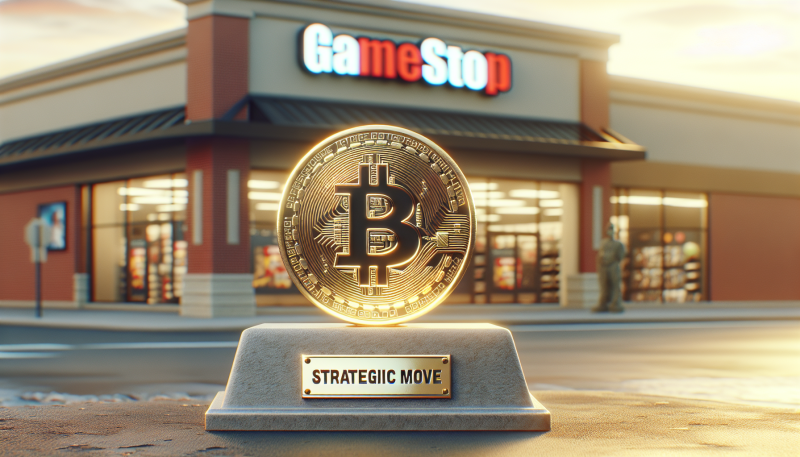
  • GameStop’s Strategic Move: Integrating Bitcoin into Treasury Reserves

    GameStop’s Strategic Move: Integrating Bitcoin into Treasury Reserves

    What happened?

    GameStop has announced that it will include Bitcoin in its treasury reserves, a strategic decision approved by its board of directors. The company aims to use part of its existing cash or potential future funds to invest in Bitcoin, although the exact amount has not been disclosed. This move aligns GameStop with other companies looking to embrace digital assets and comes after a U.S. presidential executive order supporting a strategic cryptocurrency reserve.

    Who does this affect?

    This decision primarily impacts GameStop’s shareholders, customers, and retail investors interested in the company’s financial strategies. It also affects the crypto-curious community that has been closely watching GameStop due to its previous ventures into the cryptocurrency space. Moreover, this move could influence other businesses and investors considering cryptocurrency as a viable asset.

    Why does this matter?

    This matters because it represents a significant step toward the normalization of cryptocurrency within corporate finance, potentially encouraging more companies to consider Bitcoin as a strategic asset. By integrating Bitcoin into its reserves, GameStop signals an adaptation to modern financial trends, which could have a ripple effect on the market. This strategy may also help re-engage investors and potentially stabilize its business amid declining revenue from traditional gaming retail operations.


  • Celo Transitions to Ethereum Layer-2 Network, Enhancing Security and Interoperability

    Celo Transitions to Ethereum Layer-2 Network, Enhancing Security and Interoperability

    What happened?

    Celo has successfully transitioned to an Ethereum Layer-2 network using Optimism’s OP Stack and EigenDA, marking its evolution from an independent blockchain to an interoperable network. This move brings Celo back into the Ethereum ecosystem with enhanced capabilities. As part of this transition, the Celo Layer 1 client has been deactivated, and a new Layer 2 client is now operational.

    Who does this affect?

    This transition impacts developers and users within the Celo ecosystem, including over 1,000 projects that are now integrated into the Ethereum network. Popular infrastructure projects like Uniswap, Curve, Chainlink, and Aave are part of this migration. Additionally, node providers, RPC services, and exchanges have rapidly adapted to support this change, enhancing the network experience for users.

    Why does this matter?

    The migration to Ethereum Layer-2 is significant as it enhances security, scalability, and interoperability for Celo, which in turn could affect market dynamics by attracting more users and developers to the network. The lower transaction fees and improved transaction speeds could increase the adoption of decentralized finance (DeFi) applications on Celo. Furthermore, Celo’s focus on sustainability and carbon offsetting aligns with growing market trends toward eco-friendly blockchain solutions.

  • Russian Ministry Warns of Malware Targeting Smart Home Devices for Crypto Mining

    Russian Ministry Warns of Malware Targeting Smart Home Devices for Crypto Mining

    What happened?

    A Russian ministry has warned that fraudsters are using malware to infect citizens’ smart home devices for crypto mining. The hackers aim to create a network of compromised smart devices, which can also be used for other malicious activities such as DDoS attacks and covert surveillance. Citizens are advised to secure their devices by updating passwords and firmware regularly.

    Who does this affect?

    This warning primarily affects homeowners in Russia who use smart home devices, as they are the potential targets for these cyber attacks. The threat is significant for those who may not be vigilant about cybersecurity or unaware of how to protect their smart gadgets. Additionally, the malware could affect public utilities and internet service providers if large-scale attacks disrupt services.

    Why does this matter?

    The infiltration of smart home devices by crypto mining malware highlights a growing cybersecurity risk with implications for both privacy and energy consumption. If successful, these attacks could lead to increased electricity costs, degradation of device performance, and potential disruptions in personal and public networks. On a broader scale, such activities can impact the market by affecting consumer trust in smart technologies and potentially driving up costs for energy and security solutions.

  • SEC Closes Investigation into Immutable, Alleviating Regulatory Pressures on Crypto Gaming Sector

    SEC Closes Investigation into Immutable, Alleviating Regulatory Pressures on Crypto Gaming Sector

    What Happened?

    The US SEC has concluded its investigation into Immutable, a Web3 gaming company, and decided not to pursue any enforcement action regarding its IMX token. This marks a significant moment as the SEC had previously issued a Wells notice to Immutable, indicating potential securities violations related to their token launch. The ending of this probe is part of a broader trend where the SEC has recently stepped back from several high-profile crypto enforcement cases.

    Who Does This Affect?

    This decision directly impacts Immutable, its stakeholders, and other crypto firms under scrutiny, providing relief from potential legal challenges. It’s also significant for the broader crypto community, especially those involved in blockchain gaming, by alleviating fears of regulatory crackdowns. The outcome reassures developers, creators, and gamers who are advocating for digital ownership in the gaming sector.

    Why Does This Matter?

    The SEC’s decision reflects a shift in its approach towards crypto regulation, signaling a potential easing of the stringent oversight under previous leadership. For the market, this could translate to increased confidence among investors and companies operating in the digital asset space. With a more favorable regulatory environment, the industry may see accelerated innovation and growth, influencing the broader financial markets positively.

  • Ripple Settles SEC Lawsuit for $50 Million, Impacts on Crypto Market and Future Regulation

    Ripple Settles SEC Lawsuit for $50 Million, Impacts on Crypto Market and Future Regulation

    What happened?

    Ripple has reached a settlement with the U.S. Securities and Exchange Commission (SEC) in their lengthy lawsuit. Ripple agreed to pay a $50 million penalty, significantly lower than the original $125 million. The SEC will also request the removal of an injunction prohibiting Ripple from selling XRP to institutional investors, marking a major step towards closing the case.

    Who does this affect?

    This settlement primarily affects Ripple and its leadership, as well as the broader crypto community watching the legal developments closely. Investors in XRP, both institutional and retail, are also impacted as the legal clarity could influence market sentiment and investment decisions. Additionally, other cryptocurrency companies operating in the U.S. may feel the effects of this case’s outcome as it provides legal precedents for future regulatory actions.

    Why does this matter?

    This case’s resolution is significant for the cryptocurrency market as it addresses critical questions around the classification of digital assets as securities. The partial ruling that not all digital asset sales qualify as securities transactions could influence regulatory approaches and investor confidence. Although the immediate impact on XRP prices was minimal, the long-term effects could see increased institutional involvement and a clearer regulatory landscape for cryptocurrencies.

  • U.S. Blockchain Roadmap Released to Shape Future Crypto Policies and Foster Economic Growth

    U.S. Blockchain Roadmap Released to Shape Future Crypto Policies and Foster Economic Growth

    What happened?

    The Digital Chamber, a blockchain trade association, released the “U.S. Blockchain Roadmap,” a strategic framework for U.S. lawmakers to embrace blockchain technology. This roadmap highlights the potential roles of blockchain in financial stability, banking modernization, and advancing national economic priorities. It serves as a blueprint to shape future crypto-related policies in the United States, urging decisive legislative actions.

    Who does this affect?

    The roadmap primarily impacts U.S. lawmakers, financial institutions, and blockchain industry stakeholders. By providing a policy framework, it encourages collaboration between Congress and the White House to integrate blockchain into the country’s economic strategy. Additionally, public figures like Donald Trump Jr. are involved in promoting the initiative through events like the DC Blockchain Summit.

    Why does this matter?

    This roadmap could significantly influence market dynamics by fostering regulatory clarity and encouraging blockchain innovation in the United States. As lawmakers consider integrating digital assets into the financial system, it could lead to an acceleration of blockchain adoption in banking and currency management. Clear guidance and supportive policies may also attract more investments into the U.S. blockchain sector, potentially boosting economic growth and maintaining global competitiveness.

  • Donald Trump’s Endorsement Sparks 11% Rally in TRUMP Meme Coin

    Donald Trump’s Endorsement Sparks 11% Rally in TRUMP Meme Coin

    What happened?

    This weekend, Donald Trump’s meme coin, TRUMP, saw a significant rally following his viral endorsement on Truth Social. Trump declared his love for the coin, causing its price to jump by 11% from $10.93 to a peak of $12.24 before stabilizing around $11.85. The trading volume surged by 288% to $1.22 billion, making it the most traded meme coin at the time.

    Who does this affect?

    The meme coin rally impacts both traders and investors of the TRUMP coin who are engaged in speculative buying and selling based on market trends. It also affects potential investors who may be swayed by Trump’s endorsement or wary due to the centralization concerns revealed by on-chain data. Additionally, political figures and regulators could be influenced by the political and regulatory scrutiny surrounding meme coins like TRUMP.

    Why does this matter?

    The TRUMP coin’s rally highlights the influence of celebrity endorsements and social media on cryptocurrency markets, emphasizing the speculative nature of meme coins. Although the surge provided a temporary boost, underlying issues like centralization and regulatory concerns could lead to market volatility. The broader sentiment in financial markets improved amid reports of potential easing in tariff policies, which also contributed to risk-on reactions in equities and digital assets.

  • BlackRock Expands Tokenized Money Market Fund BUIDL to Solana, Enhancing Blockchain Integration and Investor Access

    BlackRock Expands Tokenized Money Market Fund BUIDL to Solana, Enhancing Blockchain Integration and Investor Access

    What happened?

    BlackRock has expanded its tokenized money market fund, known as BUIDL, to the Solana blockchain, broadening its network reach. Originally launched on Ethereum, BUIDL offers qualified investors access to U.S. dollar yields through blockchain technology. This expansion allows for cross-chain interoperability via Wormhole, ensuring secure token transfers across different blockchains.

    Who does this affect?

    This move affects institutional investors looking for more options in digital finance and tokenized assets. It provides them with increased flexibility due to Solana’s fast transaction speeds and low fees. Additionally, it impacts the broader blockchain community by integrating a major financial product onto multiple blockchain platforms.

    Why does this matter?

    This expansion indicates a growing interest from traditional financial institutions in blockchain and digital assets, likely increasing market confidence in tokenized securities. By enhancing investor access to high-yield financial instruments through blockchain, it could potentially disrupt conventional financial markets. Overall, it signifies a shift toward adopting blockchain’s benefits, impacting future financial products and investment strategies.

  • CME Group Partners with Google Cloud to Revolutionize Capital Markets with Blockchain Technology

    CME Group Partners with Google Cloud to Revolutionize Capital Markets with Blockchain Technology

    What happened?

    The CME Group, a leading derivatives marketplace, has partnered with Google Cloud to pilot secure wholesale payments and asset tokenization. They are utilizing Google Cloud’s Universal Ledger to enhance capital market efficiency through innovative solutions. This partnership marks a significant step towards integrating blockchain technology into traditional financial systems.

    Who does this affect?

    This collaboration primarily impacts financial institutions, traders, and companies involved in capital markets and asset management. It opens up new opportunities for these entities to enhance trading efficiency and streamline their operations using tokenization. Market participants who engage in 24/7 global trading will also benefit from improved collateral, margin, settlement, and payment systems.

    Why does this matter?

    This partnership could significantly impact the market by accelerating the adoption of tokenization and distributed ledger technologies. With the on-chain tokenization market expected to grow substantially, reaching $276 billion by 2034, this initiative positions both CME Group and Google Cloud as pioneers in this emerging trend. It underscores the potential of blockchain to transform financial transactions, making them more efficient, secure, and cost-effective.

  • Abracadabra.Money Faces $13 Million Security Breach, Shaking Trust in DeFi Community

    Abracadabra.Money Faces $13 Million Security Breach, Shaking Trust in DeFi Community

    What happened?

    Decentralized lending platform Abracadabra.Money was hit by a security breach, resulting in the loss of about $13 million worth of Ether (ETH). The exploit specifically targeted pools using GMX tokens and was detected by blockchain security firm PeckShield on March 25. This is the second major attack on the platform this year, following a previous $6.49 million breach in January.

    Who does this affect?

    The breach affects users of Abracadabra.Money who utilize its platform for lending and borrowing, as their funds are at risk due to the security vulnerabilities. It also impacts the broader DeFi community as trust in the security of decentralized protocols is shaken. Additionally, token holders of GMX might experience indirect effects due to concerns around perceived vulnerabilities in platforms using GM tokens.

    Why does this matter?

    This incident highlights the ongoing security challenges in the DeFi space and its potential to impact market confidence. The repeated breaches could lead to increased scrutiny and potentially stricter regulations around decentralized finance protocols. As a result, market participants may become more cautious, influencing investment behaviors and the perceived stability of decentralized financial ecosystems.