
Category: News

  • Binance completes acquisition of South Korea’s Gopax after regulatory delay, paving the way for revived operations and greater liquidity

    Binance completes acquisition of South Korea’s Gopax after regulatory delay, paving the way for revived operations and greater liquidity

    What happened?

    Binance has completed its acquisition of South Korean exchange Gopax after a two-year regulatory delay. South Korea’s Financial Intelligence Unit approved changes to Gopax’s executive structure, clearing the final hurdle. The approval follows Binance’s $4.3 billion U.S. settlement and paves the way for Binance to address Gopax’s liquidity problems and restart operations in Korea.

    Who does this affect?

    Gopax customers who had frozen withdrawals—about $47 million tied to the GoFi product—are the most immediately affected and may see funds restored. Local exchanges, institutional investors, and custody providers will face renewed competition and possible shifts in market share. Regulators, compliance teams, and crypto service providers in Korea will also be impacted as AML standards and oversight take center stage.

    Why does this matter?

    Binance’s return could boost liquidity and trading volume in South Korea, increasing competition and potentially lowering trading costs. It may speed up institutional adoption, custody offerings, and product launches like spot ETFs, while also prompting tighter regulatory scrutiny that could change market rules. Overall, the move could attract more global capital to Korea’s crypto market but raises the stakes for compliance and risk management across the sector.

  • Australia Proposes New Powers to Regulate High-Risk Crypto ATMs

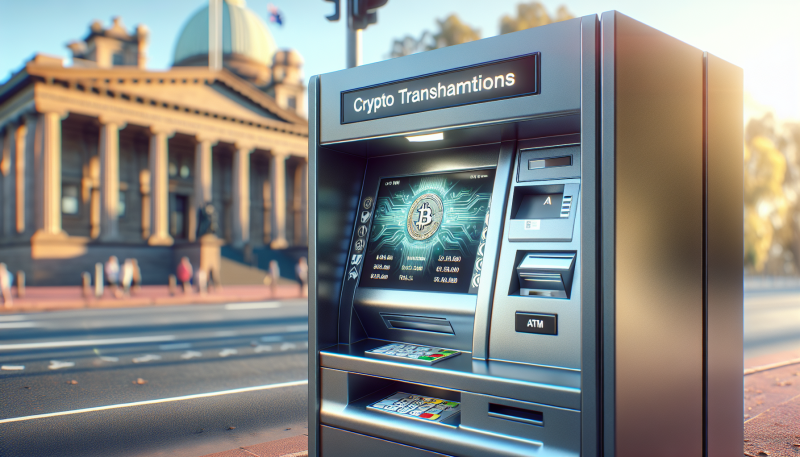
    Australia Proposes New Powers to Regulate High-Risk Crypto ATMs

    What happened? The Australian government has proposed new powers for AUSTRAC to restrict or prohibit high‑risk crypto ATMs.

    Minister Tony Burke said Bitcoin ATMs are being used by organised crime and that AUSTRAC found 85% of funds from top ATM users were linked to scams. The regulator’s crypto taskforce has been removing vulnerable kiosks as ATM numbers exploded from a few dozen to over 2,000 in recent years.

    Who does this affect? Operators of crypto ATMs, people using those machines (including scam victims), and crypto businesses that rely on cash on‑ramps.

    Operators face tougher compliance, potential restrictions or bans on high‑risk machines, and new minimum standards to follow. Consumers—especially older Australians targeted by scams—may see reduced access or more safeguards, while legitimate providers will need to tighten controls.

    Why does this matter? It signals tighter regulation that will reduce a major money‑laundering channel but also change market access and behavior.

    Cracking down on ATMs should boost trust in the market by cutting scam and mule activity, but it could also reduce retail on‑ramps and short‑term trading volumes for assets commonly bought at kiosks. Over time, compliant exchanges and regulated services may gain market share as users shift away from risky cash‑based routes, and providers face higher compliance costs.

  • Crypto Market Slips as AI Tokens Rally and Sector Rotation Intensifies

    Crypto Market Slips as AI Tokens Rally and Sector Rotation Intensifies

    What happened?

    Crypto prices fell across most sectors as the overall market dropped about 1.2% in the past 24 hours. The AI crypto niche bucked the trend, gaining 4.51% for a second straight day, led by ChainOpera AI which surged 56.47% after rising 25% the day before. Major coins slipped too — Bitcoin fell 1.29% to below $112,000 and Ethereum dropped about 2.6% to near $4,000, while CeFi, DeFi and Layer 2 sectors also saw notable declines.

    Who does this affect?

    Retail and institutional traders holding broad crypto portfolios feel the pain from the general market pullback, especially those overweight in CeFi, DeFi, and Layer 2 tokens. Investors in AI-focused projects and tokens like COAI benefited from the rally and saw outsized gains, and a few individual tokens such as FTT, TRX and DASH also outperformed. Market makers, fund managers and short-term traders are all impacted by the higher volatility and sector rotation between AI plays and legacy coins.

    Why does this matter?

    The move shows continued sector rotation inside crypto, with money flowing into AI-themed assets even as the wider market slumps, which can change short-term leadership and trading strategies. That rotation raises volatility and could influence portfolio allocations, risk management, and where liquidity concentrates over the next few sessions. If Bitcoin and Ethereum remain weak while speculative AI coins keep rallying, it could widen dispersion in returns and attract traders chasing momentum but also heighten downside risk if the trend reverses.

  • Paxos Accidentally Minted 300 Trillion PYUSD and Burned It Minutes Later

    Paxos Accidentally Minted 300 Trillion PYUSD and Burned It Minutes Later

    What happened? Paxos accidentally minted $300 trillion of PYUSD and burned it minutes later.

    Paxos mistakenly added six extra zeros when minting PayPal’s PYUSD, producing an eye‑watering $300 trillion on-chain that Etherscan recorded. The firm detected the error quickly, burned the excess tokens and re-minted the intended $300 million within minutes. The fast on-chain reversal shows it was an operational “fat‑finger” mistake rather than a malicious event.

    Who does this affect? PYUSD users, exchanges, market makers and anyone relying on the stablecoin.

    Directly affected are PYUSD holders and platforms that custody, trade, or peg to the token, since minting errors can complicate accounting and liquidity. Exchanges, market makers and DeFi apps using PYUSD had to monitor the situation and might pause trading or adjust positions if anomalies show up. More broadly, other stablecoin issuers, institutional users and regulators are watching closely because these incidents highlight operational risks across the ecosystem.

    Why does this matter? It matters for market confidence, operational risk and potential regulatory attention.

    The immediate market impact was limited because the excess was burned and PYUSD’s supply and price stayed essentially intact, but the incident underscores how fragile crypto’s plumbing can be. With the stablecoin market around $306 billion and PYUSD roughly $2.32 billion, this wasn’t systemic, yet it could dent confidence in smaller issuers and cause short-term trading volatility. Repeated minting mishaps are likely to push investors and regulators toward tighter controls, audits and more transparency, which could change operational costs and oversight across the sector.

  • Bitcoin Near Triple-Bottom at 109,600, Eyes Breakout to 130,000 Amid 401(k) Push and Major Wallet Moves

    Bitcoin Near Triple-Bottom at 109,600, Eyes Breakout to 130,000 Amid 401(k) Push and Major Wallet Moves

    What happened?

    A LuBian-linked wallet moved about $1.3 billion in Bitcoin right after the DOJ revealed a separate $15 billion crypto seizure, lawmakers proposed making Bitcoin in 401(k)s permanent, and the market saw a $1.2 billion selloff followed by a quick rebound. Bitcoin is forming a triple-bottom pattern near $109,600 that analysts say could set up a breakout toward $130,000 in Q4. Meanwhile NFTs and crypto funds saw strong inflows, and new projects like Bitcoin Hyper are pitching faster Bitcoin-native apps on Solana.

    Who does this affect?

    This affects retail and institutional investors, from traders and NFT collectors to pension and 401(k) holders who could gain new access to crypto. Regulators and the U.S. government are involved too, since seized Bitcoin could be added to a strategic reserve and new laws would change retirement investing rules. Miners, exchanges, and fund managers also stand to feel the impact as flows, custody needs, and market structure evolve.

    Why does this matter?

    These events could shift market sentiment and liquidity — a $9.3 trillion 401(k) market allowing crypto could funnel billions into Bitcoin while DOJ actions and big wallet moves change perceived legitimacy and supply dynamics. The quick rebound after a $1.2 billion crash and $3.17 billion of inflows into crypto funds show resilience that can attract more institutional capital. If Bitcoin confirms the triple-bottom and breaks higher, that momentum plus new retirement demand could push prices toward the $120k–$130k range and tighten volatility going into Q4.

  • OCC approves Erebor Bank, first de novo national bank under Gould, signaling a crypto-friendly shift in U.S. banking

    OCC approves Erebor Bank, first de novo national bank under Gould, signaling a crypto-friendly shift in U.S. banking

    What happened?

    The Office of the Comptroller of the Currency gave preliminary conditional approval to Erebor Bank, a new national bank backed by Peter Thiel, Palmer Luckey, and Joe Lonsdale. It’s the first de novo national bank approved under Comptroller Jonathan Gould after a four‑month review. The OCC also signaled it won’t impose blanket barriers on banks engaging in digital asset activities, showing a shift toward allowing crypto services under strict controls.

    Who does this affect?

    Startups, tech companies, crypto firms, payment processors, venture funds, and trading firms that need reliable U.S. banking partners are the immediate beneficiaries. Banks and crypto companies pursuing national charters or custody services — like Coinbase and Circle — now have clearer federal pathways to operate. Investors, depositors and regulators are also affected because this sets a precedent for how federally chartered banks can hold or transact in digital assets.

    Why does this matter?

    The move could open up more onshore banking services for the crypto and tech sectors, reducing reliance on offshore or non‑traditional providers. Clearer federal guidance and more charters may boost institutional crypto adoption, channel capital back into U.S. markets, and help firms that gain easier access to banking expand. At the same time, markets will reprice institutions with crypto exposure based on their compliance and risk controls, and political/oversight risks will remain a factor.

  • Crypto Market Rebounds as XRP and SUI Rally Ahead of Monad Airdrop and PEPENODE Presales

    Crypto Market Rebounds as XRP and SUI Rally Ahead of Monad Airdrop and PEPENODE Presales

    What happened?

    The market rebounded after a rough start to the week, lifting prices for XRP, SUI and sparking excitement around Monad’s incoming airdrop. XRP and SUI posted modest 24‑hour gains while Monad published a claim portal for its MON airdrop and presales like PEPENODE raised significant funds. Together these moves have traders watching for potential listing rallies and short‑term volatility.

    Who does this affect?

    Retail traders and speculators in XRP, SUI and new tokens like PEPENODE see immediate opportunities and risks from price swings and listings. Ethereum and Solana community members are eligible for the Monad airdrop, which could change token allocations and short‑term selling pressure at listing. Institutional investors are also watching XRP ETF signals and Ripple’s partnerships, since those could trigger larger inflows.

    Why does this matter?

    If XRP ETFs or big institutional flows arrive, they could add substantial liquidity and push XRP into multi‑dollar territory, affecting broader market sentiment. Monad’s airdrop may cause initial sell pressure but could seed a new L1 that attracts long‑term capital if its fundamentals hold. Overall, SUI’s TVL, ETF chatter and hot presales increase volatility but also create the kind of catalysts that often drive big market moves into the year‑end rally.

  • Naver Plans Stock-Swap Takeover of Dunamu to Build Fintech-Crypto Powerhouse

    Naver Plans Stock-Swap Takeover of Dunamu to Build Fintech-Crypto Powerhouse

    What happened?

    Naver is planning a stock-swap takeover of Dunamu, the operator of the Upbit crypto exchange, to create a combined fintech and crypto powerhouse. Experts estimate the deal could generate around KRW 3 trillion (about $2.1 billion) in annual operating profit and build a stablecoin ecosystem using Dunamu’s GIWA chain. The move would let Naver pair its ad, commerce, and payment services with Upbit’s exchange business to push deeper into crypto.

    Who does this affect?

    The merger would directly affect Naver and Dunamu shareholders, Upbit users, and employees across both companies. It would also pressure competitors like Kakao, traditional banks, and smaller exchanges that could lose market share to a much larger combined player. Regulators, fintech partners, and anyone relying on e-pay or crypto services in Korea would be impacted as the industry’s power balance shifts.

    Why does this matter?

    For markets, the deal could lift Naver’s valuation, trigger sector consolidation, and push higher crypto trading volumes and stablecoin use in Korea, which would boost liquidity and token demand. A successful merger would create a major new fintech platform that could list abroad and reshape payment and trading channels, forcing rivals to respond. But legal and regulatory uncertainty means news on approvals or setbacks could move markets sharply and increase volatility around Korean tech and crypto stocks.

  • 63 Million XRP Transfer to Binance Triggers Buy-the-Dip Rally as XRP Rebounds Toward $3

    63 Million XRP Transfer to Binance Triggers Buy-the-Dip Rally as XRP Rebounds Toward $3

    What happened? A $63M XRP transfer to Binance during Friday’s crash raised eyebrows, but buyers quickly stepped in.

    A large $63 million XRP move to Binance coincided with a market dip and sparked concern among traders. Buyers aggressively bought around the $2 level, and smart money used the drop to accumulate. XRP has since recovered to about $2.50 on strong volumes while ETF holdings like XRPR stayed near $90 million.

    Who does this affect? Short-term traders, long-term XRP holders, ETF investors, and exchanges are the main parties watching this move.

    Short-term traders and whale-watchers had to react to the volatility and potential liquidations. Long-term, diamond-handed holders and institutional ETF investors benefited from buying the dip and keeping exposure steady. Exchanges like Binance and on-chain analysts are under the microscope, but the transfer alone doesn’t prove a market-wide sell-off.

    Why does this matter? The buying pressure and steady ETF assets suggest a bullish market signal that could impact prices if momentum continues.

    The aggressive buying at the $2 support and above-average volumes point to technical strength and a possible trend reversal. A breakout above $2.70 — and then $3 to $3.5 — could accelerate momentum and push XRP significantly higher, even toward $5 if gains extend. With ETFs holding steady and institutional interest growing, this behavior could translate into stronger demand and a meaningful market impact if it persists.

  • Ethereum ETF Outflows Amid Prolonged Consolidation Hint at Possible Breakout

    Ethereum ETF Outflows Amid Prolonged Consolidation Hint at Possible Breakout

    What happened?

    Investors pulled about $430 million from Ethereum ETFs on Monday after a sharp Friday sell-off, interrupting eight straight days of net inflows that had added nearly $2 billion to ETH funds. The outflow coincided with a dip toward $3,500, but analysts note the larger inflow picture suggests most holders weren’t spooked. Meanwhile, Ethereum is sitting in a months-long consolidation between $3,900 and $4,700 that could set up a major breakout if momentum returns.

    Who does this affect?

    Retail and institutional investors in ETH ETFs and traders watching short-term flows are directly affected because ETF movements can sway price and sentiment. Technical traders and analysts who monitor indicators like the RSI and the key $4,800 resistance are impacted since a confirmed breakout or breakdown would change trade signals. Bitcoin holders and early crypto investors are also watching new products like Bitcoin Hyper, since demand for new layer‑2 solutions could redirect capital across the market.

    Why does this matter?

    A single-day $430M outflow matters because persistent outflows would signal fear and could amplify downside, but an isolated pullback after large prior inflows is less alarming and can be a buying opportunity. If ETH breaks out of its consolidation and clears $4,800, historical patterns suggest it could trigger a large rally—potentially pushing prices toward previous breakout targets like $8,000 and shifting market positioning. At the same time, growing interest in projects like Bitcoin Hyper can change capital flows and liquidity across crypto, influencing ETF flows, token demand, and where speculative money chases gains.