Category: News

  • Trump Praises Crypto as He Signals US Policy Shift Toward Bitcoin Reserve and Stablecoins

    Trump Praises Crypto as He Signals US Policy Shift Toward Bitcoin Reserve and Stablecoins

    What happened?

    President Trump praised crypto at a Miami forum, saying it “takes a lot of pressure off the dollar” and declaring the U.S. the “bitcoin superpower” and “crypto capital of the world.” He said his executive orders ended the federal “war on crypto,” and the administration is pushing ideas like a Strategic Bitcoin Reserve and wider stablecoin use. The speech and related Republican backing have accelerated talk of using crypto in official policy while drawing pushback from critics worried about conflicts of interest.

    Who does this affect?

    This affects crypto companies, stablecoin issuers, and bitcoin holders who could benefit from friendlier U.S. policy and potential government reserves or partnerships. It also matters to investors and traders because shifts in rhetoric and policy can change flows, liquidity, and volatility across crypto markets. Regulators, lawmakers, and countries with weak currencies are watching too, since U.S. moves could alter global capital flows and the role of the dollar.

    Why does this matter?

    Market-wise, it’s important because bitcoin tends to move opposite the dollar, so promoting crypto as easing dollar pressure could ironically strengthen the dollar and hurt bitcoin’s rally. Fed data, rate expectations, and dollar strength have already shown they can knock bitcoin down even amid bullish crypto headlines, so policy talk can amplify market swings. At the same time, a U.S.-backed push for reserves or stablecoins could funnel big capital into U.S. markets, changing liquidity patterns, risk correlations, and how traders price crypto versus traditional assets.


  • Fed Ends Quantitative Tightening, Raising Liquidity and Bubble Risk Across Gold, Bitcoin and Long Duration Tech Before a Potential Selloff

    Fed Ends Quantitative Tightening, Raising Liquidity and Bubble Risk Across Gold, Bitcoin and Long Duration Tech Before a Potential Selloff

    What happened?

    The Fed announced it will end quantitative tightening on December 1, 2025 and shift to balance-sheet maintenance while redirecting agency income into Treasury bills. Ray Dalio says this move looks less like a technical tweak and more like the start of “stimulating into a bubble” because it comes alongside big fiscal deficits and strong private credit growth. He warns that this combo could send gold, Bitcoin and long-duration stocks much higher before an eventual sharp collapse.

    Who does this affect?

    Investors and traders in stocks, bonds, gold and crypto are likely to feel the impact most, especially holders of long-duration assets like tech and AI names. Savers and income-focused investors could see real returns squeezed as real rates fall and equity risk premia compress, while central banks and governments are implicated through increased gold buying and debt monetization. Borrowers and fiscal policymakers may get cheaper funding now but that raises the risk of a later painful tightening that could hurt leveraged players and institutions.

    Why does this matter?

    Market-wise, easier liquidity and potential rate cuts should push real rates down, compress risk premiums and inflate P/E multiples, creating a liquidity-driven “melt-up” in risk assets and inflation hedges. That can lift gold and Bitcoin sharply and drive speculative excess in tech, but it also leaves fixed-income and income investors with poor yields and elevated risk. The net effect is higher odds of big gains followed by a violent unwind, so positioning and risk management become critical for investors and institutions.

  • Australia sanctions North Korean hacking groups over massive crypto thefts

    Australia sanctions North Korean hacking groups over massive crypto thefts

    What happened? Australia sanctioned North Korean hacking groups behind massive crypto thefts.

    Australia announced sanctions on four DPRK-linked hacking groups — Lazarus, Kimsuky, Andariel and Chosun Expo — plus an individual tied to the attacks. Canberra says these actors stole at least A$1.9 billion in cryptocurrency in 2024 and used a global network to launder the proceeds, with thefts continuing into 2025. The sanctions aim to choke off funds used for North Korea’s weapons programs and to punish large-scale cyber-enabled theft.

    Who does this affect? Crypto firms, exchanges, compliance teams, users and North Korea’s illicit finance networks.

    The measures directly target the DPRK groups and anyone who receives or moves their stolen coins, so exchanges and wallet providers will be pressured to block linked addresses. Businesses and investors that handle cross-border crypto flows will need stronger AML/KYC screening to avoid sanctions risk. Ordinary users may see tougher onboarding rules and slower transfers as platforms ramp up compliance.

    Why does this matter? It raises regulatory pressure and could shake crypto markets and increase compliance costs.

    In the short term, markets may see volatility in tokens tied to mixing services or wallets as exchanges delist suspicious addresses and traders react. Higher enforcement and stronger screening will raise costs for platforms and could reduce liquidity in some assets, even as it makes the space safer for institutional investors. Over time, removing large-scale theft and laundering could lessen selling pressure from stolen coins and improve market confidence, but it will also accelerate global regulatory scrutiny.

  • Coinbase Pushes for Narrow GENIUS Act Rules to Protect Stablecoins and US Innovation

    Coinbase Pushes for Narrow GENIUS Act Rules to Protect Stablecoins and US Innovation

    What happened?

    Coinbase asked the US Treasury to keep GENIUS Act rules tight and true to Congress’s original intent. It warned against broad definitions that would pull in developers, validators, or open-source projects and said exchanges’ rewards aren’t the same as banned interest. The company also pushed for payment stablecoins to be treated like cash equivalents for simpler tax and accounting rules.

    Who does this affect?

    Stablecoin issuers and big exchanges like Coinbase are directly affected by how the rules are written. Developers, blockchain validators, and open-source protocol teams could avoid new regulation if the Treasury follows Coinbase’s narrow interpretation. Everyday users, DeFi platforms, and international businesses that use dollar-backed stablecoins would feel the ripple effects through access, fees, and available services.

    Why does this matter?

    How the Treasury implements the GENIUS Act will determine whether US-issued stablecoins stay competitive globally and how easy it is to build products around them. Clear, narrow rules would lower compliance costs and encourage innovation in the US, while overbroad rules could push projects and liquidity offshore. Those outcomes will influence market liquidity, adoption rates, pricing in crypto markets, and the dollar’s role in digital payments.

  • Robinhood Takes a Wait-and-See Approach to Crypto on Its Balance Sheet as Trading Surges

    Robinhood Takes a Wait-and-See Approach to Crypto on Its Balance Sheet as Trading Surges

    What happened?

    Robinhood said it’s not rushing to put crypto on its balance sheet and is taking a wait-and-see approach. CFO Shiv Verma said the company is “still thinking about it” and will weigh alignment with users against the best use of capital for shareholders. At the same time, Robinhood’s crypto trading business surged in Q3 and helped the company beat Wall Street revenue expectations.

    Who does this affect?

    This affects Robinhood shareholders and management decisions about where to deploy capital. It also affects retail customers who trade crypto on the platform, although they can still buy assets directly through Robinhood. And it matters to other firms considering digital-asset treasuries, since Robinhood’s caution could influence peer strategies and investor expectations.

    Why does this matter?

    Robinhood’s decision signals a pullback from the corporate-buying boom that supported Bitcoin and could remove a potential source of sustained demand. With crypto prices off their highs and market liquidity patchier, boards and risk committees may be less willing to take price risk on balance sheets. That could keep upward pressure on prices muted and contribute to thinner liquidity and higher volatility in the crypto market.

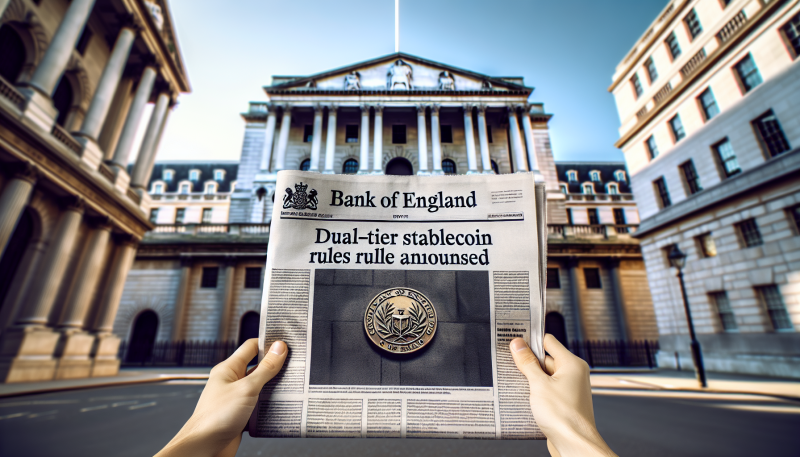
  • Bank of England to Unveil Dual-Tier Stablecoin Rules on November 10 to Align with U.S. Developments

    Bank of England to Unveil Dual-Tier Stablecoin Rules on November 10 to Align with U.S. Developments

    What happened? The Bank of England will publish a new stablecoin regulatory framework on November 10 to align with U.S. developments.

    The BOE announced a dual‑tier regime that targets “systemic” stablecoins while leaving smaller issuers under the FCA’s lighter rules. The plan includes temporary holding caps — about £20,000 for individuals and £10 million for businesses — and other safeguards. The aim is to protect banks and the mortgage market from rapid deposit shifts while letting digital payments innovation continue.

    Who does this affect? Consumers, businesses, banks, and crypto firms will all feel the impact.

    Retail users holding large amounts of stablecoins could hit the new individual caps and face limits on how they store tokenized money. Businesses, payment providers, and stablecoin issuers will need to adapt to the dual‑tier rules and possible operational or compliance changes. Banks and mortgage lenders may see less deposit outflow risk, but crypto firms may face higher regulatory scrutiny and costs.

    Why does this matter? This will change market dynamics by shaping where and how stablecoins and tokenized finance grow in the UK.

    Clear rules reduce uncertainty, which can attract institutional investment and speed adoption of digital payments and tokenized assets. At the same time, holding caps and stricter rules for systemic coins could limit large-scale use and influence liquidity, funding costs, and product design across markets. By moving in step with the U.S., the UK hopes to stay competitive as a hub for responsible crypto innovation while managing financial stability risks.

  • Ethereum Whales Accumulate 394,682 ETH Worth $1.37B Over 3 Days, Signaling Bullish Momentum Ahead of Fusaka Upgrade

    Ethereum Whales Accumulate 394,682 ETH Worth $1.37B Over 3 Days, Signaling Bullish Momentum Ahead of Fusaka Upgrade

    What happened?

    Over the past three days, multiple Ethereum whales bought a combined 394,682 ETH, roughly $1.37 billion. The biggest buyer repaid a 66,000 ETH Aave loan and then repurchased about 257,543 ETH at around $3,480 each. Other buyers named in on-chain data include Bitmine, a group called 7 Siblings, OTC traders, and several new wallets that all increased their positions during the market dip.

    Who does this affect?

    This matters for anyone holding or trading ETH because big whale accumulation can shift short-term supply and price dynamics. Institutional investors, OTC desks, and DeFi platforms like Aave are directly involved or impacted by these flows and changing leverage. Retail traders and exchanges could see increased volatility as these large positions influence market liquidity and sentiment.

    Why does this matter?

    Heavy whale buying can tighten available supply and spark bullish momentum, especially with institutional interest and anticipation around the Fusaka upgrade. Analysts are already flagging upside targets and suggesting institutional buys could push prices significantly higher, which can attract more capital. That said, concentrated buying can also increase price swings, so the market may see sharper moves as sentiment reacts to further on-chain signals and macro data.

  • Markets rebound on strong US data as Bitcoin tops $103,000 and risk assets rally but rate outlook keeps gains in check

    Markets rebound on strong US data as Bitcoin tops $103,000 and risk assets rally but rate outlook keeps gains in check

    What happened?

    Stronger-than-expected US services data and private payrolls lifted global risk sentiment, helping Asia markets recover after yesterday’s selloff. Bitcoin bounced back above $103,000 and major cryptos rallied while equities broadly gained. At the same time, US Treasury yields and the dollar stayed firm, and traders cut the odds of an imminent Fed rate cut.

    Who does this affect?

    Crypto traders and investors feel the move directly, especially those holding leveraged positions around key Bitcoin levels. Equity investors, especially in tech and momentum stocks, saw relief as better growth data reduced fears about stretched valuations. Macro traders, FX players and anyone with exposure to rate-sensitive assets are watching policy expectations and the dollar closely.

    Why does this matter?

    Higher-for-longer rate expectations and a firm dollar can cap upside for risk assets, so even with a rebound, gains may be limited unless policy signals change. A decisive hold above $100,000 would steady crypto sentiment and invite gradual upside, but a break below could trigger swift deleveraging and bigger outflows. Overall, markets are in a selective risk-on phase where large caps and quality plays may outperform high-beta names if economic data stays resilient.

  • Crypto Market Rebound as PayFi Leads Gains and Bitcoin Reclaims 104,000 while Ethereum Surges above 3,400

    Crypto Market Rebound as PayFi Leads Gains and Bitcoin Reclaims 104,000 while Ethereum Surges above 3,400

    What happened?

    The crypto market staged a broad rebound over the past 24 hours, led by strong gains in the PayFi sector and big rallies in several altcoins. Telcoin jumped nearly 28% and XRP gained over 7% while meme tokens like TRUMP and GIGGLE saw huge moves, though Dash pulled back after earlier gains. Bitcoin climbed about 3% to reclaim roughly $104,000 and Ethereum rose about 5% above $3,400, with gains across DeFi, Layer 1/2 and CeFi signaling renewed risk appetite.

    Who does this affect?

    This matters most to traders and investors who rely on short-term momentum, because rapid rallies and pullbacks can create quick profits or losses. It also affects holders and teams in PayFi, DeFi, Layer 1/2 projects and meme token communities as capital rotates between sectors. Exchanges, market makers and derivative desks will feel the impact through higher volumes, increased margin activity and greater volatility.

    Why does this matter?

    The rebound indicates renewed risk-on sentiment and could drive capital rotation from Bitcoin into altcoins, lifting smaller tokens and sector leaders. Reclaiming approximately $104K for Bitcoin and Ethereum moving back above $3,400 provide psychological support that can attract more buyers and institutional attention. However, lingering bearish pressure and quick pullbacks mean gains may not be sustainable, so volatility, liquidity demands and trading risks are likely to remain elevated.

  • Bonk Bounces From Key Support After 42% Drop, Signaling a Possible Reversal for Solana Meme Coins and the LetsBonk.fun Launchpad

    Bonk plunged about 42% this month but just bounced off a key support level, suggesting a possible reversal.

    BONK fell sharply as meme coins broadly dropped after a market shock, but today’s move shows buyers stepping in at $0.00001150. The token’s selling pressure has eased and its strong community, token burns, and LetsBonk.fun launchpad activity are supporting interest. If momentum builds from here, past history shows big rallies are possible, so traders are watching closely.

    This mainly affects Solana traders, meme-coin investors, and users of the LetsBonk.fun launchpad.

    Holders and short-term traders in BONK will feel this most because a successful bounce could flip losses into fast gains. The LetsBonk.fun launchpad (now a top-three Solana launchpad by volume) directly ties fees to token burns, so launchpad users and investors influence scarcity. Broader meme-coin speculators and presale participants (like Maxi Doge buyers) will also watch BONK’s price action for signs of a marketwide risk-on turn.

    It matters because a confirmed bounce could shift market sentiment and trigger meaningful price moves across meme coins and related tokens.

    If BONK holds support and RSI picks up, technical momentum could drive a rally with analysts pointing to roughly 112% upside to the next target, which would pull more speculative money back into meme coins. Ongoing burns funded by launchpad fees increase long-term scarcity, making each rebound potentially more explosive. Given the recent macro shocks that exaggerated sell-offs, a BONK recovery could signal easing fear and revive risk appetite across crypto markets.