Blog

  • DePIN Leads a Mixed Market as Storage Tokens Surge and Bitcoin and Ethereum Dip

    DePIN Leads a Mixed Market as Storage Tokens Surge and Bitcoin and Ethereum Dip

    What happened?

    The market traded mixed over the last 24 hours with a clear split between sectors. DePIN led the winners, jumping about 10.9% as Filecoin surged 51.8% and Arweave rose 37.9%, while PayFi cooled off and fell roughly 4%. At the same time majors softened — Bitcoin slipped 1.6% below $102,000 and Ethereum eased about 2.3% to near $3,300, though Dash bounced back about 15.7%.

    Who does this affect?

    This mainly affects traders and investors exposed to DePIN and storage tokens like Filecoin and Arweave who saw big gains. It also matters for holders of PayFi, Bitcoin and Ethereum, since PayFi pulled back while BTC and ETH lost short‑term ground. Plus, token teams, miners, L1/L2 projects and anyone trading newly listed AI tokens will feel the newsflow and increased volatility.

    Why does this matter?

    Sector rotations like a DePIN surge alongside weakness in BTC and ETH can redirect capital into niche areas and change short‑term market leadership. That reallocation can boost funding and attention for storage and AI projects but also raise volatility as traders chase momentum or take profits. For the broader market it signals shifting liquidity and sentiment that could influence where institutional and retail flows go, impacting prices across L1s, L2s and altcoins.

  • Asia Markets Turn Risk-Off as Crypto and Tech Stocks Fall Amid ETF Outflows

    Asia Markets Turn Risk-Off as Crypto and Tech Stocks Fall Amid ETF Outflows

    What happened?

    Markets across Asia turned risk-off as crypto and major regional equity benchmarks slipped after signs of weakening demand and large ETF outflows. Bitcoin and many altcoins fell, with total crypto market cap down about 2%, while indices like the Nikkei and Hang Seng also retreated following a US tech-led selloff. The move was compounded by slowing institutional treasury buys, rising job-cut headlines, and uncertainty from the US government shutdown that has reduced official data flow.

    Who does this affect?

    Crypto holders, institutional treasuries (like firms that buy Bitcoin for their balance sheets), and investors in crypto ETFs face immediate pressure from price drops and outflows. Tech and AI-linked equity investors, funds exposed to growth stocks, and companies in sectors seeing layoffs also feel the pain through weaker valuations and higher funding risk. Macro traders and policymakers are affected too, since shifts in liquidity, yields and dollar moves change market positioning and policy expectations.

    Why does this matter?

    This matters because the selloff increases volatility and can trigger a broader re-pricing of risk, pushing investors from smaller altcoins and speculative tech names into larger, perceived safe assets or cash. Continued ETF outflows and reduced institutional demand can reduce liquidity and deepen declines, amplifying market stress across assets. If funding strains or data uncertainty persist, central bank intervention becomes more likely, which would influence yields, currency moves, and how capital is allocated between stocks, bonds and crypto.

  • The Next Top Signal Just Flashed (What This Means for Bitcoin)

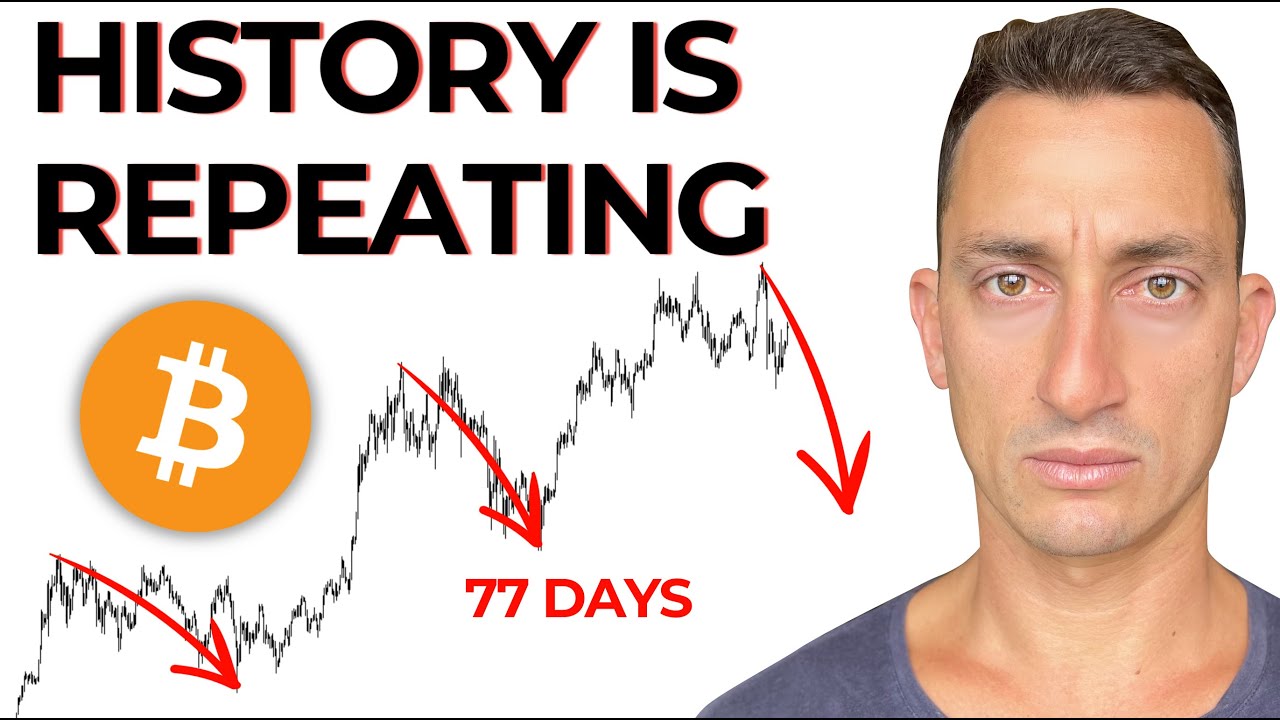
    The Next Top Signal Just Flashed (What This Means for Bitcoin)

    🔴 *JOIN THE INVESTOR ACCELERATOR PRO WAITLIST* – NAVIGATE YOUR PORTFOLIO THROUGH THE PEAK AND COLLAPSE → https://tiainvestor.com/

    🔴 NEW WEEKLY REPORTS, NEW SUBSCRIBERS GET ACCESS HERE → https://tiainvestor.com/subscribe/

    🌏 INSTAGRAM: Beware of fake accounts, this is my only REAL Instagram → https://www.instagram.com/mrpizzino/

    🔥 NEW THE INVESTOR ACCELERATOR YOUTUBE CHANNEL https://www.youtube.com/@theinvestoraccelerator/videos
    (This is an additional channel to my “Jason Pizzino” channel 😄)

    🇦🇺 Trade Bitcoin and crypto – Swyftx, Get $20 Free BTC → https://bit.ly/SwyftxPizzino

    🏅 Toobit, Worldwide No KYC exchange, $600 ETH Airdrop → https://www.toobit.com/t/tiacrypto
    🏅 WEEX, No KYC, 20% Deposit Bonus & Up to 30,000 USDT Rewards → https://www.weex.com/register?vipCode=tiacrypto
    🏅 ByBit, Trade Crypto, get a Crypto Debit Card, Up to $30,000 bonus → https://partner.bybit.com/b/tiacrypto
    🏅 BloFin Crypto Exchange, No-KYC, plus cash bonuses → https://blofin.com/rewards?activity_id=1573&referral_code=TIACRYPTO

    🏆 Free 7-Day Trial – TIA Premium Membership → https://tiacrypto.com/
    🔥 Free 7-Day Trial TIA Indicator Suite → https://indicators.tiacrypto.com/
    📈 TradingView $15 OFF → https://www.tradingview.com/?aff_id=2…
    💳 KAST, Crypto/USD Debit Card https://kast.xyz/jason

    🔴 BEWARE OF IMPERSONATORS (THEY ARE NOT ME).
    I DO NOT HAVE A WHATSAPP OR TELEGRAM GROUP.
    ONLY USE OFFICIAL LINKS IN VIDEO DESCRIPTION.

    🔥Beware of scammers, this is my only REAL Instagram → https://www.instagram.com/mrpizzino/
    → YouTube https://bit.ly/JasonPizzinoYouTube
    → Twitter/X / jasonpizzino https://x.com/jasonpizzino
    → More Crypto Trading on Michael’s YouTube https://bit.ly/MichaelPizzino

    ALSO IN THIS VIDEO:
    SPX, SP500, NASDAQ, NDX, GOLD, USD, DXY, OIL, TRUMP, USDT, ALTCOINS, MEME COINS, AI, US INTEREST RATES DECISION, ETFS, REAL ESTATE CYCLE, 18-YEAR REAL ESTATE AND ECONOMIC CYCLE.

    *I reserve my right to adjust my outlook as more information and data come through. #crypto #bitcoin #cryptonews
    Like and Share if you want to inform your friends and family.

    By watching this video, you are accepting the conditions below:
    ➢ Disclaimer & Affiliate Links https://tiainvestor.com/disclaimer/
    ➢ Privacy Policy https://tiainvestor.com/privacy-policy/
    ➢ Terms & Conditions https://tiainvestor.com/terms-and-conditions/

    PLEASE NOTE: YouTube is now inserting automatic ads. Apologies for any inconvenience.

  • Block’s Q3 Results Highlight Bitcoin Revenue and Holdings Driving Earnings and Stock Volatility

    Block’s Q3 Results Highlight Bitcoin Revenue and Holdings Driving Earnings and Stock Volatility

    What happened?

    Block reported $6.11 billion in Q3 revenue with nearly $2 billion coming from Bitcoin, making BTC almost one-third of its total haul. Gross profit rose 18% year over year thanks to a 24% jump in Cash App and 9% growth in Square, but adjusted EPS and some operating metrics slightly missed analyst expectations. Bitcoin revenue was lower than a year earlier, BTC holdings increased to about 8,780 coins with negative remeasurement charges, and the stock slipped sharply after the report.

    Who does this affect?

    This mainly affects Block shareholders and investors in crypto‑exposed stocks because Bitcoin now represents a meaningful portion of the company’s results and drove share volatility. Merchants and Cash App users are also impacted since Block is rolling out new Bitcoin payment tools and a merchant wallet that change how sellers can accept crypto. The wider crypto ecosystem, institutional investors, and regulators are affected too because Block’s moves influence adoption, compliance scrutiny, and potential policy changes.

    Why does this matter?

    Block’s sizable Bitcoin exposure means its earnings and strategy can shape investor sentiment across both tech and crypto markets, amplifying moves in related assets. The earnings miss and post‑report share decline could reprice other crypto‑linked companies and boost short‑term volatility in equities and Bitcoin. Over the longer term, Block’s product rollouts, growing BTC holdings and S&P 500 inclusion reinforce institutional adoption and could increase liquidity and mainstream use of Bitcoin.

  • Google Finance adds live prediction-market feeds from Polymarket and Kalshi

    Google Finance adds live prediction-market feeds from Polymarket and Kalshi

    What happened — Google Finance will add live prediction-market feeds from Polymarket and Kalshi

    Google Finance is beginning to show real-time market probabilities from Polymarket and Kalshi, starting with Labs users and rolling out more broadly in the coming weeks. The integration will surface current pricing and historical charts so people can ask natural-language questions like projected GDP growth for 2025 and see the crowd’s odds. In short, prediction-market prices will appear alongside traditional financial data in search and Finance tools.

    Who does this affect — Investors, traders, researchers, and everyday users who follow markets

    Retail and institutional investors get easier access to crowd-sourced probabilities for elections, macro events, sports, and more, which can inform trading and hedging decisions. Brokerages, prediction-market platforms, and wagering apps face new competition as these odds become more visible and mainstream. Crypto-native traders, sports bettors, researchers, and regulators will also be paying attention as volumes and institutional interest rise.

    Why does this matter — It could make prediction prices a core market metric and change how event risk is priced

    If Google’s rollout sticks, crowd-implied probabilities could become a default data point next to stock quotes and bond yields, tightening the feedback loop between public data and price discovery. That greater visibility can drive higher volumes, attract more institutional capital, and force incumbents to respond, reshaping liquidity and risk pricing across markets. It also raises competitive and regulatory stakes as exchanges and firms move to launch or integrate prediction products.

  • XRP Ranks Second in Kaiko Crypto Survey as Institutional Interest and ETF Flows Increase

    XRP Ranks Second in Kaiko Crypto Survey as Institutional Interest and ETF Flows Increase

    What happened?

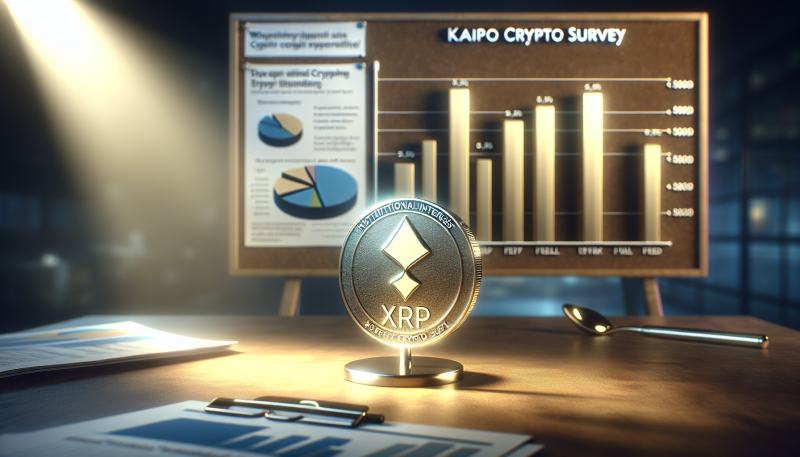
    A Kaiko survey of analysts ranked XRP as the second most popular cryptocurrency, tied with Ethereum and behind Bitcoin. Kaiko’s ranking is based on a 100-point index that evaluates use cases, resources, and research for each token. The article also notes rising institutional interest — a new spot XRP ETF raised about $100 million and XRP’s price recently bounced from roughly $2.08 up toward $2.30 after finding support near $2.10.

    Who does this affect?

    This matters to retail and institutional investors who follow rankings and ETF flows for signals about where to allocate capital. It impacts the Ripple ecosystem — developers, validators, and companies building on the XRP Ledger — as well as active traders watching support and momentum. Wallet and DeFi projects like the Best Wallet Token presale could also see more attention as demand for custody and easy access grows.

    Why does this matter?

    Increased institutional awareness and early ETF inflows can boost liquidity and sentiment, which may help XRP’s rebound and could potentially push prices higher toward levels some analysts reference. Credible rankings from firms like Kaiko can steer capital and coverage toward certain tokens, influencing exchange listings and fund allocations. If interest keeps rising, related infrastructure — custody, wallets, and DeFi integrations — stands to benefit and that can have spillover effects on other altcoins and overall market activity.

  • Zcash rally driven by rising demand for privacy as shielded activity hits records and price targets rise amid regulatory risk

    Zcash rally driven by rising demand for privacy as shielded activity hits records and price targets rise amid regulatory risk

    What happened?

    Zcash surged from September lows near $32 to about $542, gaining over 1,500% and outperforming most of the top 100 cryptocurrencies. Shielded supply hit record highs (around 16 million ZEC, roughly 76% of max supply), shielded transactions rose about 60% month‑over‑month, and trading volume jumped to roughly $1.6 billion. Technicals show an ascending trendline with Fibonacci extensions pointing to targets like $1,669 and $3,428, while analysts watch $1,000 as a key psychological level.

    Who does this affect?

    Zcash holders, traders, and privacy‑coin investors are the most directly affected by the rapid price moves and rising use of shielded transactions. Institutional and accredited investors are also impacted after Grayscale opened a Zcash Trust private placement, helping market cap climb from around $700 million to over $1.8 billion and now nearing $9 billion. Regulators, banks and crypto service providers matter here too, since the EU’s upcoming AML rules (Article 79) plan to ban anonymity‑enhanced tokens, which could restrict access to ZEC in Europe.

    Why does this matter?

    The rally signals growing demand for privacy features, which can redirect capital toward privacy coins and increase liquidity across that niche of the market. If ZEC breaks resistance with volume, momentum could push prices toward $1,000 and higher Fibonacci targets, attracting speculative flows and raising correlated asset prices; but a failure of the trendline could trigger a sharp correction toward $350–$400 and spill losses into related tokens. At the same time, the EU regulatory risk creates an asymmetric outlook—strong upside from adoption and institutional interest versus heightened downside and volatility if major jurisdictions move to restrict custody or trading.

  • Bitcoin trades around $101,000 as hedge funds and corporates boost crypto exposure

    Bitcoin trades around $101,000 as hedge funds and corporates boost crypto exposure

    What happened?

    Bitcoin is trading around $101,000 as hedge funds and some companies ramp up crypto exposure. A PwC/AIMA survey finds 55% of hedge funds now hold crypto and many use futures, Robinhood is weighing adding BTC to its treasury, and Spain’s ITER plans to sell 97 BTC bought for about $10K now worth roughly $10M. At the same time, charts show BTC is testing $100K support and could retest the $97.6K area if sellers push it lower.

    Who does this affect?

    This affects hedge funds and institutional investors that are allocating capital to digital assets and using derivatives for exposure. It also matters for corporate treasuries, public institutions, retail platforms like Robinhood, and everyday traders watching price action. Exchanges, custodians, and banks feel the impact too because shifting institutional flows change trading volume, custody demand, and regulatory attention.

    Why does this matter?

    More institutional adoption and possible corporate treasury buys increase structural demand for Bitcoin and can help lift price floors over time. At the same time, public sales and current technical weakness raise the odds of short-term volatility and a pullback toward the high‑$90Ks. Overall, deeper institutional flows, heavy futures use, and growing corporate interest strengthen market liquidity and make large moves more significant for global markets.

  • SHIB Exchange Flows Flatline as Traders Watch MaxiDoge Rotation and Potential Rebound Path

    SHIB Exchange Flows Flatline as Traders Watch MaxiDoge Rotation and Potential Rebound Path

    What happened? SHIB’s exchange flows have almost flatlined, showing very low trading activity.

    Trading activity for Shiba Inu fell to just about 94 billion tokens (roughly $850,000), which is tiny compared to its $5.3 billion market cap. That flatline suggests both buyers and sellers are hesitant, and technicals show SHIB retesting the lower boundary of a six-month descending channel. Historically this kind of stagnation either leads to a slow decline as interest fades or a quiet accumulation that can set the stage for a rebound.

    Who does this affect? Traders, long-term SHIB holders, and meme-coin investors watching rotations.

    Short-term traders and anyone using leverage face higher risk because low liquidity can amplify price moves and slippage. Long-term holders may see a continued slow bleed unless a clear catalyst appears, while speculators could pivot to other meme coins. That rotation is already visible with projects like MaxiDoge raising interest and funds, which can siphon capital away from SHIB.

    Why does this matter? It could shift market flows and price direction for SHIB and the wider meme-coin market.

    If SHIB breaks key support around $0.0000085 it could drop toward a $0.0000067 demand zone (about 25% lower), but regaining $0.000012 would reopen a path to much higher targets and a possible 170% move. A rotation of capital into alternatives like MaxiDoge — which has raised millions and offers staking rewards — could amplify downside pressure on SHIB. Broader macro fears (like the U.S. government shutdown and growth concerns) also reduce risk appetite, meaning market sentiment will likely determine whether SHIB fades further or quietly accumulates for a rebound.

  • Forward Industries Announces $1 Billion Buyback Linked to Solana Exposure as SOL Rises

    Forward Industries Announces $1 Billion Buyback Linked to Solana Exposure as SOL Rises

    What happened? Forward Industries announced a $1 billion stock buyback and SOL ticked up about 2.7% to $159.

    Forward Industries, the largest corporate holder of Solana with roughly 6.8 million tokens, authorized a repurchase program of up to $1 billion to be executed via at‑the‑market offerings and block trades. That move tightened the company’s share base and effectively increases the amount of SOL represented by each share. The announcement coincided with a modest price bounce as traders priced in the corporate support for Solana exposure.

    Who does this affect? Forward shareholders, SOL holders, traders, and projects built on Solana are the main parties impacted.

    Forward shareholders could see higher per‑share Solana exposure and potential upside if the market views the buyback favorably. SOL holders and traders may get renewed confidence from a big institutional backer reducing risk of large token sell pressure. Developers and new projects on Solana, like Bitcoin Hyper, benefit from stronger institutional attention that can attract more liquidity and partnerships.

    Why does this matter? The buyback signals growing institutional support and could tighten supply or shift sentiment, which matters for SOL’s market outlook.

    Corporate buybacks from a major Solana treasury can reduce effective supply pressure and lift investor sentiment, increasing the chance of a technical bounce from recent lows. If SOL breaks above key levels (around $180), it could trigger further inflows and a move toward $200 as institutions chase exposure, but macro risks that pushed SOL down earlier still apply. Overall, this development makes Solana more attractive to institutional and retail investors and could tighten the market if the buyback is aggressive.