Blog

  • Ethereum Dips Ahead of Fed Decision Amid Tariff Shock, Eyes Rally to $6,000 if Rate Cut Materializes

    Ethereum Dips Ahead of Fed Decision Amid Tariff Shock, Eyes Rally to $6,000 if Rate Cut Materializes

    What happened?

    Ethereum dropped about 3% in the last 24 hours as traders nervously awaited today’s Fed rate decision, which markets expect will be a 25bps cut. President Trump’s surprise move to double tariffs on Chinese imports has introduced uncertainty that could make the Fed rethink or delay that cut. At the same time ETH trading volume is up roughly 10% and a large share of the circulating supply is moving, while price recently found support around $3,800 and faced resistance near $4,200.

    Who does this affect?

    Short-term crypto traders and investors in ETH are most immediately exposed to the volatility from the Fed decision and tariff shock. Macro traders and institutions watching interest rate signals will also be affected since their risk positioning could shift quickly. Early-stage projects and presale investors (like those in Pepenode) could see large gains or losses if a macro surprise amplifies crypto price moves.

    Why does this matter?

    If the Fed goes ahead with the expected 25bps cut, risk appetite would likely rise and could push ETH back toward all-time highs — analysts even point to a potential move toward $6,000 under favorable macro conditions. Conversely, a Fed pause or reversal because of tariff-driven inflation risks could trigger a sharp sell-off and wider crypto market weakness. With elevated volumes and big on-chain activity, any macro surprise is likely to produce faster, larger price swings and make both upside opportunities and downside risks more pronounced.


  • XRP Stalls Near Key Fibonacci Zone as Analysts Eye Breakout Above 2.66 or Drop Toward 2.50

    XRP Stalls Near Key Fibonacci Zone as Analysts Eye Breakout Above 2.66 or Drop Toward 2.50

    What happened?

    XRP stalled around $2.60 after an impulsive run that peaked near $2.66 and is now sitting in a key Fibonacci demand zone roughly between $2.56 and $2.61. Analysts are watching two scenarios: a drop toward ~$2.50 or a breakout above the 78.6% Fibonacci level near $2.655, with an ascending trendline pushing price toward $2.63–$2.65. Technicals are mixed — there’s an ascending channel and rising wedge suggesting bullish bias but weakening momentum, and the TD Sequential recently flashed a sell signal.

    Who does this affect?

    Retail XRP holders and short-term traders face immediate risk and opportunity as the token sits at a make-or-break technical zone. Institutional partners and payment networks (and Ripple’s pitch to them) are indirectly affected after Western Union chose Solana over XRP for settlement, raising questions about Ripple’s adoption story. Leveraged traders and derivatives platforms could see amplified moves because many are positioned to chase the next big swing based on these setups.

    Why does this matter?

    The market impact could be big: a confirmed breakout could fuel a quick rally (analysts point to a potential ~12% move toward $3.32), while a breakdown would likely accelerate selling and shake confidence. Western Union’s Solana decision undermines Ripple’s institutional narrative, which could reduce long-term demand and put downward pressure on price if others follow. High leverage availability means any sharp move — up or down — could lead to outsized volatility and cascade liquidations in crypto markets.

  • STAO: Regulated Staked Bittensor ETP Debuts on SIX Swiss Exchange

    STAO: Regulated Staked Bittensor ETP Debuts on SIX Swiss Exchange

    What happened?

    Deutsche Digital Assets teamed up with Safello to launch a staked Bittensor (TAO) ETP called STAO on the SIX Swiss Exchange. The product is physically backed by TAO held in cold custody, tracks the Kaiko Safello Staked Bittensor Index, and reinvests staking rewards into the NAV. It’s a regulated total-return ETP with a maximum fee of 1.49% that gives investors price exposure plus staking income.

    Who does this affect?

    Retail and institutional investors in Europe who want regulated access to crypto and staking rewards now have a simple on-exchange vehicle to buy. Bittensor holders and the decentralized AI community could see higher demand and visibility as the token becomes more accessible to mainstream investors. Custodians, index providers, asset managers and exchanges are also affected as they compete to offer similar compliant products and adapt operations for staking and custody needs.

    Why does this matter?

    The listing can attract fresh capital into TAO by giving conservative investors a regulated way to gain exposure plus staking yields, which may push up TAO’s price and trading volume. It’s a sign the European crypto ETP market is maturing and starting to fold niche DeFi and AI tokens into traditional finance, likely prompting more rival ETPs and institutional flows. More liquidity and institutional demand could tighten spreads, raise valuations for similar projects, and accelerate the rollout of compliance-first crypto products across exchanges.

  • World Liberty Announces 8.4 Million WLFI Airdrop Linked to USD1 Loyalty Program

    World Liberty Announces 8.4 Million WLFI Airdrop Linked to USD1 Loyalty Program

    What happened? World Liberty announced an 8.4 million WLFI token airdrop tied to its USD1 loyalty program.

    World Liberty Financial said it will distribute 8.4 million WLFI tokens (about $1.2M) to early users through its USD1 Points Program. The airdrop will be handled across six major centralized exchanges and rewards people who traded USD1 pairs or held stablecoin balances on partner platforms. The company says the initiative drove over $500M in trading activity in two months and is the first phase of a broader loyalty plan that could add DeFi integrations and staking rewards.

    Who does this affect? Early USD1 users, WLFI holders, partner exchanges, and political observers.

    Eligible early users of the USD1 Points Program and existing WLFI holders are the direct recipients, while Gate.io, KuCoin, LBank, HTX Global, Flipster and MEXC will manage distributions. The airdrop could change WLFI’s circulating supply and create short-term selling pressure even as it’s meant to drive more trading and platform activity. Broader stakeholders — other crypto traders, DeFi projects eyeing USD1 integrations, and political watchers — are also affected because of the project’s ties to the Trump family and growing regulatory scrutiny.

    Why does this matter? It could shift token supply, boost stablecoin usage, and influence market sentiment amid political risk.

    In market terms, the extra WLFI entering circulation may weigh on the token price short term, especially since WLFI is already well below its all-time high. At the same time, the program’s ability to spur trading (reports say $500M in two months) can increase USD1 liquidity and help the stablecoin rise in rankings. But political links and potential regulatory responses could dampen investor confidence and slow adoption across exchanges and DeFi partners.

  • Shibaswap Breach: Private Keys Leaked, $2.8 Million in SHIB Drained via Merkle Exit Exploit

    Shibaswap Breach: Private Keys Leaked, $2.8 Million in SHIB Drained via Merkle Exit Exploit

    What happened?

    Signers’ private keys tied to Shibaswap were leaked or misused, letting an attacker exploit the exit() function and withdraw about $2.8 million in SHIB by submitting legitimate Merkle leaf exit requests. The vulnerability let the attacker manipulate the root hash and repeatedly drain tokens from the contract. Security researchers flagged the issue after seeing multiple withdrawals signed by different addresses, confirming it wasn’t a simple one-off hack.

    Who does this affect?

    Primary victims are Shibaswap users and SHIB holders who face direct token losses and higher counterparty risk when using the platform. The broader DeFi community also gets hit because exploits like this shake trust in smart contracts and multisig or signer key management. Traders and liquidity providers will feel the fallout too, as they may pull funds or stop interacting with the protocol until fixes and audits are complete.

    Why does this matter?

    Market-wise, the breach increases selling pressure and could keep SHIB’s already weak price and low trading volume under stress, worsening its downtrend and reducing investor confidence. Short-term traders may flee to hotter meme projects (we’re already seeing money move to things like PepeNode), which can further sap SHIB liquidity and momentum. Longer term, if the team fixes the hole and buyers return, a technical breakout remains possible, but reputational damage makes recovery slower and riskier for investors and market makers.

  • Crypto Market Dips as ETF Inflows and Fed Outlook Shape Near-Term Direction

    Crypto Market Dips as ETF Inflows and Fed Outlook Shape Near-Term Direction

    What happened?

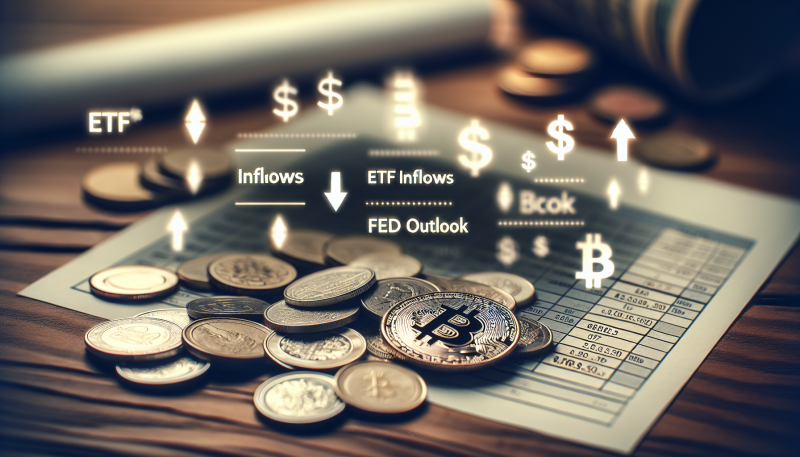
    The global crypto market dipped about 1.6% to $3.89 trillion, with Bitcoin down ~2% and Ethereum down ~3%. Trading volume actually rose a bit while investor sentiment slipped back into “fear.” At the same time, spot ETFs kept seeing big inflows — BTC ETFs $202.48M, ETH ETFs $246.02M — and Bitwise’s new Solana ETF pulled $69.5M on its first day.

    Who does this affect?

    Short-term traders and retail investors feel the immediate impact from the price pullback and higher volatility. Institutional investors and ETF holders are directly involved because large inflows show they’re still buying exposure. Crypto projects, exchanges and emerging platforms (like Truth Social’s new prediction markets via Crypto.com) could see activity and capital shift depending on where money flows.

    Why does this matter?

    Big ETF inflows plus a likely Fed rate cut could boost liquidity and lift crypto prices if risk appetite returns, so these flows are a key driver of near-term market direction. Institutional demand can create steadier price support and push capital into specific tokens (ETH, SOL), changing leadership among assets. But sentiment is fragile, so even with structural inflows the market could see sharp moves if the Fed’s message or macro conditions turn more cautious.

  • Solana Set for Rally as Qwen AI Forecasts 320 by 2026 and ETF Approvals Could Boost SOL

    What happened?

    Markets are recovering and money is rotating out of gold back into risk assets, with Solana standing out as a retail favorite. Alibaba’s Qwen AI — fresh off beating rivals in the Alpha Arena trading contest — gave a bullish three‑month call that could see SOL near $320 by January 2026. The case rests on Q4 seasonality, network upgrades like Firedancer, strong on‑chain activity, and growing institutional partnerships.

    Who does this affect?

    This mainly affects retail traders and DeFi/NFT users who hold or trade Solana, since they’d be first to feel any sharp price moves. Institutional investors and ETF buyers are next in line, especially if U.S. approvals follow Hong Kong’s Solana ETF green light and bring big inflows. Wallet providers and token platforms (like Best Wallet and its BEST token) could also benefit as investors reorganize portfolios and chase staking or yield perks.

    Why does this matter?

    A confirmed breakout toward the Qwen AI target could pull substantial capital into SOL and other Layer‑1 altcoins, potentially changing market leadership versus Ethereum and BNB. ETF approvals would be a major market catalyst, likely increasing liquidity, volatility, and institutional participation, which can amplify price moves. That dynamic would reshape risk allocation, boost demand for custody and wallet services, and could accelerate a broader altcoin rally into Q4 and early 2026.

  • Fed Decision Looms: Dovish Outcome Could Lift Bitcoin and Altcoins, Hawkish Hints Could Trigger Sharp Selloffs

    Fed Decision Looms: Dovish Outcome Could Lift Bitcoin and Altcoins, Hawkish Hints Could Trigger Sharp Selloffs

    What happened?

    Markets are holding their breath ahead of the FOMC decision, with Polymarket pricing a 98% chance of a 25-basis-point rate cut. Bitcoin is trading around $113,000 and Ethereum near $4,000 with low volatility, while Solana and XRP are roughly steady. Analysts say a dovish outcome could spark a relief rally, but any hawkish hints could quickly reverse gains because liquidity is thin and leverage is high.

    Who does this affect?

    This matters for crypto traders and investors who will react quickly to the Fed’s wording and Powell’s press conference. Leverage-heavy traders and exchange markets with thin liquidity are especially exposed to sharp moves on any surprise. Broader risk-asset investors and altcoin holders also stand to see short-term swings as market positioning shifts around expected policy changes.

    Why does this matter?

    If the Fed is dovish and cuts rates as expected, it could lift risk appetite and push Bitcoin toward the roughly $117,000 target analysts mentioned, and lift major altcoins by a few percent. Conversely, any hint of hesitation or a hawkish tone could trigger quick sell-offs given elevated leverage and fragile liquidity, amplifying volatility. Overall, the FOMC outcome and Powell’s guidance will likely set near-term direction for crypto prices and trader sentiment, shaping where money flows in the market.

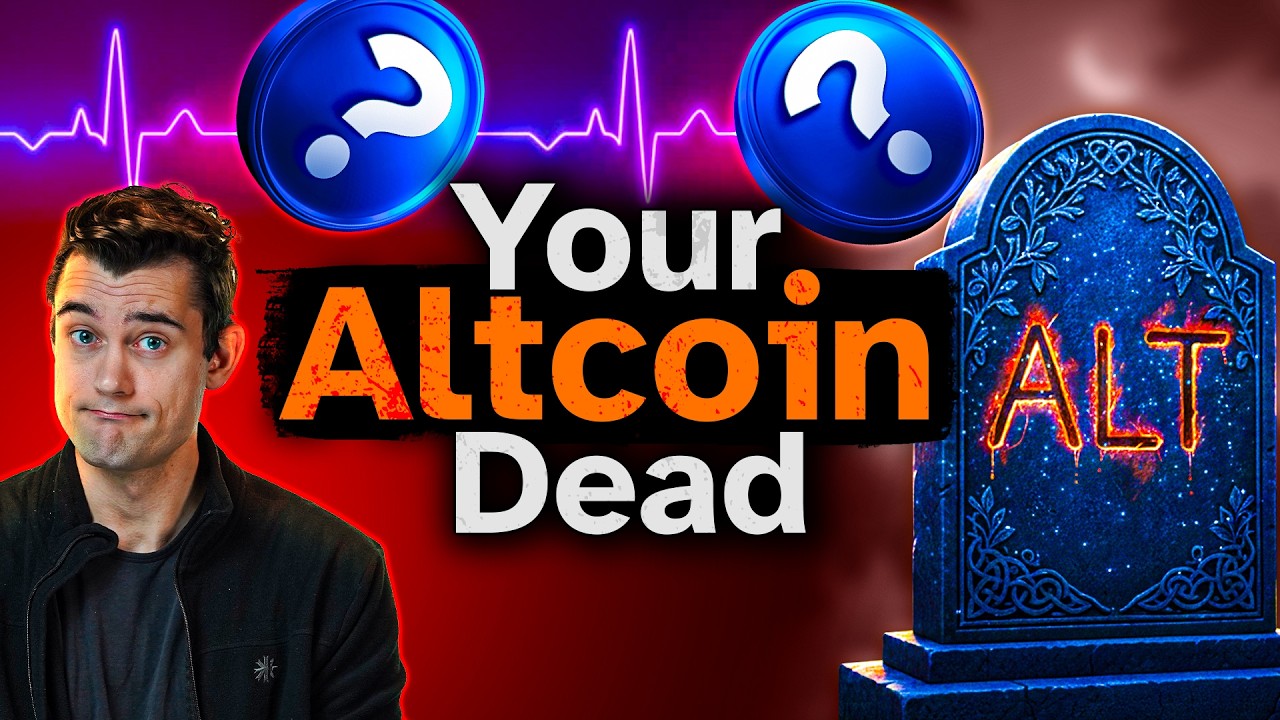
  • Is Your Altcoin DEAD? Use This Checklist To FIND OUT!!

    Is Your Altcoin DEAD? Use This Checklist To FIND OUT!!

    Everyone has loved watching Bitcoin explode to new all-time highs, but many are now wondering when altcoins could be next. And while some have seen explosive rallies of their own, most have been going down and to the right for years.

    This has many people wondering if their cryptos could pump too, or if they’re really just bagholding a load of dead coins or tokens.

    If this sounds like you, then fear not. Today, we’re giving you the tools you need to determine if your crypto is simply hibernating, or if it should be buried six feet deep.

    ~~~~~

    🛒 Get The Hottest Crypto Deals 👉 https://www.coinbureau.com/deals/
    ♣️ Join The Coin Bureau Club 👉 https://hub.coinbureau.com/
    💥 Coin Bureau Discord 👉 https://go.coinbureau.com/cb-discord
    📲 Insider Info in our Socials 👉 https://www.coinbureau.com/socials/
    👕 Best Crypto Merch 👉 https://store.coinbureau.com
    🔥 TOP Crypto TIPS In our Newsletter 👉 https://www.coinbureau.com/newsletters/
    💸 Coin Bureau Finance Channel 👉 https://www.youtube.com/@CoinBureauFinance
    ⭐ More Coin Bureau Channel 👉 https://www.youtube.com/@morecoinbureau
    📈 Coin Bureau Trading Channel 👉 https://www.youtube.com/@CoinBureauTrading

    ~~~~~

    🔥OUR BRAND PARTNERS🔥

    📈Bitget up to 50K USDT Deposit Bonus & GetAgent Plus Trial (Exclusive AI-powered Trading Assistant) 👉 https://go.coinbureau.com/bitget-getagent
    🔒Get 10% Off Your Tangem Wallet 👉 https://go.coinbureau.com/tangem10

    ~~~~~

    📺Essential Videos📺

    Is Your Crypto Dead? 👉 https://youtu.be/mMLTQJ-VVE4
    When To Sell Your Altcoins 👉 https://www.youtube.com/watch?v=ZGd6O79_MOc&t=50s
    Market Top Indicators 👉 https://www.youtube.com/watch?v=7ltPX1LFdYE&t=12s

    ~~~~~

    ⛓️ 🔗 Useful Links 🔗 ⛓️

    ► What Are Dead Projects: https://coinmarketcap.com/academy/article/what-are-dead-coins
    ►Spotting Dead Projects: https://cointelegraph.com/news/what-is-a-ghost-chain-how-to-spot-dead-crypto-projects
    ► Why Zombie Cryptos Pump: https://unchainedcrypto.com/why-many-zombie-blockchains-are-still-worth-billions-of-dollars/

    ~~~~~

    – TIMESTAMPS –

    0:00 Intro
    0:33 On-Chain Surface-level Analysis
    3:23 Runway
    5:23 Developer Activity and Community Engagement
    7:04 Roadmap And Milestones
    9:24 Why Zombie Cryptos Pump
    11:16 What To Do If Your Crypto Is Dead

    ~~~~~

    📜 Disclaimer 📜

    The information contained herein is for informational purposes only. Nothing herein shall be construed to be financial legal or tax advice. The content of this video is solely the opinions of the speaker who is not a licensed financial advisor or registered investment advisor. Trading cryptocurrencies poses considerable risk of loss. The speaker does not guarantee any particular outcome.

    #zombie #dead #crypto

  • Norway Tightens Crypto Oversight as Tax Filings Surge and Mining Restrictions Loom

    Norway Tightens Crypto Oversight as Tax Filings Surge and Mining Restrictions Loom

    What happened?

    Norway saw a sharp increase in crypto tax filings for 2024, with over 73,000 people reporting digital-asset holdings—a 30% jump from the year before. The total declared value more than doubled to NOK 40.3 billion, driven by higher market prices and active reporting prompts from the tax agency. Authorities also signaled tougher oversight going forward, including third-party reporting rules from 2026, MiCA-aligned licensing, and a temporary ban on new high-energy mining projects.

    Who does this affect?

    Individual Norwegian crypto holders—especially first-time filers—must now be more diligent about declaring holdings and may face capital gains or wealth-tax liabilities. Crypto exchanges, wallet providers, and service firms operating in or serving Norwegians will face new reporting duties and licensing expectations that increase compliance requirements. Institutional players and mining projects are also in scope, with ethics reviews, potential divestments, and mining restrictions changing investment and operational decisions.

    Why does this matter?

    Greater reporting and forthcoming third-party data sharing should boost transparency and tax revenue while shrinking the portion of undeclared crypto activity, which can stabilise the market’s regulatory footing. Increased compliance and licensing costs could push some services offshore or raise consumer costs, but clearer rules can also attract more institutional capital seeking regulated markets. Overall, tighter oversight and mining limits are likely to reduce speculative excess, alter supply-side dynamics, and shift where crypto businesses choose to operate, with knock-on effects on liquidity and price behavior.