XRP saw a significant price increase after Ripple Labs CEO Brad Garlinghouse announced the company would drop its cross-appeal against the SEC. This comes in response to a federal court’s recent decision to deny Ripple and the SEC’s request to reduce a $125 million penalty. The court also decided that Ripple’s institutional XRP sales were securities transactions, but Ripple’s legal team emphasized that XRP’s status as not a security remains unchanged.
Who does this affect?
This development primarily affects Ripple Labs and its investors, as well as the broader XRP community. Investors who hold XRP are particularly impacted, as legal clarity on XRP’s status is crucial for their investment decisions. The decision also has implications for the SEC, which has been in a lengthy legal battle with Ripple since December 2020 over alleged unregistered sales of XRP.
Why does this matter?
The resolution of this legal battle is significant for the market because it could signal an end to regulatory uncertainty surrounding XRP in the US. A clear path forward without ongoing legal disputes may boost investor confidence and potentially enhance XRP’s growth prospects. Additionally, Ripple’s continued focus on expanding network functionality through upgrades positions it to improve transaction efficiency and appeal to institutional users.
💎 Join My Inner Circle for Exclusive Insights and Community Hivemind💎
✅ Sign-up for only $19.99 / month
👉 https://whop.com/the-house-of-crypto/ 👈
🌔 Join The Moon House for Experts’ Alpha 🌖
✅ Maximize your learning with weekly live calls and portfolio Q&A sessions.
👏 https://whop.com/the-moon-house/ 👏
💰No KYC | 400+ altcoin pairs | Fastest new coin listing 💛 WEEX Exchange💰
✅ Deposit, trade and get up to 5000 USDT rewards!
👁️ Referral code: 2dfo
👏 https://shorturl.at/SOsy4 👏
💰NO KYC & NO VPN +5500USDT Rewards 💚 Bitunix Exchange💰
✅ Trade anywhere in the world with a discount on your trading fee
👁️ Referral code: rdhq
👏 https://shorturl.at/2XJrk 👏
💰NO KYC | Fast Execution | +5,000USDT Rewards 🧡 BloFin Exchange💰
✅ 20% Deposit Bonus up to $500 | Exclusive $5–$10 SUI Airdrop 🎁
👁Referral code: HouseOfCrypto
👏 https://tinyurl.com/bdhp7c3m 👏
💰Low Trading fees, 20,000 USDT BONUS link 💙 MEXC (No KYC)💰
✅ Visit MEXC below for exclusive House Of Crypto Signup Bonuses
👁️ Referral code: mexc-12QQEf
👉 https://tinyurl.com/3f3f5fbn 👈
💰60,000 USDT in Rewards for Each Trader 🖤 OKX Exchange💰
✅ Access top crypto markets with the best liquidity available.
👁️ Referral code: houseofcrypto
👏 https://shorturl.at/TlN5I 👏
$$$$$$$$$$$$$$$$$$$$$$$$$$$$$$$$$$$$$$$$$$$$$
🔒Secure and easy to use, trusted by millions worldwide.🔒
✅ Get Your Ledger Crypto Wallet with an Exclusive Discount!
***This is important, as crypto hacks occur frequently.***
👏 https://shorturl.at/Nt2WZ 👏
🔑 Secure Your Trading with a VPN 🔑
✅ Get 4 Months Free With Nord VPN!
👏 https://nordvpn.com/houseofcrypto 👏
🔒Protect Your Asset with a Hardware Wallet🔒
✅ Visit D’cent Below For A HUGE Exclusive Discount!
👏 https://tinyurl.com/2z5y9pxd 👏
$$$$$$$$$$$$$$$$$$$$$$$$$$$$$$$$$$$$$$$$$$$$$
🎭 Want To Chat With Other Crypto Enthusiasts? 🎭
✅ Join The FREE Telegram
👉 https://t.me/+4RGUNX-VMw04NTY1 👈
📬 Subscribe to our weekly goodies: https://www.thehouseofcrypto.io/subscribe 📬
Gear up for the moon! 🚀 Shop exclusive merch at wenlambo.shop
🎭 Follow us here to stay updated every day:
👉 Website: https://www.thehouseofcrypto.io/
👏 X.com: https://x.com/Peter_thoc
🙌 LinkedIn: https://www.linkedin.com/company/thehouseofcrypto/
💪 Instagram: https://www.instagram.com/the.houseofcrypto/
👉Telegram: https://t.me/+4RGUNX-VMw04NTY1
***************************************************************************
*DISCLAIMER*
DO NOT take this video as financial advice! I am not a financial advisor and this video was only made for entertainment purposes. I am not liable for any losses you may incur so always do your own research before making any investments/financial decision.
This information is what was found publicly on the internet. This information could’ve been doctored or misrepresented by the internet. All information is meant for public awareness and is in the public domain.
Changpeng “CZ” Zhao, the former CEO of Binance, stated that owning Bitcoin could become the new American dream, replacing home ownership. This comment follows a decision by Bill Pulte, Director of the U.S. Federal Housing Finance Agency, to explore using cryptocurrencies like Bitcoin in mortgage risk assessments. The idea is that cryptocurrencies can now be considered as assets for mortgages without needing to convert them to USD first.
Who does this affect?
This affects prospective homeowners in the United States who hold cryptocurrencies, as they might soon be able to use these digital assets as part of their mortgage evaluation. It also impacts major housing finance entities Fannie Mae and Freddie Mac, which are preparing to integrate cryptocurrency evaluations into their processes. Additionally, the broader financial and crypto markets are impacted by this development given the recognition of digital currencies in mainstream financial services.
Why does this matter?
The inclusion of cryptocurrencies in mortgage risk assessments by key financial bodies signals a significant shift towards mainstream acceptance of digital assets, potentially boosting their value and utility. This development could influence market dynamics by increasing demand for cryptocurrencies like Bitcoin, as they gain legitimacy as part of financial portfolios for loans. The endorsement from influential figures and organizations could accelerate the integration of crypto assets into traditional financial systems, impacting both real estate and cryptocurrency markets.
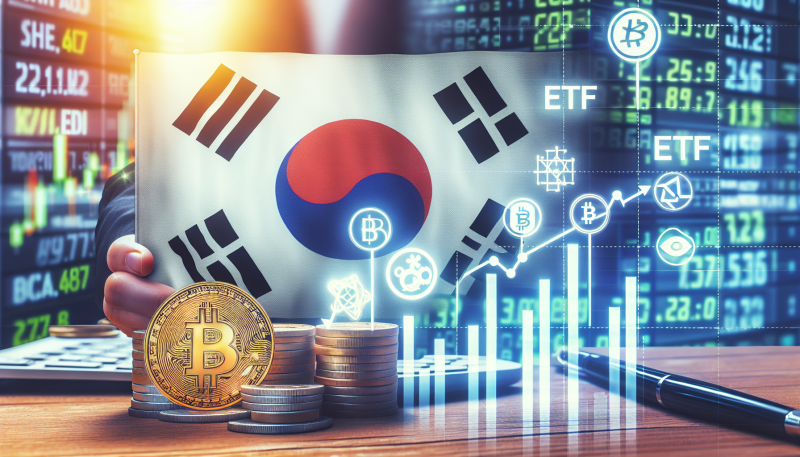
A South Korean lawmaker introduced a bill to amend the Capital Markets Act, aiming to expand the underlying assets for ETFs to include digital assets like Bitcoin. The amendment sets up a legal framework that allows trust companies to hold and manage digital assets as trust property. This move is a part of a broader agenda to integrate digital assets into South Korea’s financial system.
Who does this affect?
The proposed bill primarily affects asset managers, investors, and trust companies in South Korea who are interested in digital assets. Institutional investors with more than KRW 10 billion in assets may gain the ability to trade virtual assets domestically by late 2025. Additionally, it impacts regulators and industry players focused on risk management related to digital asset derivatives.
Why does this matter?
This amendment, if passed, could significantly impact South Korea’s market by offering a regulated path for digital asset-based ETFs, increasing market transparency and diversity. It provides investor protections previously unavailable due to the prohibition on ETFs using digital assets as underlying assets. This change might also influence broader debates about digital asset regulation, including taxation and reporting standards, potentially positioning South Korea as a leader in digital finance integration.
SOL Strategies, a Canada-based digital asset firm, announced the launch of a new Strategic Ecosystem Reserve (SER) to support Solana’s critical infrastructure. The company started with an initial acquisition of over 52,000 Jito tokens valued at more than $100,000 as its first allocation from the reserve. This move is part of SOL Strategies’ broader focus on investing in infrastructure projects that push the Solana ecosystem forward.
Who does this affect?
This initiative primarily affects Solana’s developer community, token investors, and users who rely on enhanced blockchain infrastructure. By investing in projects like Jito, which provides MEV infrastructure and liquid staking services, SOL Strategies aims to support Solana applications and developers. Furthermore, the impact extends to its partners in the cryptocurrency and blockchain space, such as Pudgy Penguins.
Why does this matter?
The establishment of the Strategic Ecosystem Reserve reflects a strategic investment approach by SOL Strategies that can boost confidence in Solana’s long-term growth and technical advancements. By backing essential infrastructure projects, the company not only enhances Solana’s network capabilities but also signals significant institutional interest, potentially attracting further investment and development within the ecosystem. These moves could drive market attention and positively influence the valuation and perception of Solana-related assets.
Senator Tim Scott announced that U.S. lawmakers are aiming to finalize crypto market structure legislation by September 30th. He discussed this plan alongside Senator Cynthia Lummis and Bo Hines, the head of the President’s Council of Advisers on Digital Assets. This announcement has sparked positive reactions from key figures within the cryptocurrency industry.
Who does this affect?
The proposed legislation will impact various stakeholders in the cryptocurrency market, including digital asset innovators, investors, and consumers in the United States. Key crypto companies like Coinbase and influential figures such as Brian Armstrong and Colin McCune have expressed their support for the legislative timeline. It also affects regulatory bodies and policymakers who are working towards creating a structured environment for cryptocurrencies in the U.S.
Why does this matter?
The introduction of comprehensive crypto market structure legislation can significantly impact the market by providing clear guidelines and regulatory certainty. This could position the U.S. as a leader in financial innovation, attract more investments, and boost the growth of the cryptocurrency industry. The market’s anticipation of these new rules may influence trading behaviors and the strategic planning of businesses involved in digital assets.
The Trump coin has been undergoing a downward consolidation since mid-May, but it’s nearing a breakout point, which could result in a significant price movement. The current setup is a classic reversal pattern that has been developing for 60 days, indicating potential momentum buildup. Despite struggles faced by meme coins due to geopolitical tensions, derivatives traders are betting on a Trump coin rally.
Who does this affect?
This development affects cryptocurrency investors, specifically those involved with or considering investing in Trump coin and meme coins in general. Derivatives traders in particular may experience changes in their strategy due to the evolving market conditions. Additionally, people interested in the broader cryptocurrency market and its dynamics may find these developments relevant.
Why does this matter?
The potential rally in Trump coin could impact the market by attracting more speculative interest and possibly influencing the prices of other similar assets. If the coin experiences a significant increase, it could signal confidence in meme coins, despite recent geopolitical concerns that had negatively affected them. Furthermore, such price movements could highlight the volatility associated with cryptocurrency investments, emphasizing the need for strategic planning and risk management among investors.
On June 27, KakaoPay’s stock plunged by 17% after trading resumed following a suspension by the Korea Exchange due to concerns over its exposure to won-pegged stablecoins. The exchange labeled KakaoPay as an “investment risk” because of extreme volatility in its stock price, which had tripled in value recently. This volatility stemmed from market excitement over potential changes in South Korea’s digital asset regulations.
Who does this affect?
The sharp decline in KakaoPay’s stock affects its shareholders, financial institutions tied to stablecoin projects, and companies like KB Kookmin Bank and Hana Bank engaged in similar pursuits. It also impacts the broader Korean financial market, potentially affecting investor sentiment towards fintech startups and established firms venturing into the digital currency space. Additionally, it concerns regulators who are monitoring the intersection of fintech innovation and financial stability.
Why does this matter?
This situation has significant implications for the market as it highlights the tension between the rapid adoption of fintech innovations and the need for regulatory frameworks to ensure stability. The volatility in KakaoPay’s stock reflects broader uncertainty in the market about the future role and regulation of stablecoins. As the global market explores stablecoin use and regulation, incidents like these underscore the risks and challenges that accompany rapid innovations in financial technology.
The Financial Action Task Force (FATF) issued a strong warning about the increasing use of cryptocurrencies by sanctioned states to finance weapons programs. A report from June 20 urges countries to address regulatory gaps facilitating illicit finance in the digital asset space. The FATF highlights that weaknesses in the global financial system are being exploited by networks involved in proliferating weapons of mass destruction.
Who does this affect?
This issue affects many countries worldwide, as only 16% of them have been found to be effective in applying targeted financial sanctions related to weapons proliferation. It also impacts financial institutions and governments that need to strengthen their regulatory frameworks to prevent misuse of cryptocurrencies. Furthermore, it affects global security as state-backed threat actors may grow more capable in evading existing controls to finance dangerous programs.
Why does this matter?
The increased use of cryptocurrencies for sanctions evasion could significantly impact global markets, creating complex financial networks that are difficult to track and control. It poses a potential threat to market stability and security, as the growth of crypto crimes, including fraud and hacking, has surged. Without stronger international coordination and stricter regulatory measures, the misuse of digital assets could undermine efforts to maintain financial integrity and global peace.
The recent initial public offering (IPO) of Circle Internet Group, the issuer of the USDC stablecoin, was immensely successful, raising $1.1 billion and marking a significant gain on its first day of trading. Following Circle’s IPO, other crypto companies such as Gemini and Bullish are filing for their own IPOs in the United States, signaling a growing trend in the crypto industry. The favorable regulatory environment and market interest have encouraged more cryptocurrency firms to consider going public through traditional stock exchanges.
Who does this affect?
This development primarily impacts crypto companies and investors who are eyeing opportunities in the U.S. public markets. Major crypto exchanges like OKX and Kraken are considering IPOs, which could offer new investment avenues for institutional and retail investors. Furthermore, the trend affects financial institutions looking to incorporate digital assets into their services, as it demonstrates increasing institutional interest and regulatory support for crypto-related businesses.
Why does this matter?
The IPO boom in the crypto industry could significantly impact the market by attracting substantial institutional capital and boosting investor confidence in digital assets. Successful IPOs can lead to enhanced credibility and stability for crypto-related firms, potentially driving further growth and innovation in the sector. However, there is also a risk of speculative hype and overvaluation, which could result in a boom-and-bust cycle, making it crucial for companies to be well-prepared before going public.