Blog

  • US and China Agree to Temporary Tariff Reductions, Easing Trade Tensions and Boosting Global Markets

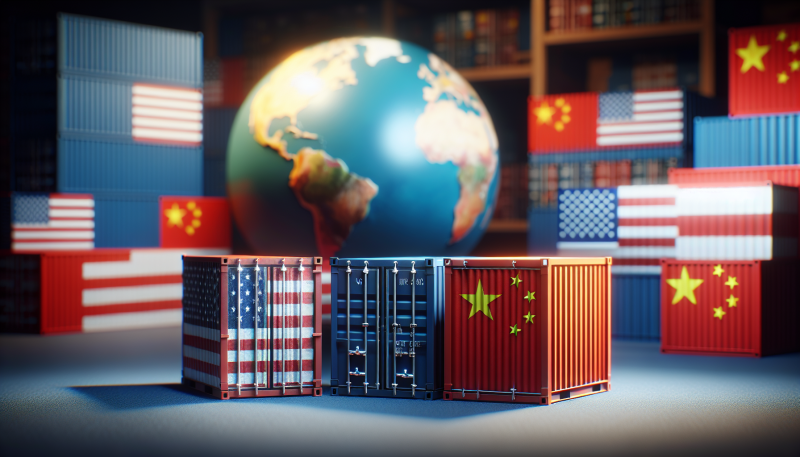
    US and China Agree to Temporary Tariff Reductions, Easing Trade Tensions and Boosting Global Markets

    What happened?

    The US and China have agreed to significantly reduce tariffs on each other’s goods for a period of 90 days, providing a temporary relief to global markets. Specifically, China will reduce its tariffs on US imports from 125% to 10%, while the US will cut its tariffs on Chinese goods from 145% to 30%. This development signals a pause in the ongoing trade tensions between the two countries, which have previously been a source of uncertainty for global economic growth.

    Who does this affect?

    The reduction in tariffs is likely to impact a wide range of stakeholders, including businesses and consumers in both the US and China who are affected by import prices. Global investors and traders are also affected, as the easing of trade tensions has already led to positive reactions in Asian markets and strengthened the US dollar against major currencies like the euro and yen. Additionally, cryptocurrency markets, such as Bitcoin, may experience ripple effects as global market sentiment improves with the trade truce.

    Why does this matter?

    The temporary tariff reduction has important implications for global markets, as it offers a respite to the uncertainties that have been weighing on investor confidence and market performance. The positive reaction in stock markets and currency exchanges highlights the potential for renewed economic growth and stability, providing a more supportive environment for risk assets. For Bitcoin, stable global markets could aid its price stability, though technical indicators suggest Bitcoin is navigating critical support levels where any sustained break might lead to further price corrections.
  • The Rise of Dark Stablecoins: Navigating Privacy and Regulation in the Evolving Crypto Landscape

    The Rise of Dark Stablecoins: Navigating Privacy and Regulation in the Evolving Crypto Landscape

    What Happened?

    Governments around the world are tightening regulations on stablecoins, digital assets that tie their value to traditional currencies, in an effort to prevent money laundering and enhance financial stability. In response, privacy-focused “dark stablecoins” might emerge to offer users greater financial privacy and censorship resistance. The shift towards more scrutiny has sparked discussions about the future of decentralized finance and its ability to remain borderless.

    Who Does This Affect?

    This trend impacts a wide range of stakeholders including stablecoin issuers, developers, regulators, and users, particularly those conducting large cross-border transactions who prioritize privacy and minimal government oversight. Developers may seek innovative ways to design stablecoins that resist regulatory control, while regulators and governments focus on maintaining financial system integrity. Everyday users of stablecoins might face increased scrutiny and regulation, affecting how they transact digitally.

    Why Does This Matter?

    The potential rise of “dark stablecoins” could significantly impact the crypto market by creating new avenues for private, decentralized financial exchanges outside conventional regulatory frameworks. Such shifts may challenge existing market leaders like USDC and USDT while prompting traditional financial markets to reconsider integration strategies with digital assets. Furthermore, it raises critical questions about the balance between innovation and regulation, privacy rights, and the overall decentralization of global finance.

  • Cryptocurrency Market Growth and Teletubbies’ Collaboration with The Sandbox Metaverse

    Cryptocurrency Market Growth and Teletubbies’ Collaboration with The Sandbox Metaverse

    “`html

    What happened?

    The cryptocurrency market is seeing a period of growth with several top coins experiencing significant gains. Notably, Dogecoin and Cardano are leading among the top 10 coins, while lesser-known coins like Pi Network and Dogwhifhat have surged massively. Additionally, the Teletubbies are debuting in The Sandbox metaverse, marking an intriguing crossover for fans of both digital worlds and nostalgic TV shows.

    Who does this affect?

    This impacts a wide range of groups including cryptocurrency investors, NFT enthusiasts, and fans of the Teletubbies franchise. Cryptocurrency holders may see fluctuations in their portfolios as coins experience gains or losses. In the entertainment sector, fans of the Teletubbies have new interactive experiences, and developers working within The Sandbox can find inspiration for further creative projects.

    Why does this matter?

    The upward trend in the crypto market could influence investor sentiment positively, attracting more participation and potentially boosting market capitalization. Collaborations like that of the Teletubbies with The Sandbox might drive awareness and adoption of blockchain technology beyond financial applications. Such developments could catalyze broader acceptance and integration of cryptocurrencies and digital assets into everyday life.

    “`

  • Teenagers Charged with Kidnapping and Crypto Theft in $4 Million Las Vegas Incident

    Teenagers Charged with Kidnapping and Crypto Theft in $4 Million Las Vegas Incident

    What happened?

    Three teenagers from Florida were accused of kidnapping a man at gunpoint after he hosted a crypto-related event in Las Vegas. The victim was forced into a car, driven to the Arizona desert, and coerced into giving passwords to his crypto wallets, resulting in the theft of $4 million in digital assets. After being abandoned, the victim managed to walk to safety and contact authorities, leading to charges against the suspects.

    Who does this affect?

    This incident primarily affects the victim, who lost a significant amount of cryptocurrency, and his family, who were also threatened. It also impacts the cryptocurrency community, highlighting the emerging risks for those involved, especially individuals with high-profile roles or public exposure. Furthermore, it affects law enforcement and legal systems tasked with addressing such increasingly sophisticated crimes involving digital assets.

    Why does this matter?

    The event underlines the growing trend of physical crimes targeting the crypto industry, as criminals shift from online scams to real-world threats. This shift signals a need for enhanced security measures among crypto holders, influencing their trust and confidence in the market. The case highlights the evolving risks associated with digital assets, prompting discussions around regulatory and protective measures within the market.

  • Dogwifhat ($WIF) Soars Over 45% in 24 Hours, Marking a Major Crypto Comeback

    Dogwifhat ($WIF) Soars Over 45% in 24 Hours, Marking a Major Crypto Comeback

    What happened?

    Dogwifhat ($WIF), a Solana-based memecoin, has seen a significant price surge, increasing over 45% in the past 24 hours to reach approximately $1.30, with trading volume hitting $1.27 billion. This rally has propelled $WIF back into the top 70 cryptocurrencies by market capitalization for the first time since January. The token, recovering from a previous crash, has now rebounded over 200% from its recent low, making it a top-performing asset in recent weeks.

    Who does this affect?

    The surge in Dogwifhat ($WIF) affects a wide range of stakeholders, including early investors who, despite volatility, still enjoy substantial gains of over 550,000%. It also impacts current traders and new investors who might be attracted by its recent performance and those actively trading on major exchanges like Binance, Bybit, Coinbase, and Robinhood. Additionally, increased interest from Chinese traders suggests that the Asian market, particularly those using platforms like BingX, is significantly impacted.

    Why does this matter?

    The resurgence of $WIF indicates a shift in market sentiment towards higher-risk assets, driven partly by recent geopolitical developments like the U.S.-China agreement to ease tariffs. This momentum not only boosts the value of $WIF but also increases trading activity and speculation, which can lead to potential further gains or corrections depending on market dynamics. The rally signifies a broader risk-on sentiment in the crypto market, with investors showing renewed appetite for volatile and speculative investments.

  • Moo Deng Token Price Soars 106% in 24 Hours, Surges 560% in a Week

    Moo Deng Token Price Soars 106% in 24 Hours, Surges 560% in a Week

    What happened?

    The price of the meme token Moo Deng has increased dramatically by 106% in just 24 hours, reaching $0.2603. Over the past seven days, Moo Deng saw a surge of 560%, and it has risen an astounding 920% over the last 30 days. Despite these gains, the coin is still 61% lower than its all-time high of $0.6804 from November.

    Who does this affect?

    This rise affects current investors in Moo Deng, traders considering investing in meme tokens, and broader cryptocurrency market participants watching trends. Whale investors seem to be driving some of the trading volume, indicating that large stakeholders are influencing the price. Potential new investors should be aware of the volatility and possible price corrections due to overbought signals.

    Why does this matter?

    The rapid increase in the Moo Deng price, influenced by significant whale activity, suggests a potentially volatile market where meme tokens can see substantial fluctuations. If Moo Deng’s rally continues, it could impact investor sentiment across the crypto sector, especially for similar tokens. Additionally, factors like the recent US-China tariff pause might boost market optimism, potentially affecting more than just Moo Deng and raising speculation on how high prices can go.

  • HashKey Group Secures Virtual Asset License in Dubai, Expanding Crypto Services in the MENA Region

    HashKey Group Secures Virtual Asset License in Dubai, Expanding Crypto Services in the MENA Region

    “`html

    What happened?

    HashKey Group, a leading digital asset financial services firm in Asia-Pacific, has obtained a Virtual Asset Service Provider (VASP) license from the Dubai Virtual Assets Regulatory Authority (VARA). This license allows HashKey MENA FZE, the group’s operating entity in Dubai, to officially launch HashKey Global MENA and expand into the Middle East. With this authorization, HashKey can provide Virtual Asset Exchange Services and Broker-Dealer Services within Dubai.

    Who does this affect?

    This development primarily impacts institutional and high-net-worth clients in Dubai and the broader MENA region, who will have access to secure fiat-to-crypto on and off-ramps provided by HashKey Global MENA. The services are designed to cater to large trading needs with support for major cryptocurrencies like Bitcoin, Ethereum, and stablecoins such as USDT and USDC. The move also affects the local crypto economy by introducing more regulated and secure options for digital asset transactions.

    Why does this matter?

    The acquisition of a VASP license by HashKey in Dubai signifies a growing trend of crypto firms establishing a presence in regions with supportive regulatory environments. This could increase market competition and innovation in the crypto industry within the UAE, potentially making the region a significant hub for digital asset services. Additionally, Dubai’s regulatory clarity attracts global players, contributing to the diversification and growth of its financial markets.

    “`

  • Metaplanet Boosts Bitcoin Holdings to Over 6,700 BTC, Surpassing El Salvador and Leading Asian Investments

    Metaplanet Boosts Bitcoin Holdings to Over 6,700 BTC, Surpassing El Salvador and Leading Asian Investments

    What Happened?

    Tokyo-listed investment firm Metaplanet has significantly increased its Bitcoin holdings by purchasing an additional 1,241 BTC for approximately $126 million. This acquisition brings Metaplanet’s total Bitcoin holdings to 6,796 BTC, surpassing El Salvador’s state-owned Bitcoin treasury. Metaplanet remains the largest publicly traded Bitcoin holder in Asia and aims to expand its holdings to 10,000 BTC by the end of 2025.

    Who Does This Affect?

    This development affects various stakeholders, including Metaplanet’s shareholders, who might be impacted by the firm’s aggressive Bitcoin strategy. Other companies in Asia considering similar investments may also feel pressure to act as interest in Bitcoin grows among institutions. Furthermore, this move affects global Bitcoin markets by reducing supply and possibly influencing investor sentiment toward digital assets.

    Why Does This Matter?

    This significant Bitcoin purchase by Metaplanet highlights a growing trend among public companies to use Bitcoin as a treasury reserve asset. Such moves can affect the market by increasing demand and potentially driving up Bitcoin prices. Continued institutional interest in Bitcoin, as evidenced by major acquisitions from companies like Strategy, signifies confidence in the cryptocurrency’s future despite market volatility.

  • Ramp and Stripe Launch the First Stablecoin-Backed Corporate Cards for Simplified Cross-Border Transactions

    Ramp and Stripe Launch the First Stablecoin-Backed Corporate Cards for Simplified Cross-Border Transactions

    What happened?

    Ramp, a corporate card and financial operations platform, has expanded its partnership with Stripe to introduce the first stablecoin-backed corporate cards. These cards come with integrated spend management software aimed at simplifying cross-border transactions for businesses. The solution addresses current challenges such as slow payment settlement times, high transaction fees, fiat currency volatility, and complex card issuance regulations.

    Who does this affect?

    The launch of stablecoin-backed corporate cards is set to benefit businesses operating across borders, particularly those in regions with volatile local currencies. Companies that frequently engage in international trade can leverage these cards to achieve faster transactions and lower costs. The initial rollout focuses on Latin America, with plans to expand availability to Europe, Africa, and Asia, offering a stable and streamlined payment solution for global enterprises.

    Why does this matter?

    This partnership between Ramp and Stripe has significant implications for the market as it introduces a new way to handle international business finances. By reducing transaction costs and minimizing currency risk, businesses can expect improved cash flow management and reduced operational complexities. As the stablecoin market grows, projected to reach $2 trillion by 2030, the integration of stablecoins into corporate finance could revolutionize international commerce, making markets more accessible and efficient.

  • US and China Agree to Temporarily Reduce Tariffs, Signaling Easing of Trade Tensions

    US and China Agree to Temporarily Reduce Tariffs, Signaling Easing of Trade Tensions

    What happened?

    The United States and China have agreed to temporarily reduce tariffs on each other’s goods, indicating a potential easing of trade tensions. The agreement, announced through a joint statement in Geneva, sets a 90-day period for both nations to negotiate further economic cooperation. As part of the deal, the U.S. will lower tariffs on Chinese imports from 145% to 30%, while China will reduce duties on American goods from 125% to 10%.

    Who does this affect?

    This agreement primarily affects businesses and consumers in the United States and China, who have faced increased costs due to the high tariffs. Global markets, including stocks and cryptocurrencies, are also impacted as investors react positively to the news. Additionally, companies heavily involved in cross-border trade could see improvements in their operations and profitability due to decreased tariff burdens.

    Why does this matter?

    The temporary tariff reductions have sparked optimism in global markets, with indices such as the Hang Seng and cryptocurrencies like Bitcoin experiencing significant gains. A potential easing of trade tensions between two of the world’s largest economies could lead to increased global trade and economic stability. If negotiations lead to a longer-term agreement, it may further boost equity and digital asset markets, indicating a bullish outlook among investors.