Blog

  • US Government Shutdown Could Delay Crypto Legislation and Unsettle Markets

    US Government Shutdown Could Delay Crypto Legislation and Unsettle Markets

    What happened?

    Polymarket bettors put a 25% chance on the U.S. government shutdown lasting until at least November 16, which would make it the longest in history. Other bettors think it will end sooner, with notable shares predicting late October or early November. At the same time, major crypto CEOs are set to meet with Senate Democrats to talk about market-structure legislation amid the political stalemate.

    Who does this affect?

    The shutdown hits federal workers and anyone who relies on government services, and it also creates broader economic uncertainty. It directly affects the crypto industry because lawmakers and industry leaders are negotiating rules that could limit decentralized finance and wallet development. Investors, exchanges, and developers all face increased regulatory uncertainty and the risk of delayed policy decisions.

    Why does this matter?

    A prolonged shutdown could delay or derail crypto legislation, leaving markets without clear rules and increasing short-term volatility. That uncertainty may push investment decisions and trading behavior toward caution, weighing on liquidity and price stability. If restrictive rules are eventually adopted—or if regulation is stalled—innovation could move overseas or be slowed, both of which would reshape market dynamics and investor sentiment.

  • Solana’s Percolator: Open-Source Sharded Perpetuals DEX Aims to Boost Liquidity and Execution Speed

    Solana’s Percolator: Open-Source Sharded Perpetuals DEX Aims to Boost Liquidity and Execution Speed

    What happened? — Solana’s co‑founder released Percolator, an open‑source design for a sharded perpetual futures DEX native to Solana.

    Anatoly Yakovenko published a GitHub repo on October 19 outlining a two‑program architecture (Router + modular Slabs) meant to deliver multi‑shard order books and near‑CEX execution speeds. The codebase looks close to stress‑testing, though features like account validation and funding‑rate updates are still being finished. The project is pitched to attract liquidity providers and high‑frequency traders back to Solana by offering a scalable, fully on‑chain perpetuals solution.

    Who does this affect? — Traders, liquidity providers, Solana builders, and competing perp DEXs like Hyperliquid and Aster.

    Advanced traders and HFTs could gain faster, lower‑cost on‑chain perp execution if Percolator delivers on its performance claims. Liquidity providers can run self‑contained slabs to offer markets more flexibly, and Solana developers may see renewed interest and integrations. Competing platforms like Hyperliquid and Aster face fresh on‑chain competition that could shift user and capital flows depending on adoption.

    Why does this matter? — Percolator could change market dynamics by helping Solana reclaim perpetuals volume and liquidity, with direct implications for fees, token flows, and market share.

    The perpetuals market now sees massive volume (30‑day totals around $1.15 trillion) with Hyperliquid and Aster dominating, so a performant Solana native DEX could siphon meaningful volume if it matches execution quality. If Percolator attracts LPs and traders, Solana could reverse recent declines in meme and launchpad activity and boost on‑chain trading fees and TVL. That said, actual market impact will depend on technical execution, timing, and whether users leave entrenched incumbents for a new, still‑developing protocol.

  • Is Altseason Already Over? 3 Scenarios for Altcoins in 2025

    Is Altseason Already Over? 3 Scenarios for Altcoins in 2025

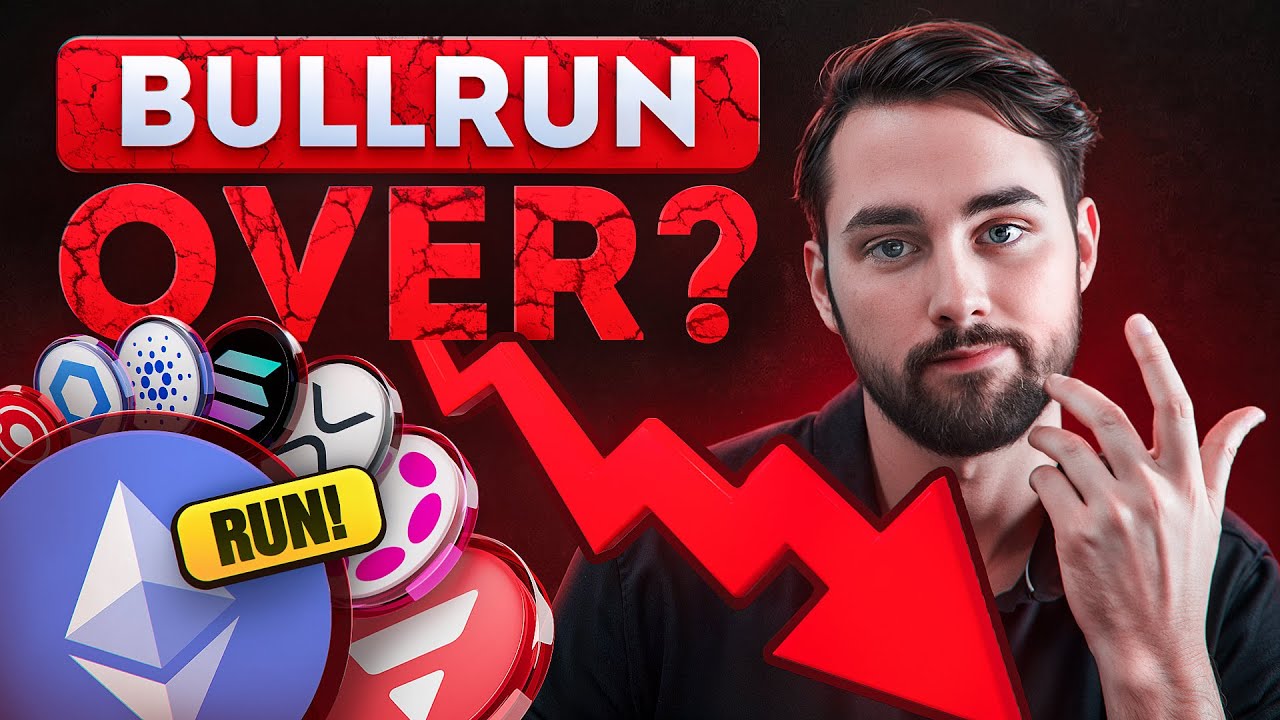
    Altcoins are back in EXTREME fear… but is the bull run really over, or just resetting? Here are the 3 possible scenarios for altcoins in 2025 – and which one I believe we’re in right now.

    NoBS Macro – Checkout my new channel 🚀https://www.youtube.com/channel/UCU9XqnucZB-FhC2RlALdomQ
    Private Community – Get Started For Free💎 https://nobscrypto.com.au/enterthevault/
    Bitunix -Deposit, trade & Win Cash Prizes ! ✈️ https://www.bitunix.com/activity/trading-competition/NoBsCrypto0918?vipcode=218m
    Phemex – Earn up to $3,000 in Rewards! 🚀 https://phemex.com/en/promo/activity/618?referralCode=E3HGP8

    👇⚠️👇⚠️ DEALS & DISCOUNTS ⚠️ 👇⚠️👇

    ***************************************************************************

    💸 Want to buy Crypto AND SAVE?? 💸

    💥 Bitunix | NO KYC | ($8,000 USDT BENEFITS – Insane Deal): 👉 https://www.bitunix.com/register?vipCode=218m

    💥 Phemex | NO Restriction | (Earn More Than $700 by Signing Up): 👉 https://phemex.com/a/k/NoBsCrypto1

    💥 Caleb & Brown | World Renowned Safety | (Broker): 👉 https://calebandbrown.com/affiliates/nobscrypto/

    ***************************************************************************

    🔒 Private Community “The Vault”: 👉 https://nobscrypto.com.au/enterthevault/

    ***************************************************************************

    🔥 Follow us on social media :

    🚀 Twitter : https://x.com/noBScrypto
    🚀 Instagram : https://www.instagram.com/no_bscrypto
    🚀 Tiktok : https://www.tiktok.com/@no_bscrypto

    ***************************************************************************

    🔒 Store your Crypto – SAFELY 🔒

    ✅ Tangem is an industry-leading cold-storage wallet ANYONE can easily use!

    👉 https://tangem.com/pricing/?promocode=NOBS 👈

    ***************************************************************************

    💯 AVOID SCAMS 💯

    ✅ Sign-up to NordVPN and remain ✔️Private ✔️Safe ✔️For $3 a Month!

    👉 https://nordvpn.com/nobscrypto 👈

    *THIS IS NOT FINANCIAL ADVICE. I AM NOT A FINANCIAL ADVISOR AND THIS IS PURELY FOR ENTERTAINMENT PURPOSES ONLY! Please consult your financial advisor BEFORE you make any investment decisions.

  • Mamdani Leads NYC Mayor Race as Cuomo Proposes Crypto-Friendly Plan, Sparking Market Reactions

    Mamdani Leads NYC Mayor Race as Cuomo Proposes Crypto-Friendly Plan, Sparking Market Reactions

    What happened?

    Polymarket bettors now give Zohran Mamdani a 93% chance of winning the New York City mayoral race, while Andrew Cuomo is at 6% and Curtis Sliwa at 1%. Cuomo has responded by pitching a crypto-friendly plan — proposing a chief innovation officer and an innovation council focused on crypto, AI, and biotech. Polling from AARP and Gotham still shows Mamdani leading in traditional polls, so the race looks tilted in his favor despite Cuomo’s late push.

    Who does this affect?

    Voters in New York City are directly affected because the next mayor will shape local policy and priorities for tech and finance. The crypto, AI, and biotech industries are watching closely since Cuomo’s pitch could mean more local support and resources if he were to win. Prediction market users and investors also care because platform prices and public sentiment can shift funding, hiring, and regulatory expectations.

    Why does this matter?

    This matters for markets because a Cuomo win and a pro-crypto city office could boost investor confidence in New York’s crypto ecosystem, potentially lifting local startups, hiring, and venture interest. If Mamdani stays likely to win, investors may expect continued uncertainty or different policy priorities, which could dampen crypto-focused bets on New York’s competitiveness. And because Polymarket and polls signal retail sentiment, shifts there can affect short-term trading, fundraising narratives, and where companies decide to locate or expand.

  • Evernorth-Ripple Nasdaq Listing and $1B XRP Treasury Could Reshape the Market

    Evernorth-Ripple Nasdaq Listing and $1B XRP Treasury Could Reshape the Market

    What happened?

    Evernorth, backed by Ripple, announced a plan to list on Nasdaq and raise over $1 billion to buy XRP on the open market and create the largest publicly traded XRP treasury. XRP briefly bounced 3.7% to $2.47 but remains below all major EMAs with bearish indicators and low-volume, while Ripple co-founder Chris Larsen offloaded about 50M XRP (~$120M). Analysts warn the move could be a short-lived “dead cat bounce” with a higher chance of sliding toward $2.10–$2.25 unless price sustains above $2.61–$2.65.

    Who does this affect?

    Retail holders and short-term traders face immediate risk from whale selling and weak technicals that can amplify volatility. Institutional investors, exchanges, and backers like SBI, Pantera and Kraken are directly involved because Evernorth’s treasury and any ETF approvals would reshape institutional demand. Market makers, funds eyeing XRP ETFs, and enterprises watching Ripple’s payments partnerships and Fed discussions will be tracking developments closely since they determine liquidity and flow dynamics.

    Why does this matter?

    If Evernorth’s $1B buying and potential ETF approvals materialize, institutional demand could flip XRP’s structure and push prices back above key EMAs toward $2.75–$3.00, improving market confidence. On the flip side, insider distributions and low-volume bounces raise the odds of a correction to $2.10–$2.25, which would increase volatility and hurt short-term sentiment. The result will affect liquidity, price discovery and ETF/regulatory outcomes, so traders and institutions need to balance near-term technical risk against possible long-term treasury-driven demand.

  • Ripple-backed Evernorth to raise over $1 billion for XRP treasury via U.S. listing amid XRP social surge

    Ripple-backed Evernorth to raise over $1 billion for XRP treasury via U.S. listing amid XRP social surge

    What happened?

    Ripple-backed Evernorth announced plans to raise more than $1 billion via a U.S. listing to build a dedicated XRP treasury. LunarCrush recorded a sharp rise in XRP social activity — mentions climbed to about 8.5k, engagements neared 13M, AltRank briefly improved from 667 to 32, and Galaxy Score sits around 56. The social burst coincided with a modest price uptick, putting XRP near $2.46 and drawing trader attention.

    Who does this affect?

    This matters to XRP holders and traders because a corporate treasury could create sustained buying pressure and change liquidity dynamics. It also impacts Ripple and Evernorth as they shape corporate use of crypto for balance-sheet management. Exchanges, market makers, and institutional investors will be watching social metrics and spot volumes for signs the headline turns into real demand.

    Why does this matter?

    A $1B XRP treasury would be a meaningful source of long-term spot demand that could tighten supply and support higher price floors. In the short term the social spike can drive volatility and trading flows, but lasting market impact depends on continued elevated volume and concrete funding steps. Macro conditions and BTC/ETH action still influence outcomes — if the broader market is calm the news can lift XRP, but if it’s just social noise without real buying the move may fade.

  • SIMCARTEL Shutdown Highlights Vulnerabilities in SMS-Based 2FA and Online Fraud

    SIMCARTEL Shutdown Highlights Vulnerabilities in SMS-Based 2FA and Online Fraud

    What happened?

    Europol and partner agencies shut down a sophisticated SIM-farm syndicate called “SIMCARTEL” that created more than 49 million fake online accounts and rented temporary phone numbers to bypass SMS-based two-factor authentication. Authorities executed coordinated raids, made seven arrests, and seized servers, hundreds of SIM devices, cash and cryptocurrency. The operation supplied these virtual phone identities to criminals who used them for phishing, smishing, money laundering and large-scale fraud.

    Who does this affect?

    This impacts everyday users whose accounts and funds could be hijacked, as well as social platforms, e-commerce sites, banks and cryptocurrency exchanges that relied on phone verification. It also hits companies offering or using these SIM-for-hire services and the victims of the scams who suffered financial and privacy losses. Law enforcement, compliance teams and security vendors are affected too, since they now need to reassess how to detect and block mass-produced fake identities.

    Why does this matter?

    This matters for markets because it exposes a systemic security weakness that helped fuel billions in crypto and online fraud, which can erode trust in exchanges and fintech services. Expect heavier regulatory scrutiny, higher compliance and security costs, and a faster shift away from SMS 2FA toward stronger methods like hardware keys or app-based authenticators—changes that may raise short-term operating costs and slow user onboarding. Over time, better defenses should reduce fraud losses and restore confidence, but some firms could face short-term reputational damage and volatility in customer flows and asset prices.

  • Wyoming Tests State-Backed FRNT Stablecoin Across Seven Blockchains

    Wyoming Tests State-Backed FRNT Stablecoin Across Seven Blockchains

    What happened?

    Wyoming deployed 100,000 FRNT stablecoins to each of seven major blockchains — Solana, Ethereum, Arbitrum, Base, Optimism, Polygon, and Avalanche — as a multi-chain test totaling 700,000 tokens. This is the first on-chain activity since the state launched the Frontier Stable Token, which is fully backed by dollars and short-term U.S. Treasuries and channels yield to the state education fund. The rollout looks like a testing phase with audits, monthly attestations, and a previously piloted payment use case, but public access is still delayed by regulatory and compliance checks.

    Who does this affect?

    Wyoming residents and the state government could benefit if yield from the reserves funds education and speeds up payments to contractors, as seen in the Avalanche pilot. Crypto users, developers, and exchanges like Kraken are affected because the multi-chain deployment touches liquidity, custody, and access across major networks. Broader stakeholders — banks, regulators, and global stablecoin issuers — are watching closely since this is a novel government-issued stablecoin that could change standards for compliance and market competition.

    Why does this matter?

    This matters because a state-backed, audited stablecoin operating across multiple blockchains adds a new, regulated player to a market dominated by private issuers, which could shift liquidity and credibility toward government-linked tokens. Big banks and international financial players are already racing to launch their own stablecoins, so Wyoming’s move could accelerate competition, regulatory clarity, and institutional adoption. If FRNT gains trust and usage, it could influence pricing, market share, and the future roadmap of stablecoin products, potentially reshaping parts of the payments and crypto asset markets.

  • DeFiLlama Relists Aster After Suspected Wash Trading Prompting Data Integrity and Market Risk Concerns

    DeFiLlama Relists Aster After Suspected Wash Trading Prompting Data Integrity and Market Risk Concerns

    What happened?

    DeFiLlama quietly relisted perpetual exchange Aster after previously delisting it over suspected wash trading because its volumes mirrored Binance’s. The relisting happened without a clear public explanation and DeFiLlama admits it still can’t fully verify Aster’s underlying order data, leaving gaps in historical metrics. Despite the unresolved questions, Aster now shows massive reported volumes and open interest while the project delayed an airdrop and its token has fallen sharply.

    Who does this affect?

    Traders and analysts who rely on DeFiLlama’s charts for market signals could be working off misleading numbers, which affects trading decisions and risk models. Aster users, token holders, and competing perpetual platforms are directly impacted — holders face price volatility and rivals face distorted market-share comparisons. Data platforms and the wider DeFi community are also hurt because this episode undermines trust in third-party analytics and on-chain transparency.

    Why does this matter?

    Market integrity is at stake: unverifiable or inflated volumes can misallocate capital, create fake liquidity signals, and amplify short-term flows into a platform that may not be as healthy as it looks. That can increase volatility, raise risk premia for perpetual markets, and prompt traders to pull capital toward venues perceived as more transparent. In the longer run it could push tighter oversight from analytics providers and regulators, reshape fee competition and liquidity patterns, and dent overall investor confidence in DeFi metrics.

  • Crypto Surges to Record Highs, Then Dips on Tariff News as ETFs and Regulation Headlines Shape Outlook

    Crypto Surges to Record Highs, Then Dips on Tariff News as ETFs and Regulation Headlines Shape Outlook

    What happened? Crypto surged to record highs and then dropped after tariff news.

    Bitcoin blasted to a record $126,080 in early October and lifted many altcoins and meme tokens. That optimism reversed quickly after Trump announced a 100% tariff on Chinese goods, triggering a steep crypto sell-off and a shift to risk-off trading ahead of the Fed’s FOMC meeting. Many analysts see the drop as a healthy reset that flushes excess leverage and weak hands, potentially setting the stage for a stronger bull run later.

    Who does this affect? Traders, institutions, major crypto projects and payment platforms.

    Retail traders with high leverage were hit hardest, while institutional players are pausing for ETF and regulatory clarity. Major coins like XRP, Solana, and Dogecoin, plus hyped presales like Bitcoin Hyper, could see big moves as ETFs, regulation, and adoption headlines flow through the market. Exchanges, payment platforms, and projects with real-world use cases will feel the impact most, since adoption news and regulation determine where capital flows.

    Why does this matter? Approval of ETFs, regulation, and macro headlines could trigger major inflows and reshape the market.

    If spot ETFs get approved and regulation becomes clearer, expect large institutional inflows that could drive prices much higher across large-cap altcoins and Bitcoin. The current correction may actually improve long-term market health by removing weak hands and creating a cleaner foundation for a major upward run. That means traders and investors should watch ETF decisions, the FOMC, and geopolitics closely because those catalysts will likely decide whether this pause becomes the calm before a big rally or a longer downturn.