Category: News

  • BBVA Encourages Wealthy Clients to Invest in Cryptocurrencies Amid Changing Banking Landscape

    BBVA Encourages Wealthy Clients to Invest in Cryptocurrencies Amid Changing Banking Landscape

    What happened?

    BBVA, a Spanish bank, is advising its wealthy clients to invest between 3% and 7% of their portfolios in cryptocurrencies, depending on their risk appetite. BBVA has been given regulatory approval to launch Bitcoin and Ether trading services in Spain, integrating these assets into its mainstream banking offerings. The bank began offering crypto advisory services to private clients in September last year, making it one of the first major banks to do so for high-net-worth individuals.

    Who does this affect?

    This move primarily affects BBVA’s wealthy clients who are interested in diversifying their portfolios with cryptocurrency investments. It also impacts the broader financial and crypto markets, as other institutions may follow suit, potentially leading to increased legitimacy and adoption of crypto assets. On a regional level, this could influence the perception and integration of cryptocurrencies in Spain and possibly other European financial markets.

    Why does this matter?

    BBVA’s embrace of cryptocurrencies signals a shift in the traditional banking sector’s approach to digital assets, which could encourage more institutional and retail investors to consider crypto investments. This development may impact the crypto market by boosting demand and potentially influencing prices, especially for Bitcoin and Ether. Additionally, as more banks engage with crypto, it could lead to broader adoption and regulatory acceptance, further integrating these assets into the global financial system.

  • China’s Digital Yuan Initiative Aims to Reduce Global Dependence on the US Dollar

    China’s Digital Yuan Initiative Aims to Reduce Global Dependence on the US Dollar

    What happened?

    China’s central bank governor, Pan Gongsheng, announced plans to decrease global dependence on the US dollar by promoting the digital yuan as an international currency. At the Lujiazui Forum in Shanghai, Pan stated that China will create an international operations center for the digital yuan in Shanghai to support its global adoption. This initiative is part of a larger effort to establish a “multi-polar international monetary system” where various sovereign currencies coexist and create checks and balances.

    Who does this affect?

    This move primarily affects global financial markets, investors, and countries currently relying heavily on the US dollar for international transactions. It also impacts businesses and financial institutions worldwide that must adapt to potential shifts in the dominant currencies for trade and investment. Additionally, it influences US policymakers and the Federal Reserve as they navigate the evolving dynamics of global currency competition.

    Why does this matter?

    The push for a digital yuan on the global stage could reshape currency markets and reduce the dominance of the US dollar, potentially affecting exchange rates and global trade balances. As more countries and businesses adopt the digital yuan, the demand for dollars might decrease, impacting the dollar’s value and influence. This shift could lead to increased volatility in currency markets and require investors to seek new strategies for hedging currency risks.

  • US Senate Approves GENIUS Act to Regulate Stablecoins, Signaling Bipartisan Support for Cryptocurrency Legislation

    US Senate Approves GENIUS Act to Regulate Stablecoins, Signaling Bipartisan Support for Cryptocurrency Legislation

    What happened?

    The US Senate passed the GENIUS Act, which is a significant piece of cryptocurrency legislation focused on regulating stablecoins. The bill was approved with strong bipartisan support, indicating widespread agreement on the necessity for regulation in this fast-growing sector. This marks the first time the Senate has advanced a regulatory framework specifically for stablecoins, and now it moves to the House of Representatives for consideration.

    Who does this affect?

    The passing of the GENIUS Act affects multiple stakeholders in the cryptocurrency space, including stablecoin issuers who will now need to adhere to new regulations such as asset backing and monthly disclosures. It also impacts consumers and financial institutions involved in digital assets by introducing regulatory clarity and consumer protection measures. Additionally, it affects lawmakers and regulators who are now tasked with ensuring that the legislation is effectively implemented and enforced.

    Why does this matter?

    The GENIUS Act’s passage is significant for the market as it provides a clearer regulatory environment for stablecoins, which could boost investor confidence and potentially lead to increased adoption and innovation within the crypto industry. By requiring stablecoin issuers to back their tokens with liquid assets, the bill aims to enhance financial stability and address national security concerns. This move is also seen as aligning the US with other jurisdictions that have already started regulating digital assets, thereby maintaining competitive advantage and influence in the global financial markets.

  • Russian Authorities Shut Down Major Illegal Crypto Mining Farm in Siberia

    Russian Authorities Shut Down Major Illegal Crypto Mining Farm in Siberia

    What happened?

    Russian prosecutors shut down a 30,000 square meter illegal crypto mining farm operating on state-owned property in Siberia. The farm was located in the town of Nazarovo, mining cryptocurrencies worth approximately $58,672 per month. This operation used numerous transformers and generators, and it was conspicuously located in an industrial area but lacked necessary permissions.

    Who does this affect?

    This affects the operators of the illegal crypto mining farm, local authorities, and residents who were subjected to potential power outages due to unauthorized electricity usage. Additionally, energy providers in the region are impacted by illegal connections and potential grid overloads. It also affects legal crypto miners who follow regulations, as such activities may lead to increased scrutiny and regulation in the industry.

    Why does this matter?

    This incident highlights the ongoing challenges and risks associated with unregulated crypto mining operations. The shutdown may lead to increased regulatory measures and enforcement actions in regions known for crypto mining, potentially causing market disruptions. It underscores the necessity for proper infrastructure and compliance with local laws to prevent negative impacts on public safety and local economies.

  • Dogecoin Tests Critical Support Level at $0.168: What It Means for Investors and the Crypto Market

    Dogecoin Tests Critical Support Level at $0.168: What It Means for Investors and the Crypto Market

    What happened?

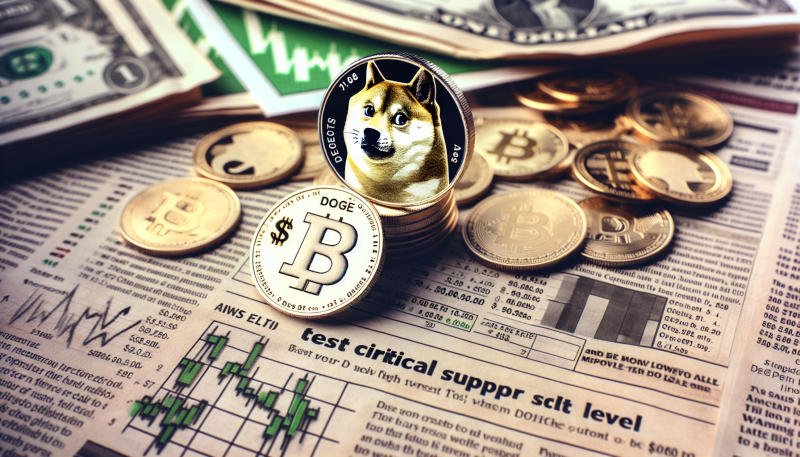
    Dogecoin (DOGE) is testing a critical historical support zone at $0.168, which previously marked the market bottom in mid-April. After reaching a local peak in mid-May, Dogecoin’s price has fallen 30%, putting this key level under scrutiny. Analysts suggest that if the price breaks below this support, it could lead to a 30% retracement, highlighting its significance in the current market structure.

    Who does this affect?

    This situation impacts Dogecoin investors and traders who are closely watching the $0.168 support level. If Dogecoin fails to maintain this level, those who have invested might face significant losses, especially if they bought during the recent highs. The broader crypto market could also see ripples from any major move in Dogecoin, affecting sentiment and trading strategies across other meme coins and cryptocurrencies.

    Why does this matter?

    The potential breakdown of Dogecoin below $0.168 could significantly impact market dynamics and investor behavior. A drop could deter buying interest and lead to increased selling pressure, potentially dragging down prices further. Conversely, holding above this level could inspire confidence and attract new investors, creating a potential rally with implications for Dogecoin’s market capitalization and its influence on related markets.

  • XRP Price Rises Amid Approval of First Canadian ETF, Boosting Trading Volumes and Investor Interest

    XRP Price Rises Amid Approval of First Canadian ETF, Boosting Trading Volumes and Investor Interest

    What happened?

    The XRP price has increased slightly by 0.2% over the past 24 hours, sparked by a significant development in Canada. The country has approved the first exchange-traded fund (ETF) for XRP in North America, leading to a nearly threefold rise in trading volumes for the token. This new ETF, named Purpose XRP ETF, is set to start trading on the Toronto Stock Exchange, providing regulated access to XRP.

    Who does this affect?

    This development primarily impacts investors interested in cryptocurrency and specifically those interested in XRP. Institutional investors and retail traders can now gain exposure to XRP through a regulated financial product, easing access to this digital asset in both Canadian and US dollars. Current and potential XRP holders are likely to see increased interest and liquidity, which could influence their investment strategies.

    Why does this matter?

    The approval of an XRP ETF in Canada marks a significant step forward for the cryptocurrency market by potentially accelerating the adoption of digital assets. It increases the likelihood of the U.S. SEC approving similar products, which could further expand market access. The anticipated influx of additional liquidity into XRP due to these financial instruments may lead to bullish price predictions and heightened volatility in the market.

  • Flashbots Report Highlights MEV Bots’ Threat to Blockchain Scalability and User Experience

    Flashbots Report Highlights MEV Bots’ Threat to Blockchain Scalability and User Experience

    What happened?

    Flashbots, a leading research group, released a report warning about the impact of MEV (Maximal Extractable Value) bots on blockchain scalability. The report highlighted that wasteful activity from these bots is consuming a significant portion of blockchain capacity, particularly on Ethereum and Solana. As a result, current efforts to scale blockchains are being undermined by this MEV-driven activity.

    Who does this affect?

    This situation primarily affects blockchain users and developers who are trying to scale networks like Ethereum and Solana. Users experience higher fees and reduced network efficiency due to the spam created by MEV bots. Developers working on scaling solutions face challenges as their efforts are diminished by the inefficiencies introduced by these bots.

    Why does this matter?

    The market impact is significant because the presence of MEV bots can artificially inflate user fees and reduce the effectiveness of scaling technologies. This inefficiency may deter new users and investors from participating in decentralized finance (DeFi) platforms. Moreover, such conditions could slow down the broader adoption and growth of blockchain technologies, potentially affecting the market value of associated cryptocurrencies.

  • ChatGPT’s AI Model Analyzes Dogecoin Price Dynamics: Key Levels and Market Implications

    ChatGPT’s AI Model Analyzes Dogecoin Price Dynamics: Key Levels and Market Implications

    What happened?

    ChatGPT’s o3 Pro AI model analyzed 47 live market indicators to predict Dogecoin’s price as it fell to $0.1653. The analysis identified $0.18 as a pivotal point for a potential breakout to $0.30 or a drop to $0.15. This comes after Dogecoin’s volatile performance since January 2025, when it reached highs of $0.4159.

    Who does this affect?

    This analysis affects Dogecoin investors and traders who are looking to make informed decisions based on current market conditions. It also impacts the broader cryptocurrency community monitoring Dogecoin’s price movements. Additionally, institutional investors and businesses utilizing Dogecoin in their operations should pay attention to these predictions.

    Why does this matter?

    The market impact of this analysis could be significant as it provides insights into potential price movements and volatility for Dogecoin. Understanding these dynamics helps investors strategize their positions and manage risk. Moreover, large swings in Dogecoin’s price could influence market sentiment and trading volumes across the cryptocurrency market.

  • Pump.fun Faces Backlash Over $741 Million in Fees and Scam Allegations, Raising Regulatory Concerns in the Memecoin Market

    Pump.fun Faces Backlash Over $741 Million in Fees and Scam Allegations, Raising Regulatory Concerns in the Memecoin Market

    What happened?

    Pump.fun, a Solana-based memecoin launchpad, has come under fire for charging users $741 million in fees amid accusations of facilitating scams and harmful activities. Crypto influencer Crypto Bitlord has alleged that over $20 billion has been extracted in scams on the platform, urging its removal from the internet. The controversy escalated with the recent suspension of Pump.fun’s official account and its co-founder by X, as the platform allegedly plans a $1 billion token sale.

    Who does this affect?

    The issues with Pump.fun impact a broad range of stakeholders, including the users who traded on the platform and paid hefty fees. Only a small fraction of traders have profited significantly, leaving the majority at a loss. Additionally, the platform’s controversial live-streaming feature has been linked to harmful behaviors, affecting individuals’ mental health and community well-being.

    Why does this matter?

    The situation with Pump.fun is significant because it highlights the risks and regulatory challenges in the growing memecoin market. The allegations could influence market confidence and investor behavior, especially regarding investments in platforms with similar business models. Regulatory scrutiny and legal battles, like those faced by Pump.fun, could lead to stricter enforcement and impact the overall crypto industry’s operation and credibility.

  • Coinbase Seeks SEC Approval for Tokenized Equities, Paving the Way for Blockchain in Stock Trading

    Coinbase Seeks SEC Approval for Tokenized Equities, Paving the Way for Blockchain in Stock Trading

    What happened?

    Coinbase, a leading cryptocurrency exchange listed on Nasdaq, is seeking approval from the U.S. Securities and Exchange Commission (SEC) to offer blockchain-based stocks, also known as tokenized equities. This move would enable Coinbase to facilitate equity trading using blockchain and distributed ledger technology, potentially positioning it to compete directly with established retail brokerage firms like Robinhood. The company has highlighted that introducing tokenized equities is a significant priority for both the platform and the broader digital asset industry.

    Who does this affect?

    This development primarily affects Coinbase customers, potential investors in tokenized equities, and competing brokerage firms. It could also impact regulatory bodies like the SEC, who must decide whether to approve this novel approach to securities trading. Additionally, financial markets participants and institutions may need to adapt to changes in how securities are traded and held if tokenized equities become widely adopted.

    Why does this matter?

    If approved by the SEC, Coinbase’s initiative could significantly impact the financial markets by introducing blockchain efficiency to securities trading. Tokenized equities offer potential benefits such as reduced transaction fees, accelerated settlement times, and the possibility of 24/7 trading, unlike traditional stock exchanges which operate on fixed schedules. This advancement could enhance liquidity and capital efficiency in financial markets, challenge existing trading platforms, and further integrate blockchain technology into mainstream finance.